Get your free personalized podcast brief
We scan new podcasts and send you the top 5 insights daily.
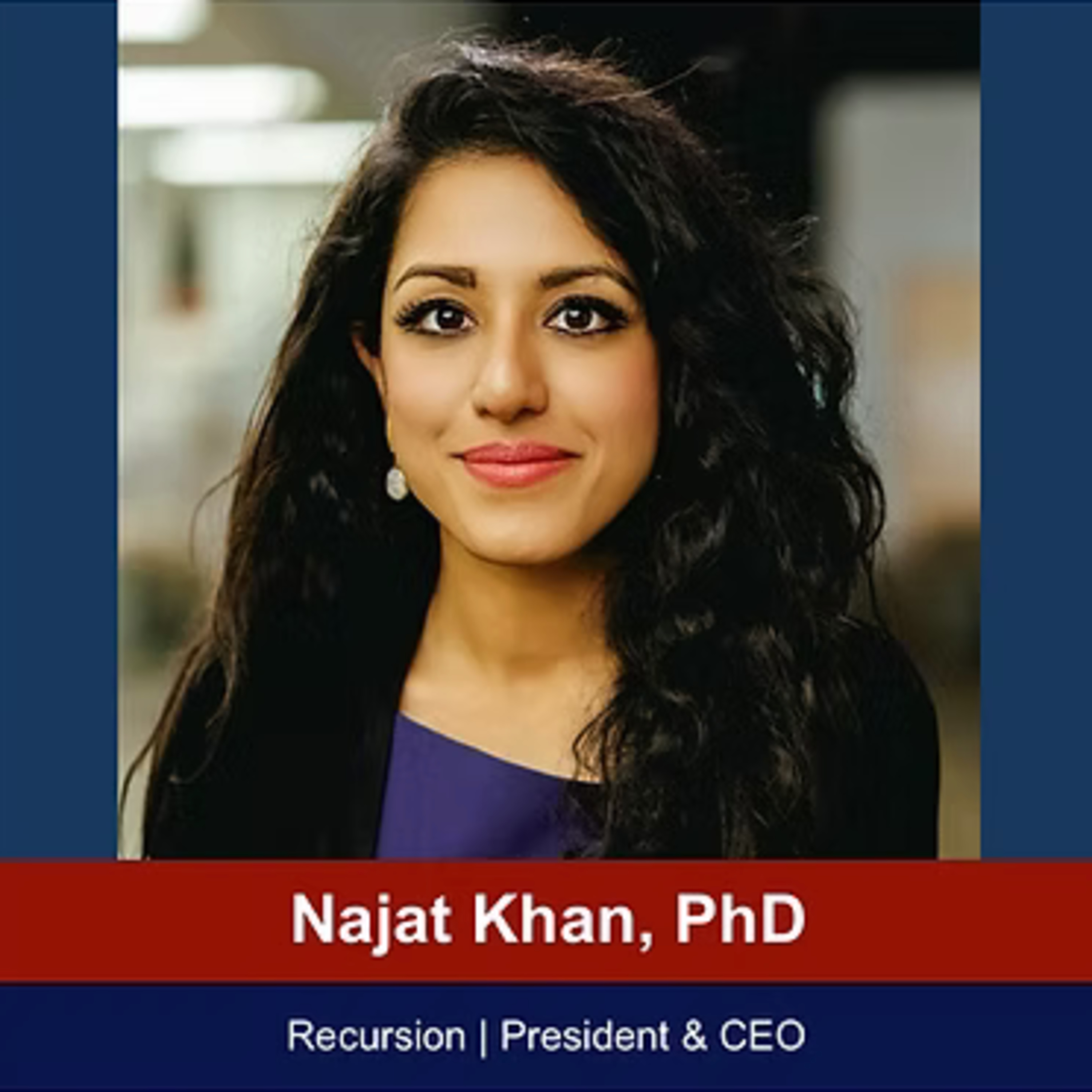
Recursion CEO Najat Khan argues the most valuable biotech professionals are "systems thinkers" who are fluent in both science and technology. She advises against narrow specialization, stating that the ability to connect the dots across complex disciplines is what drives innovation in drug discovery.
Related Insights
The best career paths are now found at the intersection of two seemingly unrelated disciplines. This "bilingual" approach creates a unique perspective and value that cannot be easily replicated by others with traditional, siloed expertise, like a pediatric surgeon who is also a game developer.

Recursion's CEO Najat Khan argues that the key to success in tech-bio is not just hiring scientists and engineers, but cultivating a 'bilingual' culture. This requires scientists who understand AI's limitations and AI experts who appreciate the humility needed for science. This integrated talent and culture is a core competitive advantage that is difficult for larger, more siloed organizations to replicate.

Today's AI-first drug companies must bridge the gap between separate AI and biology experts. The future competitive advantage will belong to a new generation of scientists who are trained from the start to be fluent in both disciplines, eliminating the "accent" of learning one as a second language.

A key skill in building a deep tech team is identifying individuals who can bridge the gap between complex science and business reality. These "translators" can articulate highly technical concepts in plain English, clarifying clinical relevance and commercial viability for decision-makers.

Resolution Therapeutics' CEO builds his team with leaders from varied backgrounds across different diseases and drug modalities. He believes this diversity creates more robust problem-solving, as challenges that are novel in one area may have been solved in another, enabling faster and more informed decisions.

Career advancement isn't always about deepening expertise in one narrow field. It can be driven by a curiosity to understand how different functions connect. This cross-functional perspective reveals process inefficiencies, and solving them leads to recognition, growth, and new opportunities.

According to Immunocore's CEO, the biggest imminent shift in drug development is AI. The critical need is not for AI to replace scientists, but for a new breed of professionals fluent in both their scientific domain and artificial intelligence. Those who fail to adapt will be left behind.

A CEO without a deep scientific background can thrive in biotech by acting as a synthesizer. The key is not to blindly delegate to experts, but to ask probing questions, understand the interplay between disciplines (regulatory, clinical, etc.), and connect them for effective decision-making.

In a rapidly changing world, the most valuable skill is not expertise in one domain, but the ability to learn itself. This generalist approach allows for innovative, first-principles thinking across different fields, whereas specialists can be constrained by existing frameworks.

As AI masters specialized knowledge, the key human advantage becomes the ability to connect ideas across different fields. A generalist can use AI as a tool for deep dives on demand, while their primary role is to synthesize information from multiple domains to create novel insights and strategies.
