Get your free personalized podcast brief
We scan new podcasts and send you the top 5 insights daily.
The Qwen 3.6 model was fine-tuned using "chain of thought distillation" data from the more powerful Claude Opus. This technique allows smaller models to learn and replicate the structured problem-solving capabilities of larger systems, making advanced AI reasoning more accessible.

Related Insights
When a company distills knowledge from a competitor's AI, it's not just scraping pre-training data. It's a highly efficient process of extracting the model's intelligence, reasoning patterns, and skills. This is more akin to an apprentice directly interacting with and learning from a world-class expert than simply reading the same textbooks the expert used.

Simply using the most powerful model to generate synthetic data for a smaller model often fails. Effective distillation requires matching the 'teacher' model's token probabilities to the 'student' model's base architecture and training data, making it a complex research problem.
![[LIVE] Anthropic Distillation & How Models Cheat (SWE-Bench Dead) | Nathan Lambert & Sebastian Raschka thumbnail](https://substackcdn.com/feed/podcast/1084089/post/189277598/ca7468da5614a246d2906ee8926f6de7.jpg)
China is gaining an efficiency edge in AI by using "distillation"—training smaller, cheaper models from larger ones. This "train the trainer" approach is much faster and challenges the capital-intensive US strategy, highlighting how inefficient and "bloated" current Western foundational models are.

An effective cost-saving strategy for agentic workflows is to use a powerful model like Claude Opus to perform a complex task once and generate a detailed 'skill.' This skill can then be reliably executed by a much cheaper and faster model like Sonnet for subsequent use.
The process of 'distillation' involves using a large, expensive LLM to perform a task repeatedly. The resulting prompts and responses then become the training data to create a smaller, specialized, and much cheaper Small Language Model (SLM) that can perform that specific task, potentially saving 90% on inference costs.

The model's training used "response only masking," where it only learns from the response part of the training data. This method forces the model to first generate a structured "chain of thought" before producing a final answer, directly embedding a systematic problem-solving process into its behavior.
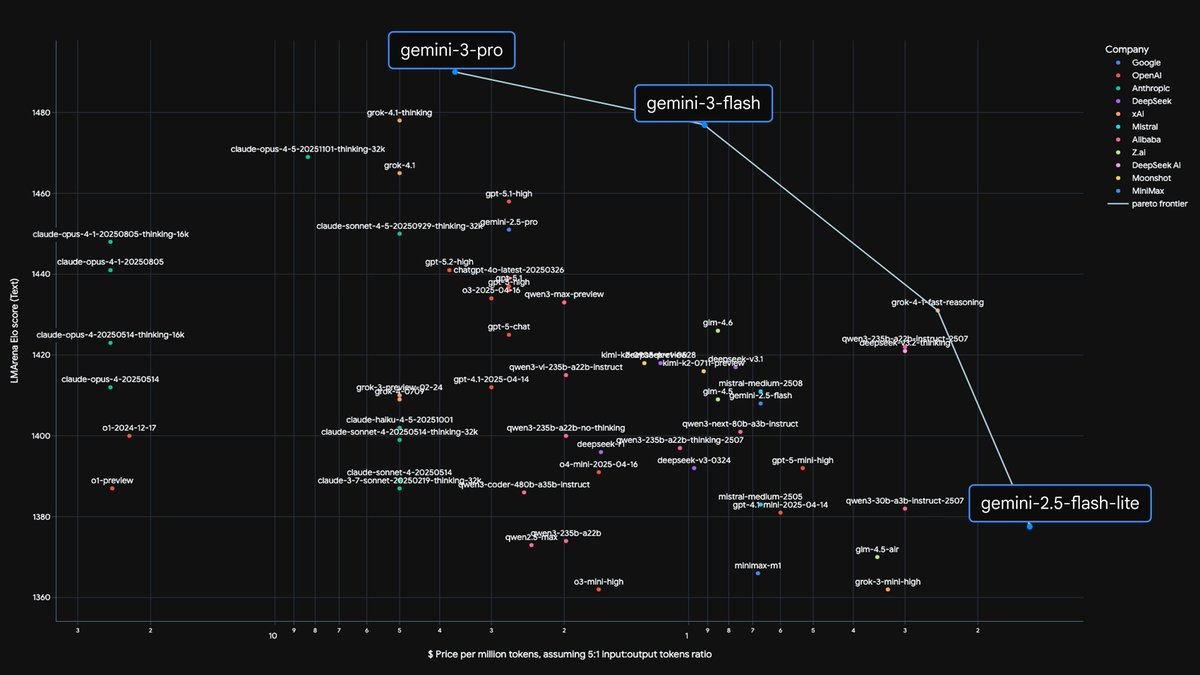
Google's strategy involves creating both cutting-edge models (Pro/Ultra) and efficient ones (Flash). The key is using distillation to transfer capabilities from large models to smaller, faster versions, allowing them to serve a wide range of use cases from complex reasoning to everyday applications.
Shopify's CTO clarifies that Liquid AI models don't compete with frontier models like GPT-4. Instead, their key advantage is serving as a highly effective target for knowledge distillation. This allows Shopify to compress a huge model's capabilities into a smaller, faster, cheaper Liquid AI model for specific tasks.
To improve LLM reasoning, researchers feed them data that inherently contains structured logic. Training on computer code was an early breakthrough, as it teaches patterns of reasoning far beyond coding itself. Textbooks are another key source for building smaller, effective models.

A key technique for creating powerful edge models is knowledge distillation. This involves using a large, powerful cloud-based model to generate training data that 'distills' its knowledge into a much smaller, more efficient model, making it suitable for specialized tasks on resource-constrained devices.