Get your free personalized podcast brief
We scan new podcasts and send you the top 5 insights daily.
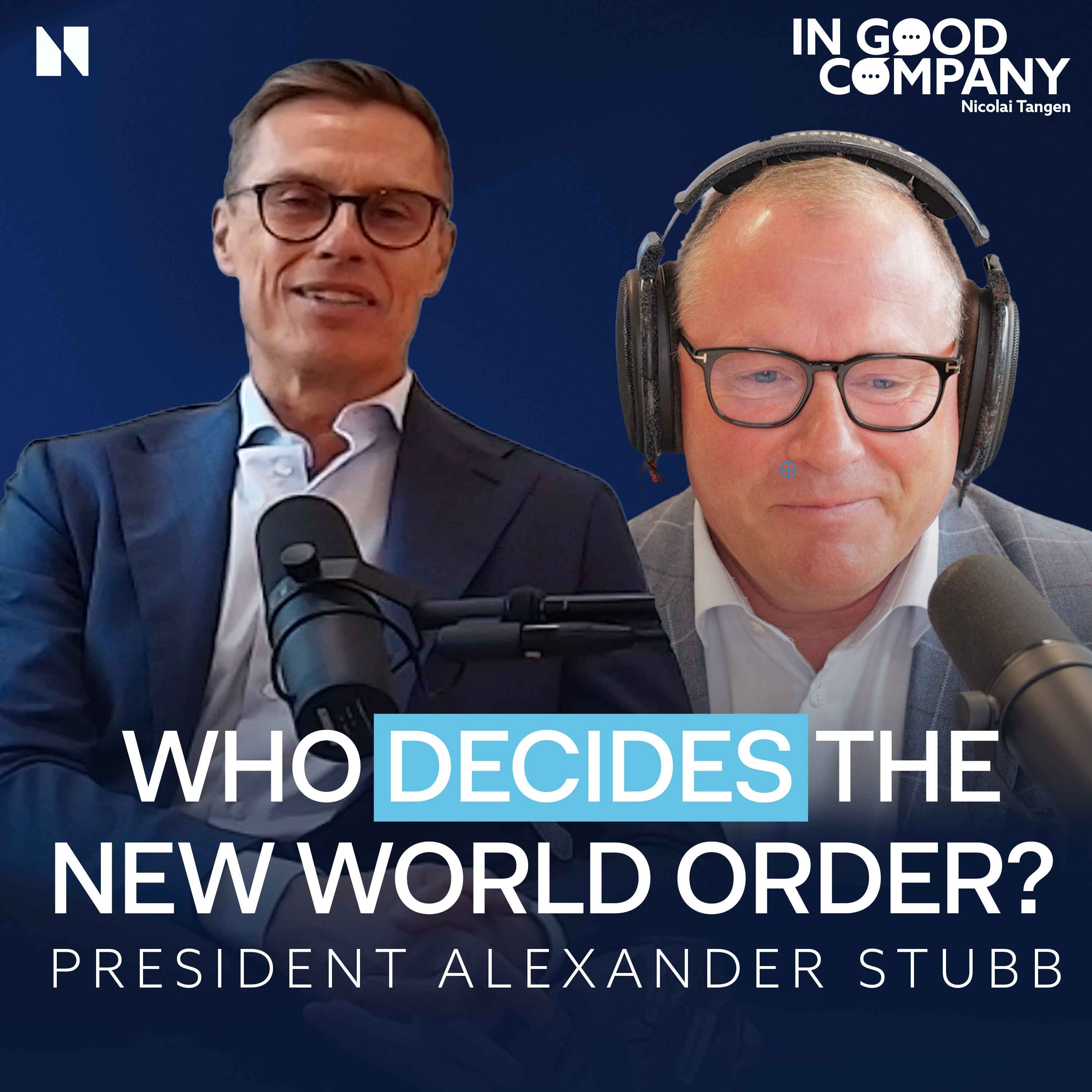
The Finnish political system splits duties: the PM runs domestic policy, while the President runs foreign policy. The President, however, wields significant domestic influence as a "value leader," using their "megaphone" to shape national conversations on values and ethics without direct power.
Related Insights
To manage global shifts, Alexander Stubb advocates for reforming institutions like the UN Security Council to give rising nations more power. This strategy aims to secure their buy-in for a rules-based system, arguing it's more stable than building separate alliances of middle powers outside of existing frameworks.

Anne Applebaum argues that certain leaders don't analyze geopolitical issues by what benefits the nation, but by how they personally emerge as a 'winner.' This transforms complex diplomacy into a quest for applause and personal validation, rather than strategic problem-solving.

Finland's president explains that the US can entertain a "multipolar" world of transactional deals because of its immense power. In contrast, smaller nations like Finland depend on a "multilateral," rules-based order for their security and prosperity. For them, multilateralism is not a choice but a geopolitical necessity.
While not the top issue for most voters, foreign policy crises serve as a critical test of a commander-in-chief's temperament and decision-making. A major failure can permanently sink approval ratings, as seen with Biden's Afghanistan withdrawal.

Having held both roles, Alexander Stubb argues that being Prime Minister is tougher. Domestic policy is ideologically divisive, so many people actively want the PM to fail. Foreign policy, however, is a national interest, so most citizens want the President to succeed.
To hold leaders accountable, a nation must agree on a core set of values. Without this shared ethos, politics devolves into tribalism where each side justifies any action, making it impossible to remove a leader for violating principles that are no longer commonly held.

Turkey's President Erdoğan is strategically leveraging his country's geopolitical importance—as a mediator and key NATO ally amid regional conflicts—to distract from domestic problems like inflation and his crackdown on political opposition. This makes Western allies overlook his autocratic excesses to keep Turkey on their side, providing him more room for domestic repression.

For a small country like Finland with limited hard power, a leader's effectiveness comes from influence. President Stubb's strategy is to build this influence through information, which he gathers from extensive personal networks. This makes personal relationships a core diplomatic function.
Informal settings like a golf course can reveal a person's true character more effectively than formal meetings. Sharing an activity where individuals struggle and react to success and failure builds rapport and trust, which is invaluable in diplomacy and business.

Leaders who immediately frame issues through a lens of core values, such as constitutionality, build more trust than those who calculate a politically palatable position. The public can detect inauthenticity, making a principles-first approach more effective long-term, even if it seems risky in the short term. Leaders should bring people along to their principled position.
