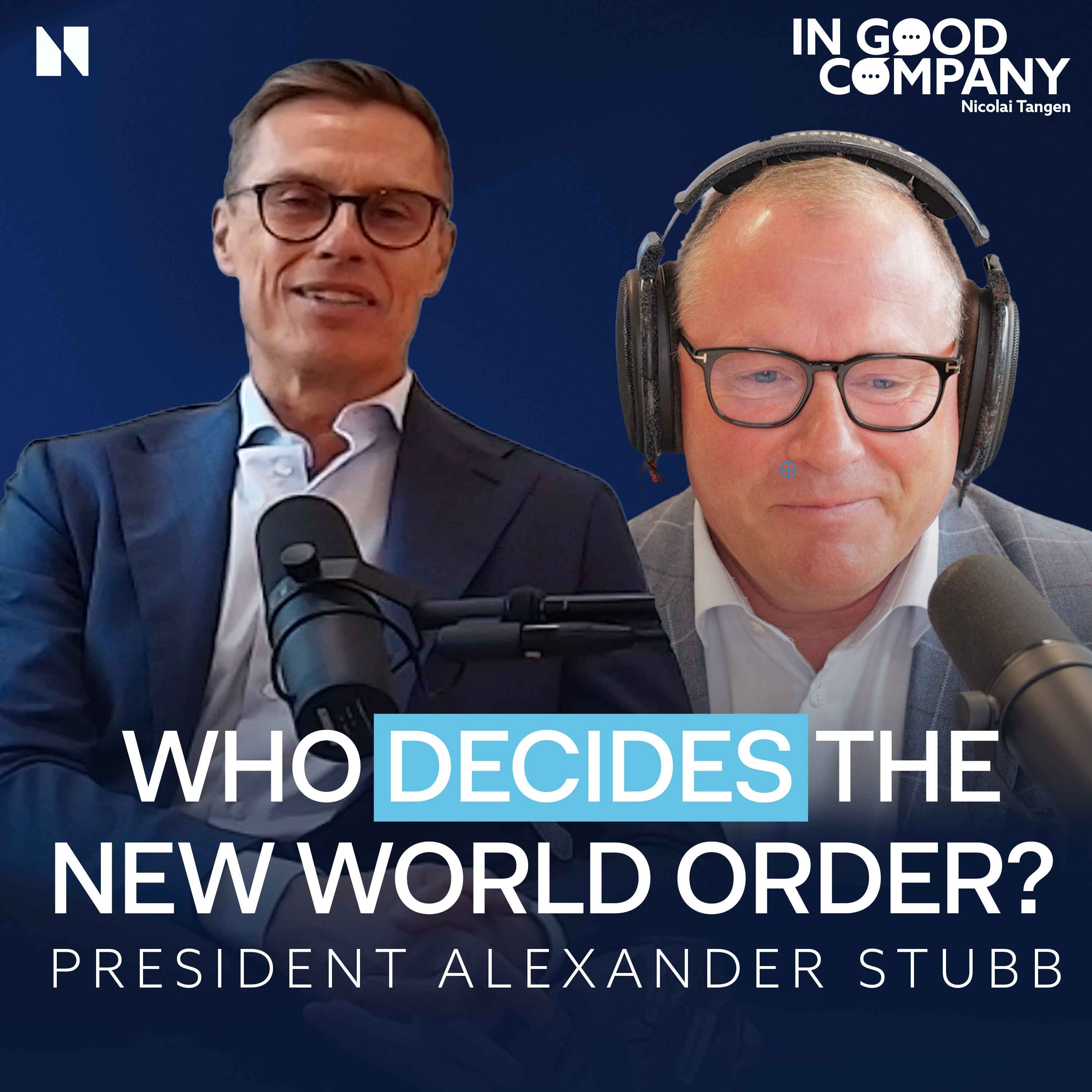
President Stubb posits that the era of Western dominance is over, but the East won't simply replace it. The Global South's collective scale in population, economy, and technology gives it the decisive power to shape the future international system.
Democracies were designed for slow, cumbersome processes. President Stubb argues this inherent design flaw makes them unable to keep pace with rapid technological change, causing them to lose the struggle against digital dictatorships and the influence of powerful tech companies.
The West's primary foreign policy mistake was an "innate arrogance" that history had ended and its liberal democratic model would dominate globally. The rise of powerful, prosperous states in the Gulf, Asia, and Africa has proven this assumption incorrect.
While a global UN-like body for AI is the ultimate goal, regulation moves too slowly. President Stubb argues a more pragmatic approach is to first establish rules within major tech blocs—the U.S., Europe, and China—and then scale those frameworks globally.
The Finnish political system splits duties: the PM runs domestic policy, while the President runs foreign policy. The President, however, wields significant domestic influence as a "value leader," using their "megaphone" to shape national conversations on values and ethics without direct power.
Having held both roles, Alexander Stubb argues that being Prime Minister is tougher. Domestic policy is ideologically divisive, so many people actively want the PM to fail. Foreign policy, however, is a national interest, so most citizens want the President to succeed.
The world is no longer in a simple state of war or peace. While kinetic warfare is obvious, Russia and other actors engage in hybrid warfare—cyber attacks, GPS jamming, sabotage. This constant, low-level conflict is harder to detect and define, blurring the lines.
Contrary to predictions of fracture, the EU is more united than ever. President Stubb argues that external pressures—Brexit, the war in Ukraine, and a more demanding US administration—have paradoxically forced member states to rally together and become a more cohesive geopolitical actor.
For a small country like Finland with limited hard power, a leader's effectiveness comes from influence. President Stubb's strategy is to build this influence through information, which he gathers from extensive personal networks. This makes personal relationships a core diplomatic function.
President Stubb reflects that his greatest failure as PM was internalizing political attacks as personal ones. He has since learned to detach his institutional role from his personal identity, a skill he admires in other world leaders who face constant criticism.