Get your free personalized podcast brief
We scan new podcasts and send you the top 5 insights daily.
The magic of AI agents is their ability to achieve user goals without manual configuration. This requires a product with a strong, built-in point of view on the 'best way' to do something, removing the burden of choice and expertise from the user.

Related Insights
Shift your mindset from using AI as a tool for a specific function (e.g., a scheduler) to creating an AI agent as an employee who owns an entire outcome (e.g., 'run my marketing'). This changes the interaction from using software to delegating goals to an autonomous agent.

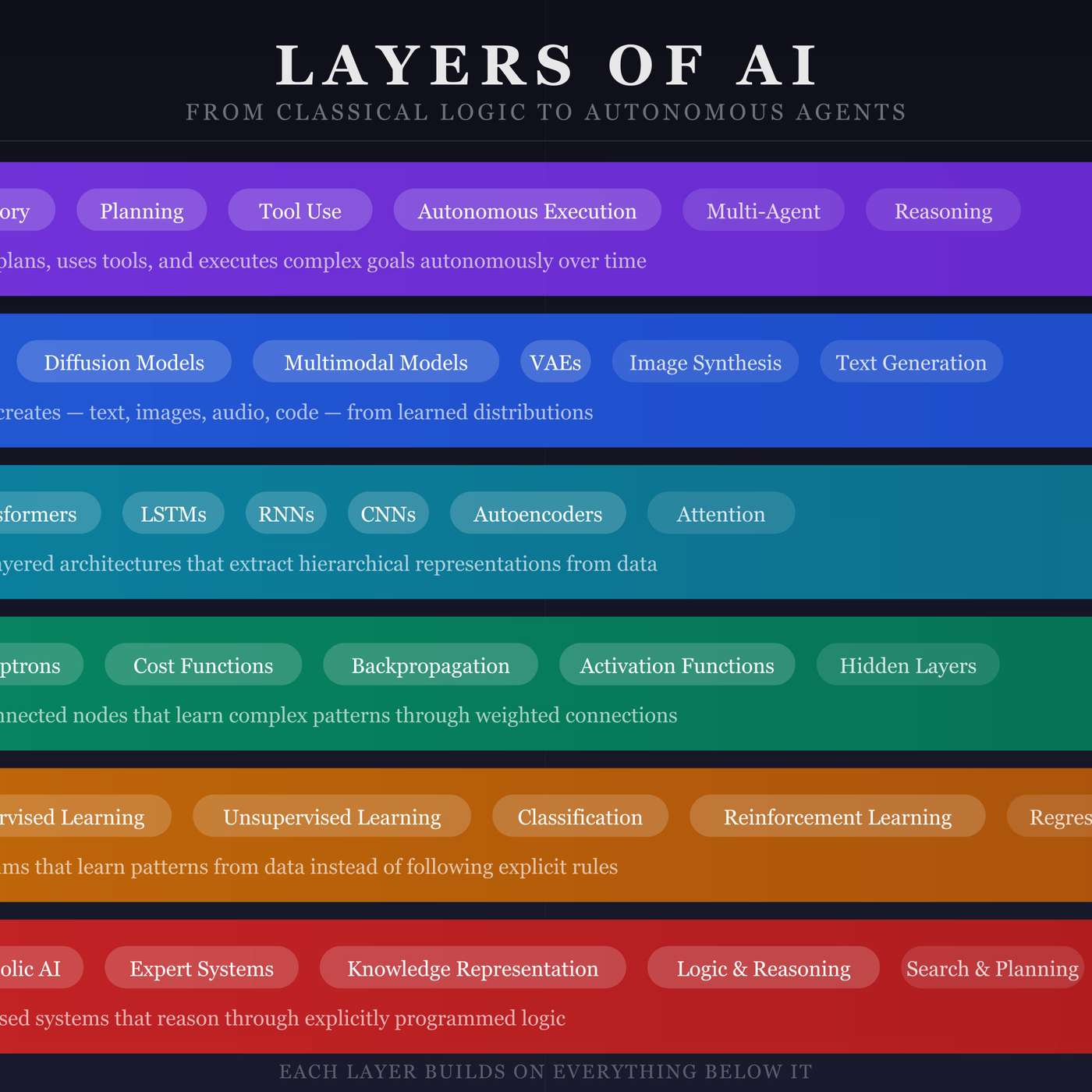
The current pinnacle of the AI stack, 'Agentic AI,' moves beyond simply generating answers to performing autonomous actions. By combining generative models with planning, memory, and tool use (like APIs or code interpreters), these systems can execute complex, multi-step tasks, defining the next wave of product development.
To get high-quality, autonomous work from an AI agent, you must treat it like a new hire, not just give it a simple prompt. You must provide a clear goal, specific skills (pre-defined knowledge), the right tools (APIs, etc.), and rich context (company data).
In an agentic world, the core AI model becomes a commodity. The defensible product is the curated experience layer built on top of it—the guardrails, instructions, and personality that define the user interaction and differentiate the offering.

The key product innovation of Agent Skills is changing the user's perception of AI. Instead of just a tool that answers questions, AI becomes a practical executor of defined workflows, making it feel less like a chat interface and more like powerful, responsive software.
Complex prompting is a transitional phase for AI interaction, not the end state. Truly useful AI tools will abstract this complexity away, using agents to translate user intent into optimal prompts. The focus should be on creating intuitive, directorial controls rather than teaching users to be prompt engineers.

A generic API lets users build their own processes, which can be inconsistent. By building a native agent, a company like Linear can embed its specific philosophy and best practices (e.g., "the Linear method") into the agent's core behavior, ensuring quality.

A truly "agent-native" product goes beyond an API. The product's AI should be aware of its internal components—like project knowledge or UI elements—and possess the inherent ability to modify them directly, rather than just instructing a human on the necessary steps.

In an AI-native world, products are sets of autonomous agents, not human-operated interfaces. Founders must shift from finding product-market fit to ensuring their AI agents achieve desired business outcomes, a concept Steve Blank calls 'agent-outcome fit.'

The paradigm for using software is shifting from providing explicit instructions to defining high-level objectives. AI agents act like a team of digital employees, empowering every user to operate like an executive who decides *what* to do, while the AI figures out *how* to do it, increasing individual leverage.
