Get your free personalized podcast brief
We scan new podcasts and send you the top 5 insights daily.
A truly "agent-native" product goes beyond an API. The product's AI should be aware of its internal components—like project knowledge or UI elements—and possess the inherent ability to modify them directly, rather than just instructing a human on the necessary steps.

Related Insights
Don't view AI as just a feature set. Instead, treat "intelligence" as a fundamental new building block for software, on par with established primitives like databases or APIs. When conceptualizing any new product, assume this intelligence layer is a non-negotiable part of the technology stack to solve user problems effectively.
The next step for agents is self-awareness: understanding the specifics of their "harness"—the tools, APIs, and constraints of their environment. This awareness is a prerequisite for more advanced behaviors like identifying knowledge gaps and eventually modifying their own system prompts.
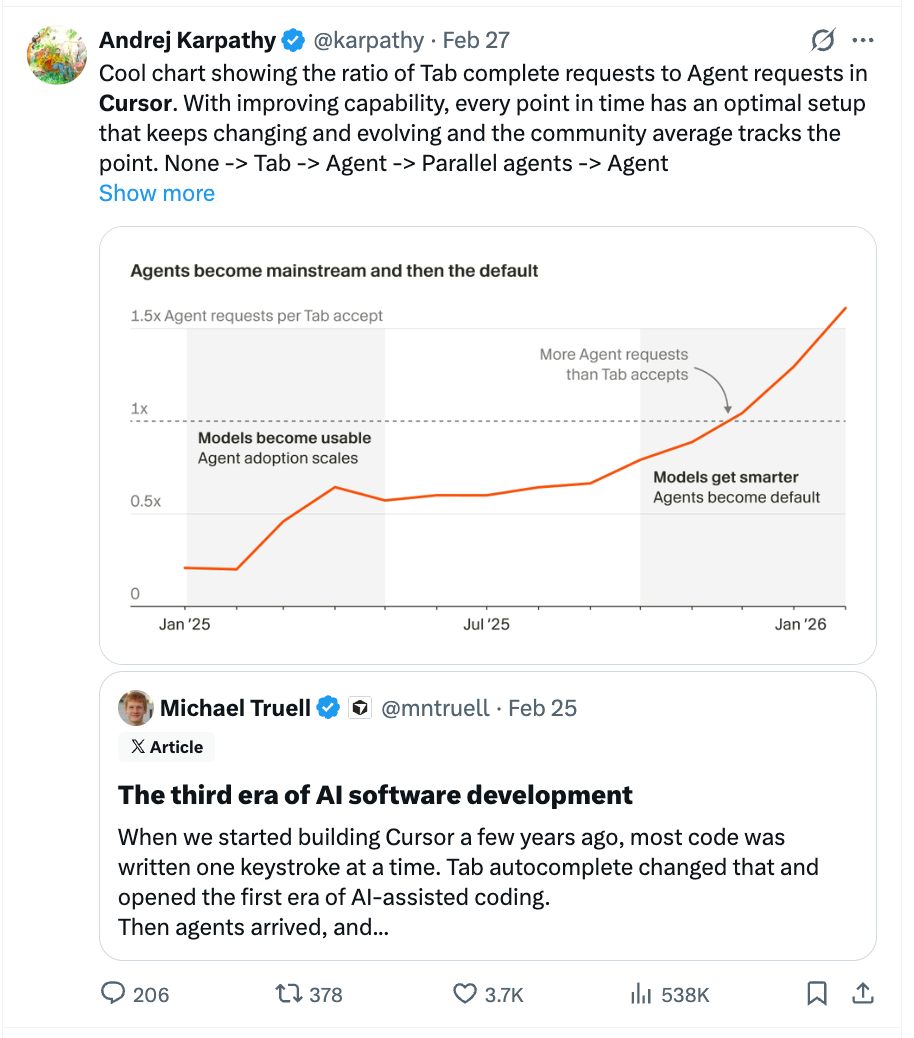
The true building block of an AI feature is the "agent"—a combination of the model, system prompts, tool descriptions, and feedback loops. Swapping an LLM is not a simple drop-in replacement; it breaks the agent's behavior and requires re-engineering the entire system around it.

In this software paradigm, user actions (like button clicks) trigger prompts to a core AI agent rather than executing pre-written code. The application's behavior is emergent and flexible, defined by the agent's capabilities, not rigid, hard-coded rules.
For years, Google has integrated AI as features into existing products like Gmail. Its new "Antigravity" IDE represents a strategic pivot to building applications from the ground up around an "agent-first" principle. This suggests a future where AI is the core foundation of a product, not just an add-on.

The 'agents vs. applications' debate is a false dichotomy. Future applications will be sophisticated, orchestrated systems that embed agentic capabilities. They will feature multiple LLMs, deterministic logic, and robust permission models, representing an evolution of software, not a replacement of it.

A new software paradigm, "agent-native architecture," treats AI as a core component, not an add-on. This progresses in levels: the agent can do any UI action, trigger any backend code, and finally, perform any developer task like writing and deploying new code, enabling user-driven app customization.
Instead of integrating with existing SaaS tools, AI agents can be instructed on a high-level goal (e.g., 'track my relationships'). The agent can then determine the need for a CRM, write the code for it, and deploy it itself.
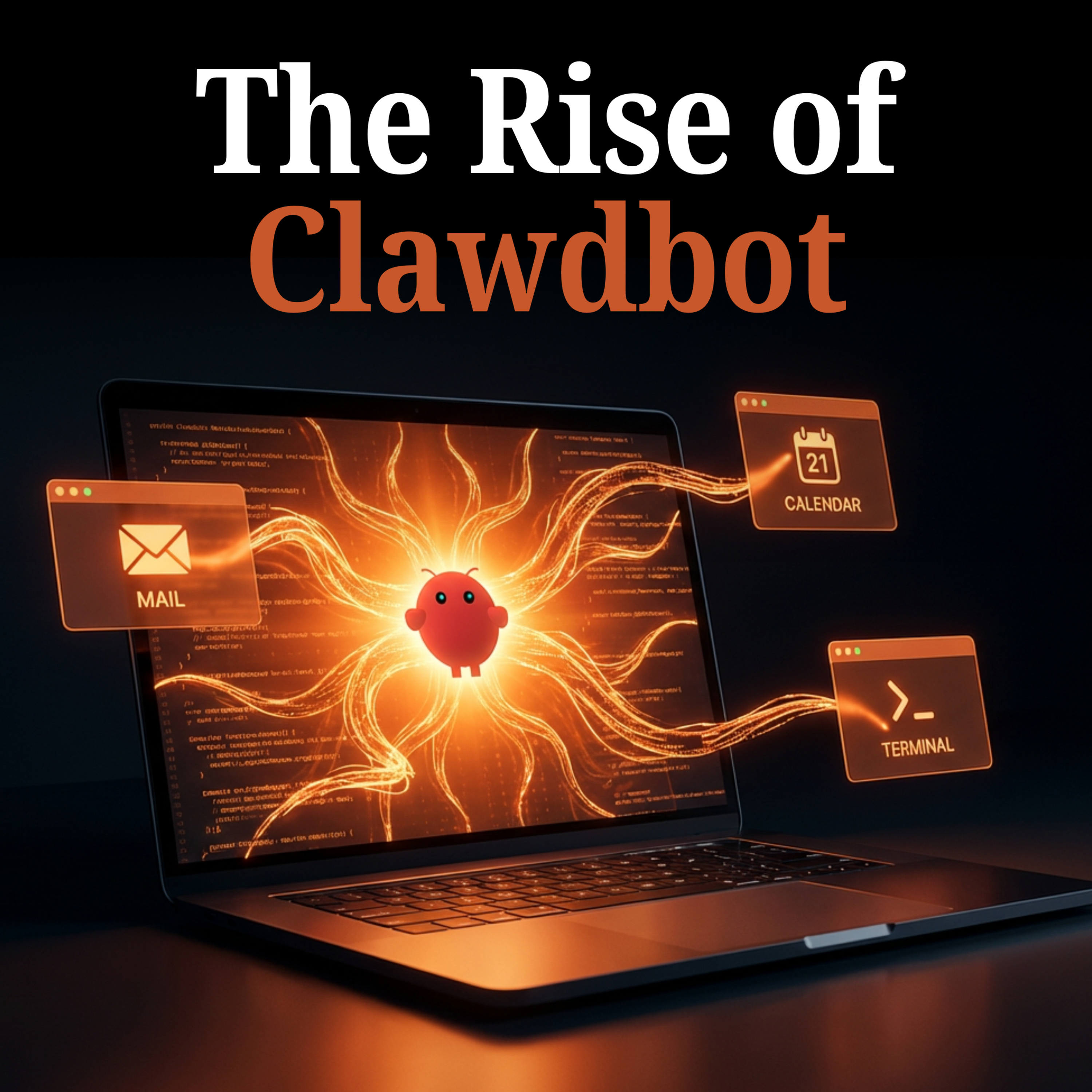
Unlike static tools, agents like Clawdbot can autonomously write and integrate new code. When faced with a new challenge, such as needing a voice interface or GUI control, it can build the required functionality itself, compounding its abilities over time.

The future interface for SaaS products won't just be a UI for humans or a REST API for machines. It will be an 'agent harness'—a rich environment of context, documentation, and skills that enables a customer's AI agent to expertly operate the product and extract maximum value.