Get your free personalized podcast brief
We scan new podcasts and send you the top 5 insights daily.
In fast-paced settings like professional basketball, verbal communication is too slow. Teams develop a shorthand of non-verbal cues and pre-agreed symbols to communicate complex ideas instantly, fostering the chemistry required for high performance. This model applies to any high-pressure professional environment.
Related Insights
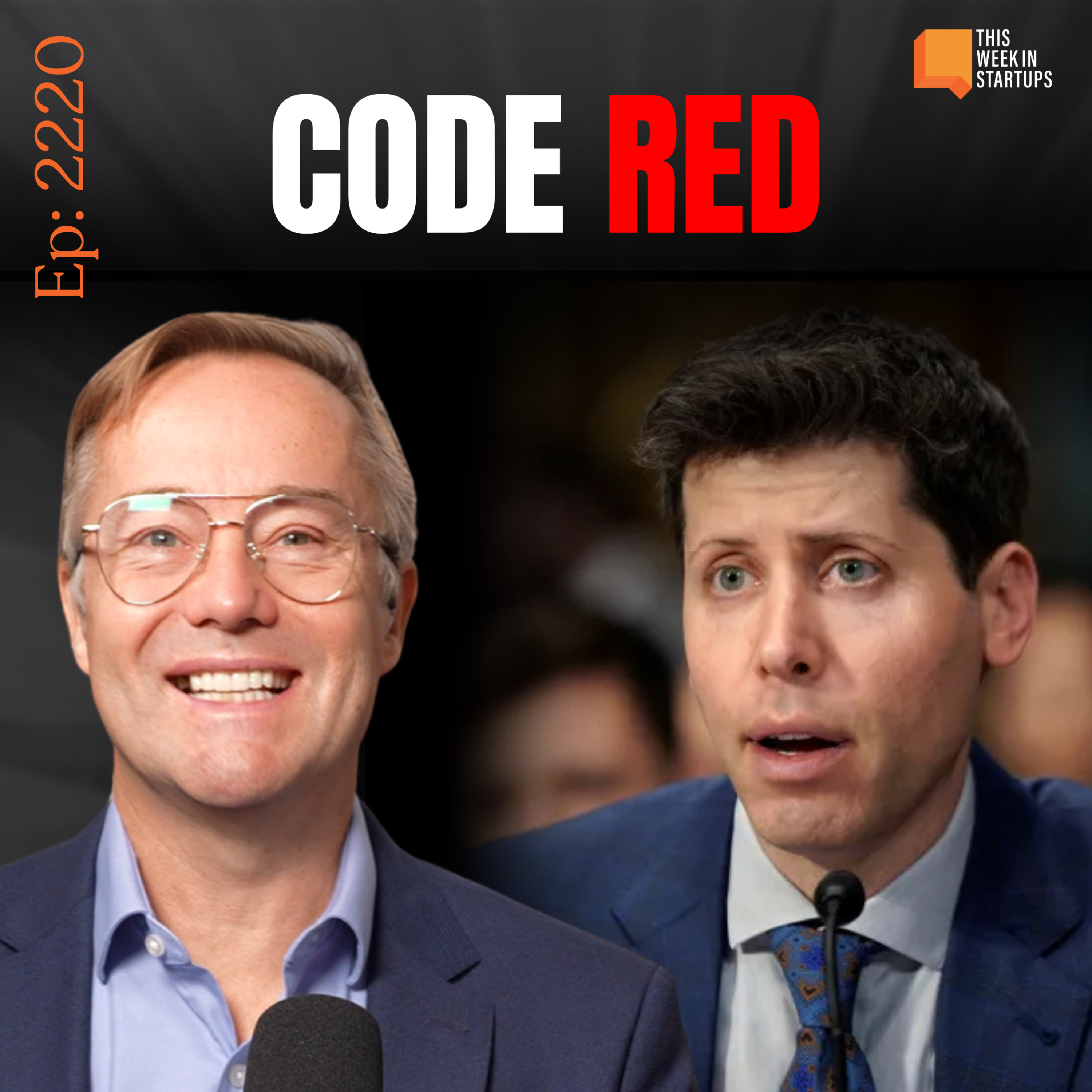
Calling a "code red" is a strategic leadership move used to shock the system. Beyond solving an urgent issue, it serves as a loyalty test to identify the most committed team members, build collective confidence through rapid problem-solving, and rally everyone against competitive threats.
The act of looking at someone's eyes—the part of them that does the looking—creates an unbreakable feedback loop of "I know you know I know..." This immediately establishes common knowledge, forcing a resolution to the social game being played, whether it's a threat, a challenge, or an invitation.

In fields like finance, communities with strong internal communication and vested interests make better long-term decisions than purely quantitative models. The group's "shared wisdom" provides a broader, more contextual view of risks and opportunities that myopic mathematical approaches often miss.
Communication effectiveness isn't just about clarity; it's about velocity. Using relentless follow-up and over-communication as an operating system creates an undeniable sense of momentum and importance. This system forces engagement and makes things happen, differentiating you from slower, more passive counterparts.
![Ari Emanuel - The Anti-AI Bet - [Invest Like the Best, EP.448] thumbnail](https://megaphone.imgix.net/podcasts/c5910280-c4dd-11f0-94be-ab6a7a5865b0/image/1e5a2263eb62fcde200846919e24419a.jpg?ixlib=rails-4.3.1&max-w=3000&max-h=3000&fit=crop&auto=format,compress)
Behaviors established in the very first meeting—like where people sit, who speaks first, and how much they contribute—tend to become permanent norms. This makes the initial formation period a critical, high-leverage opportunity to intentionally shape a group's culture for success, rather than letting it form by accident.
To introduce a new idea, a leader shouldn't dictate terms. Instead, they should pose it as a discussion topic and listen to the language the team uses (e.g., "cost of living" vs. "inflation"). Adopting their terminology builds shared understanding and makes people feel heard, which enables collective action.
The "99% Invisible" team uses shorthand phrases like "CWGHF" (Can We Get Here Faster?). This coded language transforms potentially harsh criticism into a shared, objective problem to solve, depersonalizing feedback and protecting creative morale during intense group edits.

In virtual settings, the lack of physical presence causes people to "over-index" on the few non-verbal cues available, like facial expressions. A leader's innocuous action, such as rubbing their face, can be misinterpreted as negativity. Leaders must be hyper-aware that their virtual body language is under a microscope.

Communication extends far beyond words. How you carry yourself—your posture, demeanor, and overall presence—is a constant broadcast that communicates your value and influence. Citing WNBA icon Lisa Leslie, Chiney Ogwumike argues this "physical communication" is as critical to one's professional brand as their spoken words.
Sending a quick text or email feels efficient in the moment, but it creates a long-term 'scavenger hunt' for information. High-performing teams establish a system where information is stored in a designated, easily retrievable place, even if it takes a few extra seconds upfront to save hours of searching later.
