Get your free personalized podcast brief
We scan new podcasts and send you the top 5 insights daily.
Instead of focusing on large platforms like destroyers, Saronic analyzes naval firepower through a startup lens: unit economics. By comparing the cost per Vertical Launch System (VLS) missile tube, they show how autonomous ships can deliver more firepower, faster, for less money.

Related Insights
The conflict in Ukraine exposed the vulnerability of expensive, "exquisite" military platforms (like tanks) to inexpensive technologies (like drones). This has shifted defense priorities toward cheap, mass-producible, "attritable" systems. This fundamental change in product and economics creates a massive opportunity for startups to innovate outside the traditional defense prime model.

Autonomy enables a first-principles redesign of vessels. By eliminating the need for human crews, ships can be built with fundamentally less steel and fewer labor hours, drastically reducing costs and build times compared to traditional naval platforms.

By vertically integrating, Saronic can optimize a ship's design for ease of manufacturing and simultaneously design the factory layout for that specific ship. This hardware-software co-design approach, common in chipmaking, is now being applied to heavy industry for massive efficiency gains.
Modern conflicts demonstrate that low-cost drones can effectively neutralize multi-million dollar missiles. This economic imbalance creates a massive market opportunity for tech companies that can produce cheaper, high-volume, and effective weapons systems.
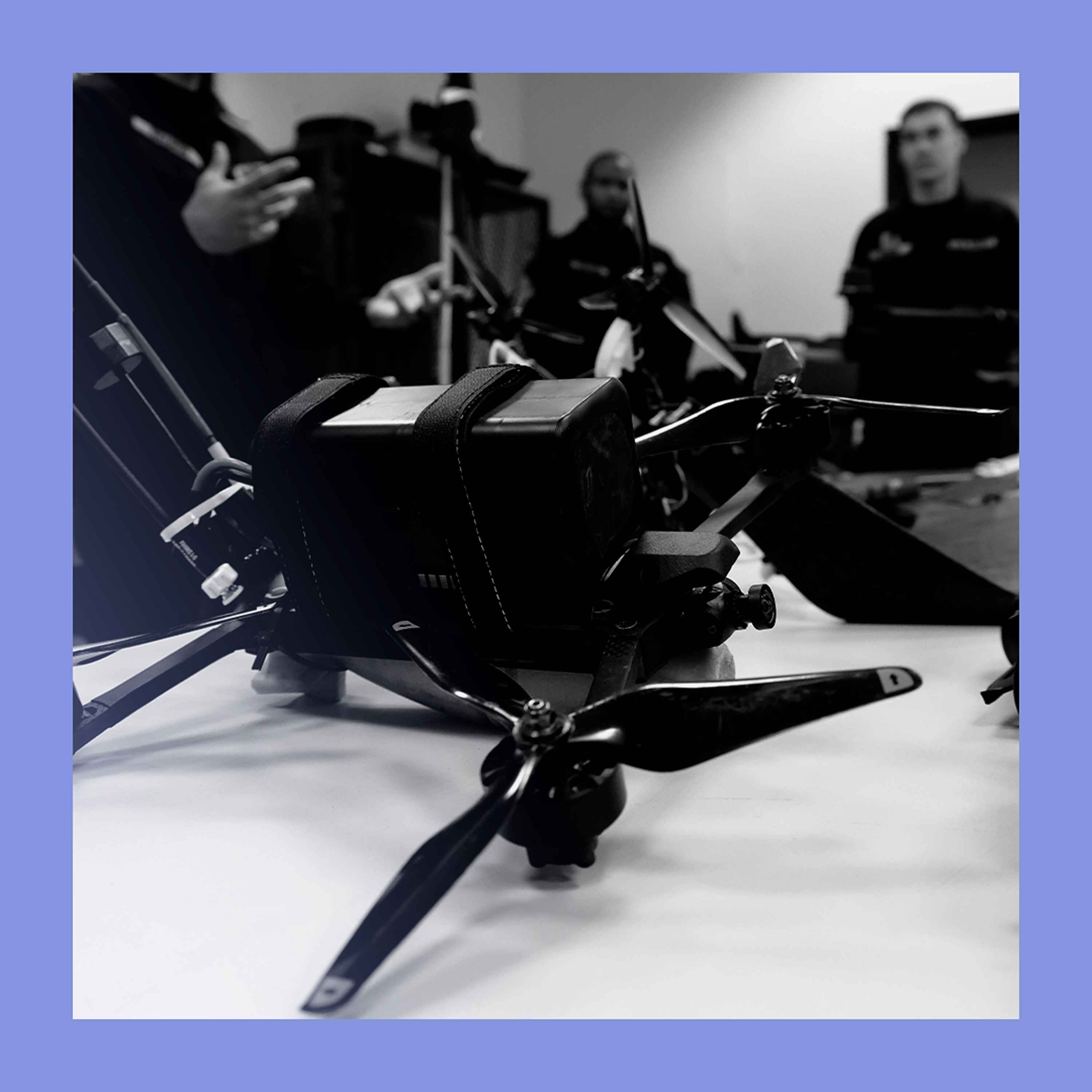
The Pentagon is moving away from decades-long, multi-billion dollar projects like aircraft carriers. The new focus is on mass-produced, attributable, low-cost systems like drones, which allows for faster innovation and deployment from new defense tech startups, not just the old primes.

Kleiner Perkins, a traditional venture capital firm, is leading a $1.5 billion round for defense startup Saronic. This signals a broader VC trend of moving beyond crowded software markets to invest in capital-intensive hardware businesses. Firms are betting that companies like Saronic can build monopoly-like, defensible positions similar to SpaceX.

Legacy defense contractors on "cost-plus" models are incentivized to increase costs to boost profits. This is the opposite of the startup model, which must innovate to deliver superior products faster and cheaper to gain market share, injecting much-needed competition into the sector.

Silicon Valley investors are backing companies building cheap, quickly manufacturable, and expendable ("attritable") systems like autonomous boats. The core innovation is the ability to rapidly scale production from one to 10,000 units, fundamentally changing warfighting economics away from expensive, long-cycle platforms like aircraft carriers.
The effectiveness of Ukrainian defense technology comes from its ability to dramatically lower the 'cost per shot' by orders of magnitude compared to legacy systems. This demonstrates that financial efficiency and adaptability, not just advanced features, are decisive on the modern battlefield.

The key benefit of unmanned vessels isn't just saving on crew. It's the ability to remove all human-centric subsystems (latrines, galleys, etc.), allowing for a complete redesign optimized for naval architecture, speed, range, and payload.