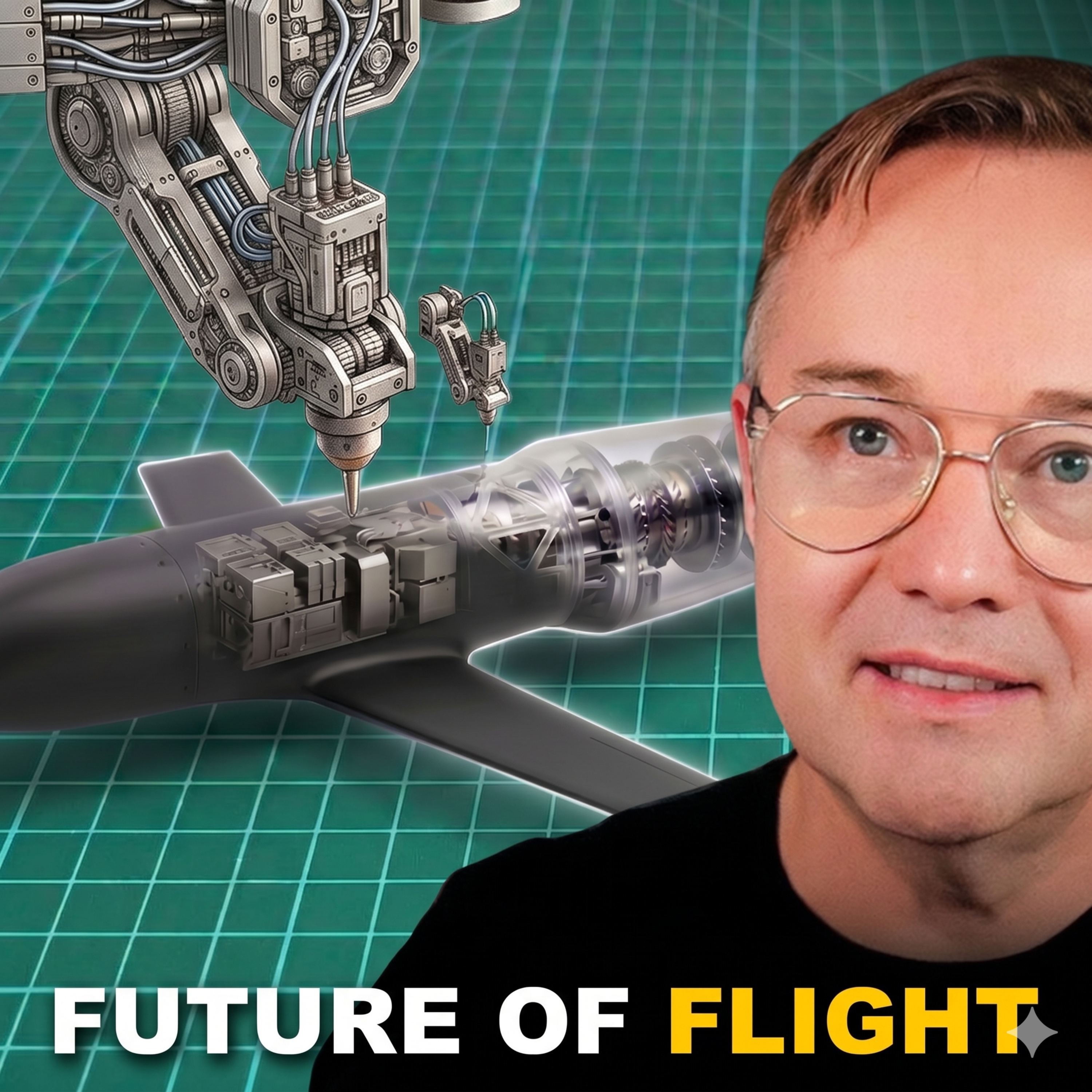
Divergent created a product-agnostic manufacturing system where factories can adaptively switch between vastly different products, like a car chassis or a missile airframe, using the same vertically integrated hardware. This creates a flexible, scalable industrial platform.
Divergent secured top-level government meetings by first shipping thousands of units and integrating into 20+ key programs. They act as an "infrastructure layer" for primes like Lockheed, making them a force multiplier rather than a threat, which accelerates adoption.
Thanks to a >10x improvement in cost productivity over the last decade, additive manufacturing (3D printing) has become the more affordable option for complex metal structures in aerospace and defense for production runs up to 10,000 units per year.
The widespread belief that depression stems from a chemical imbalance was a successful marketing hypothesis by drug companies, not a scientifically proven fact. After 60 years of research, no consistent evidence supports the theory, yet it drove massive antidepressant adoption.
Because of receptor saturation, the effect of antidepressants on the brain is not linear. The final few milligrams have a massive impact. Safe tapering requires a hyperbolic curve—making progressively smaller dose reductions to avoid a "cliff-edge" withdrawal effect.
When patients stop antidepressants, they often experience severe withdrawal symptoms like panic attacks and insomnia. Doctors, trained to look for relapse, frequently misinterpret these as a return of the underlying illness, creating a cycle of unnecessary long-term medication.
Mark Zuckerberg revealed Meta is using monitoring software to capture how its employees perform tasks. The goal is to use this data from a high-intelligence workforce to train its AI, particularly for coding, creating a unique and potentially powerful competitive advantage.
Research shows that when patients are told they have a chemical imbalance, they feel less in control of their recovery and become more reliant on medication. Framing depression as a manageable response to life stressors fosters a greater sense of agency and optimism.
Outro Health found a viable go-to-market strategy for helping people get off antidepressants by billing under existing, reimbursed "medication management" services. This avoids the need to create a new payment model, piggybacking on established healthcare infrastructure.
Legacy defense contractors on "cost-plus" models are incentivized to increase costs to boost profits. This is the opposite of the startup model, which must innovate to deliver superior products faster and cheaper to gain market share, injecting much-needed competition into the sector.
A primary effect reported by users of antidepressants is emotional numbing, where the full spectrum of feelings is compressed. While this reduces extreme anxiety, it also impairs positive emotions, impacting creativity, relationships, and overall engagement with life—a significant trade-off.
Additive manufacturing enables a new paradigm for military supply chains. Small plastic and metal 3D printers can be placed in standard shipping containers (CONEX boxes) near the front lines, allowing for on-demand production of drones and munitions, increasing responsiveness.