Get your free personalized podcast brief
We scan new podcasts and send you the top 5 insights daily.
Autonomy enables a first-principles redesign of vessels. By eliminating the need for human crews, ships can be built with fundamentally less steel and fewer labor hours, drastically reducing costs and build times compared to traditional naval platforms.

Related Insights
Rather than just replacing drivers, autonomy will allow logistics to operate 24/7 during the midnight-to-8am "third shift." This will dramatically increase the world's operational intensity and create new demand as automation drives down costs and enables services that were previously too expensive.

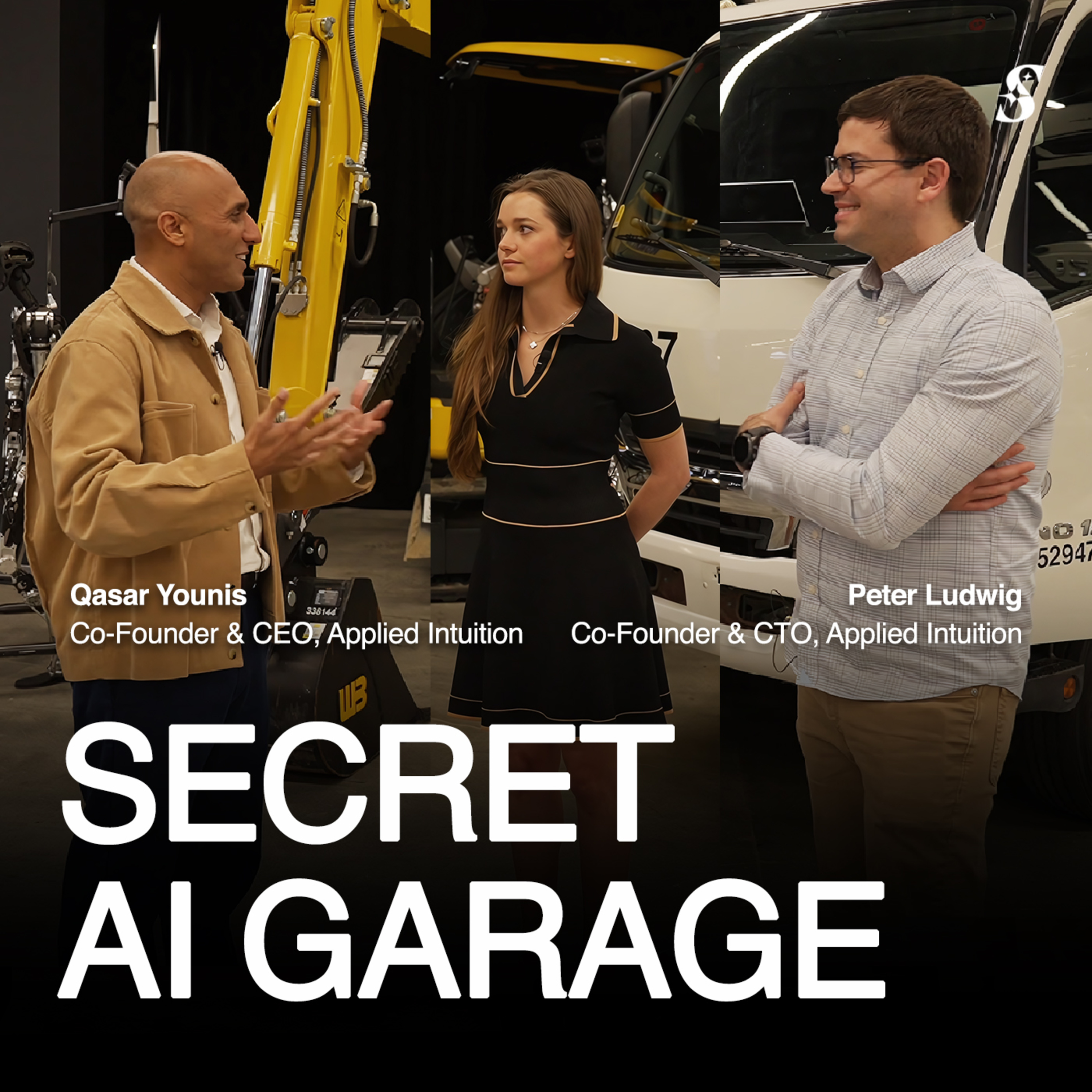
Applied Intuition uses the same fundamental software platform across cars, trucks, boats, and construction equipment. This is possible because all are machines interacting with the physical world governed by consistent laws of physics, enabling a scalable "Teslification" of multiple industrial sectors with a single core technology.
Modern factories like Hadrian's use software not just for automation but for agility. This allows them to quickly reconfigure production lines for small batches of highly varied parts ('high mix, low volume'), a necessity for complex systems like submarines where components are not mass-produced.
The core bottleneck in construction isn't design intelligence but the high cost and stagnant productivity of manual labor. The most promising application of AI is not designing more clever prefabricated buildings, but powering robots to automate physical tasks, finally addressing the industry's decades-long productivity problem.

Palantir is applying AI software to US shipyards to dramatically accelerate production. The technology has reduced planning processes that previously took hundreds of man-hours per week to just 10 minutes, and manufacturing bill of materials generation from 200 hours to 12 seconds, aiming to overcome production bottlenecks.

By automating mechanical build tasks, AI liberates significant time in the development cycle. Teams can reallocate this time to more strategic upstream activities like planning and exploration, and downstream refinement, focusing on high-quality craft and polish.

The mining industry has historically driven down costs by using ever-larger machinery to reduce labor intensity. However, full autonomy will flip this paradigm, enabling smaller, more precise 'swarm mining' robots. This unlocks new, more selective operating modes that are impossible with human-operated mega-trucks.

Traditional vehicles have complex, disparate wiring and compute systems. Applied Intuition first simplifies this into a centralized "one box" architecture, which is a necessary step before they can effectively deploy advanced autonomy and AI capabilities, much like developing apps for a modern smartphone.
Silicon Valley investors are backing companies building cheap, quickly manufacturable, and expendable ("attritable") systems like autonomous boats. The core innovation is the ability to rapidly scale production from one to 10,000 units, fundamentally changing warfighting economics away from expensive, long-cycle platforms like aircraft carriers.
The economic case for autonomous trucks isn't just saving on driver salary. By designing a "cab-less" vehicle from scratch, the entire truck becomes lighter and cheaper to build, allowing the total equipment cost to be competitive with traditional diesel trucks.