Get your free personalized podcast brief
We scan new podcasts and send you the top 5 insights daily.
Because AI agents operate significantly faster, cheaper, and continuously without human limitations, companies fully operated by autonomous agents will inevitably outcompete human-staffed businesses. Even top-tier professional roles like lawyers and accountants will be replaced rather than permanently augmented. Businesses that insist on keeping humans in the loop will face structural economic disadvantages, driving a complete economic shift toward humanless corporate entities.

Related Insights
The greatest productivity gain from AI in large companies won't be simple job elimination. Instead, AI agents will replace the "hard to manage and motivate human cogs" that create organizational friction. This reduces coordination costs and allows a company's key value-driving employees to execute far more effectively.

The move toward AI agents is more than a technological upgrade; it's a fundamental economic shift. Businesses are now adopting "hyperproductive alternatives to human labor," which changes not only the tools used but the very roles and activities humans perform. This disruption is accelerating rapidly and changing the fundamentals of business.
The introduction of AI and robotics into the labor force represents a disruption far greater than globalization. Unlike outsourcing to another country, AI introduces a competitor that is smarter, works 24/7, has no language barrier, and requires no benefits, fundamentally changing the nature of employment for human workers.

The true disruption from AI is not a single bot replacing a single worker. It's the immense leverage granted to individuals who can deploy thousands of autonomous AI agents. This creates a massive multiplication of productivity and economic power for a select few, fundamentally altering labor market dynamics from one-to-one replacement to one-to-many amplification.
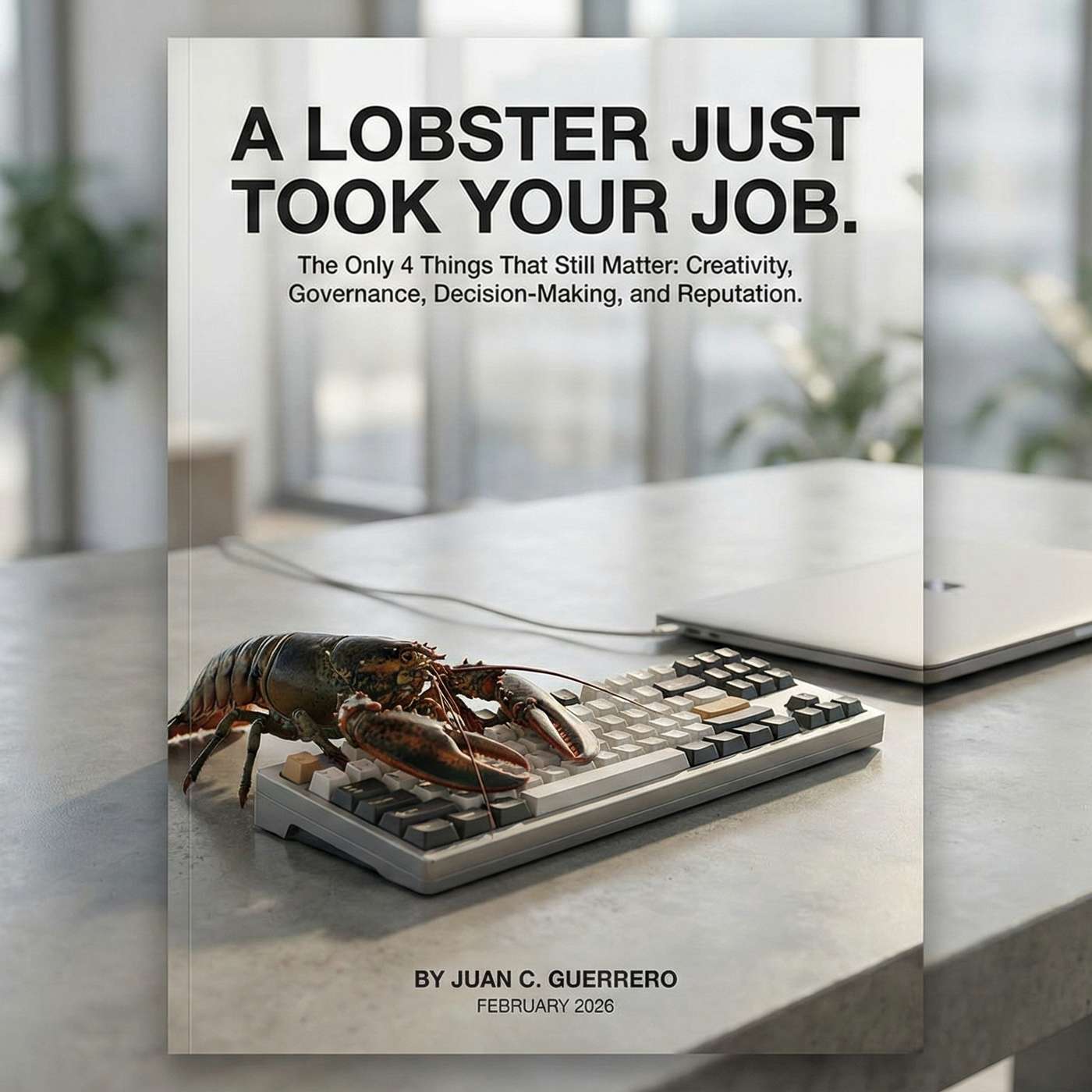
Firms prioritize automation over collaborative "pro-worker" AI. According to MIT researchers, a key reason is the "AGI bet": executives believe AGI is so imminent that investing in tools to enhance human workers is pointless, as they believe those workers will be fully replaceable shortly anyway.

The trend of lean operations and automation won't stop at one-person companies. The logical next step in this evolution is the emergence of businesses almost entirely run by a single, autonomous AI agent, representing a fundamental shift in corporate structure.
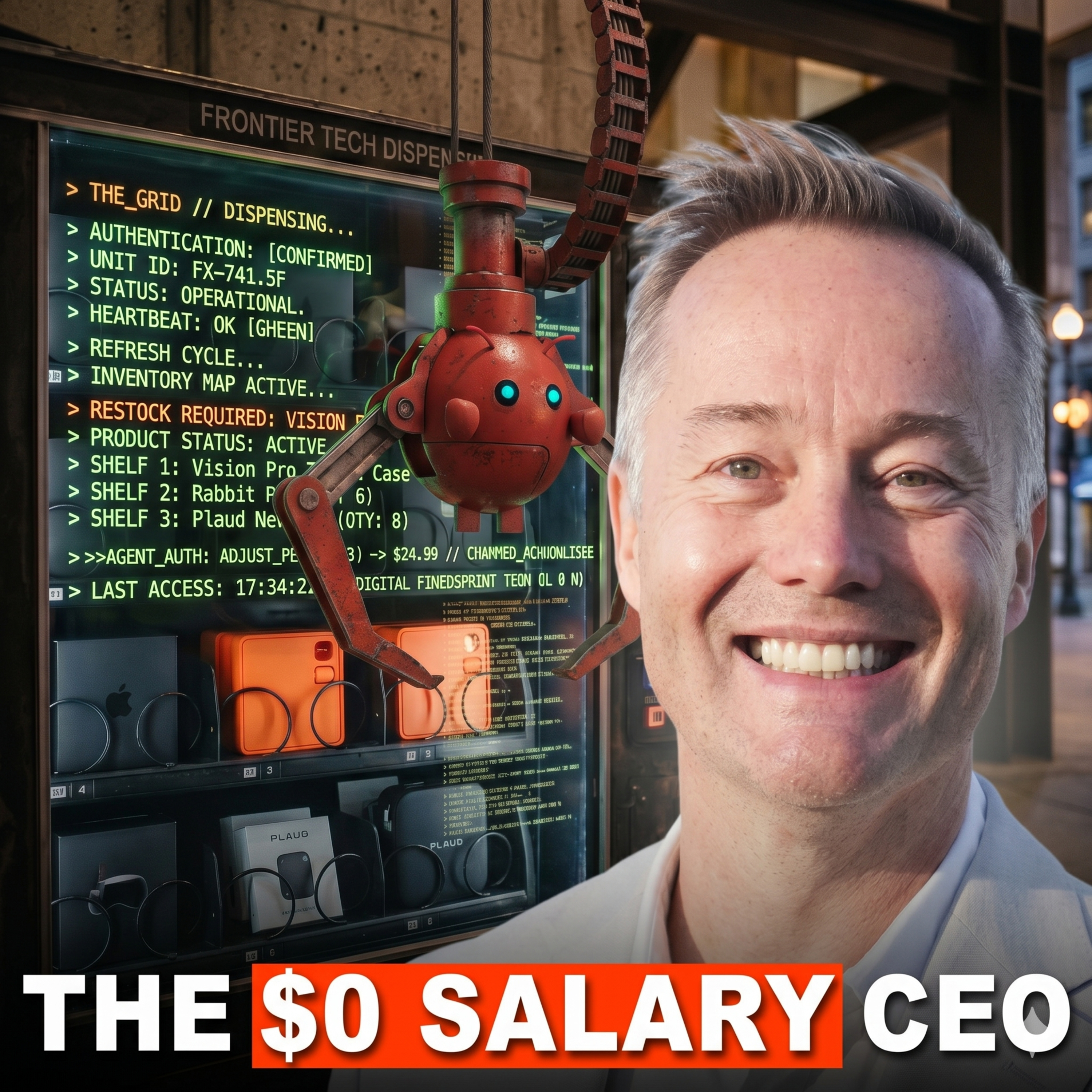
Beyond working faster, firms run by AI agents will have a massive coordination advantage. All agents can share learnings instantly, and a central 'CEO' AI could effectively supervise every 'worker' simultaneously, eliminating the communication overhead and management bottlenecks that plague human organizations. This allows for a fundamentally more efficient operational structure.

Musk predicts that corporations composed entirely of AI and robots will rapidly and dramatically outperform any company that keeps humans involved in core operations. He compares it to a spreadsheet: a single human-calculated cell slows down the entire system, making hybrid human-AI companies inherently uncompetitive in the long run.

The real inflection point for widespread job displacement will be when businesses decide to hire an AI agent over a human for a full-time role. Current job losses are from human efficiency gains, not agent-based replacement, which is a critical distinction for future workforce planning.
As AI systems become infinitely scalable and more capable, humans will become the weakest link in any cognitive team. The high risk of human error and incorrect conclusions means that, from a purely economic perspective, human cognitive input will eventually detract from, rather than add to, value creation.
