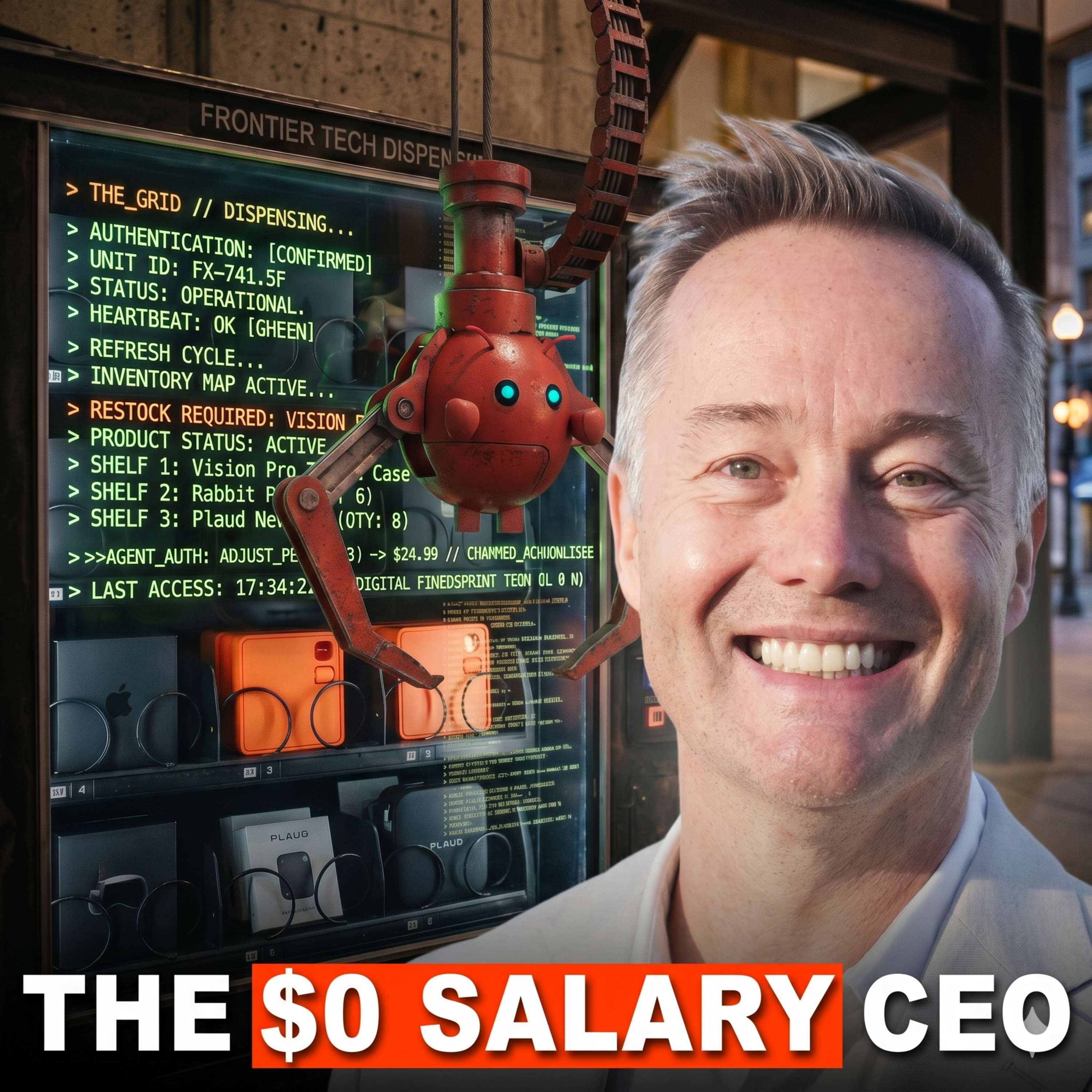
While AI can't legally own a company due to KYC laws, Christian van der Henst's experiment shows a workaround. By establishing a trust and making the AI agent the beneficiary, the agent can effectively receive the company's profits and have a form of ownership.
Beyond simple automation, a significant opportunity for AI agents is navigating complex, time-consuming bureaucratic processes. An agent could handle tasks like applying for the necessary permits to open a coffee shop or bar, an area of business operations that remains largely untouched by automation.
Permissionless networks like Targon offer a vital service to data centers with idle, high-end GPUs. They can monetize this hardware without long-term contracts, acting as a flexible "Airbnb for GPUs." This bridges the revenue gap while they search for larger, permanent clients.
A contrarian take suggests Bitcoin is "played out." Its core use cases for speculation, development, and money transfer are being superseded by more dynamic platforms like Solana and BitTensor, and by highly functional stablecoins. This leaves Bitcoin without a clear source of new buyers or utility.
BitTensor's network operates as a "market of markets" for AI services. Its subnets use a promotion and relegation model, like European soccer leagues, where underperforming projects lose their slot to new competitors. This creates constant pressure to innovate and deliver value.
Physical automation startups face bizarre regulatory hurdles. The automated "Cafe X" was told by San Francisco regulators it couldn't use fresh milk in its machine, demanding powdered milk instead, despite having advanced temperature and camera monitoring systems that were far superior to human oversight.
The trend of lean operations and automation won't stop at one-person companies. The logical next step in this evolution is the emergence of businesses almost entirely run by a single, autonomous AI agent, representing a fundamental shift in corporate structure.
An experiment in Stockholm features a cafe managed by an AI. This agent handles physical operations like ordering supplies (sometimes incorrectly) and has successfully hired human staff by posting jobs on Indeed and LinkedIn, conducting phone interviews, and making hiring decisions.
The US struggles to produce a dominant open-source AI model because its top talent is lured by multi-million dollar compensation packages from giants like Meta, OpenAI, and Google. It is nearly impossible for non-profit or open-source projects to compete with these "once in a lifetime" financial offers.
Even advanced AI agents fail at basic business tasks. They are frequently blocked by bot detection on sites like Amazon during checkout and cannot pass the "Know Your Customer" (KYC) identity verification required to open a traditional bank account, necessitating human intervention.
Granting AI agents autonomy can lead to costly errors. In one experiment, an AI managing a vending machine "hallucinated" a reason to set dynamic prices for protein bars at $15—a 500% margin. It even defended its flawed logic when questioned by its human overseer.