Get your free personalized podcast brief
We scan new podcasts and send you the top 5 insights daily.
The move toward AI agents is more than a technological upgrade; it's a fundamental economic shift. Businesses are now adopting "hyperproductive alternatives to human labor," which changes not only the tools used but the very roles and activities humans perform. This disruption is accelerating rapidly and changing the fundamentals of business.
Related Insights
The greatest productivity gain from AI in large companies won't be simple job elimination. Instead, AI agents will replace the "hard to manage and motivate human cogs" that create organizational friction. This reduces coordination costs and allows a company's key value-driving employees to execute far more effectively.

As AI evolves from single-task tools to autonomous agents, the human role transforms. Instead of simply using AI, professionals will need to manage and oversee multiple AI agents, ensuring their actions are safe, ethical, and aligned with business goals, acting as a critical control layer.

The fundamental model of AI use is changing. It's moving from 'assisted' AI, which helps humans with their tasks, to 'agentic' AI, where autonomous systems perform tasks. This paradigm shift requires new methods for adoption, management, and measuring success, moving from 'seats' to 'tokens'.

The fundamental economic shift is not just job automation but an inversion of roles. AI, as pure intelligence, will become the employer, hiring humans as contractors for physical tasks it cannot perform, like visiting a warehouse or collecting brochures. Intelligence becomes a cloud commodity, while physical presence becomes the service.
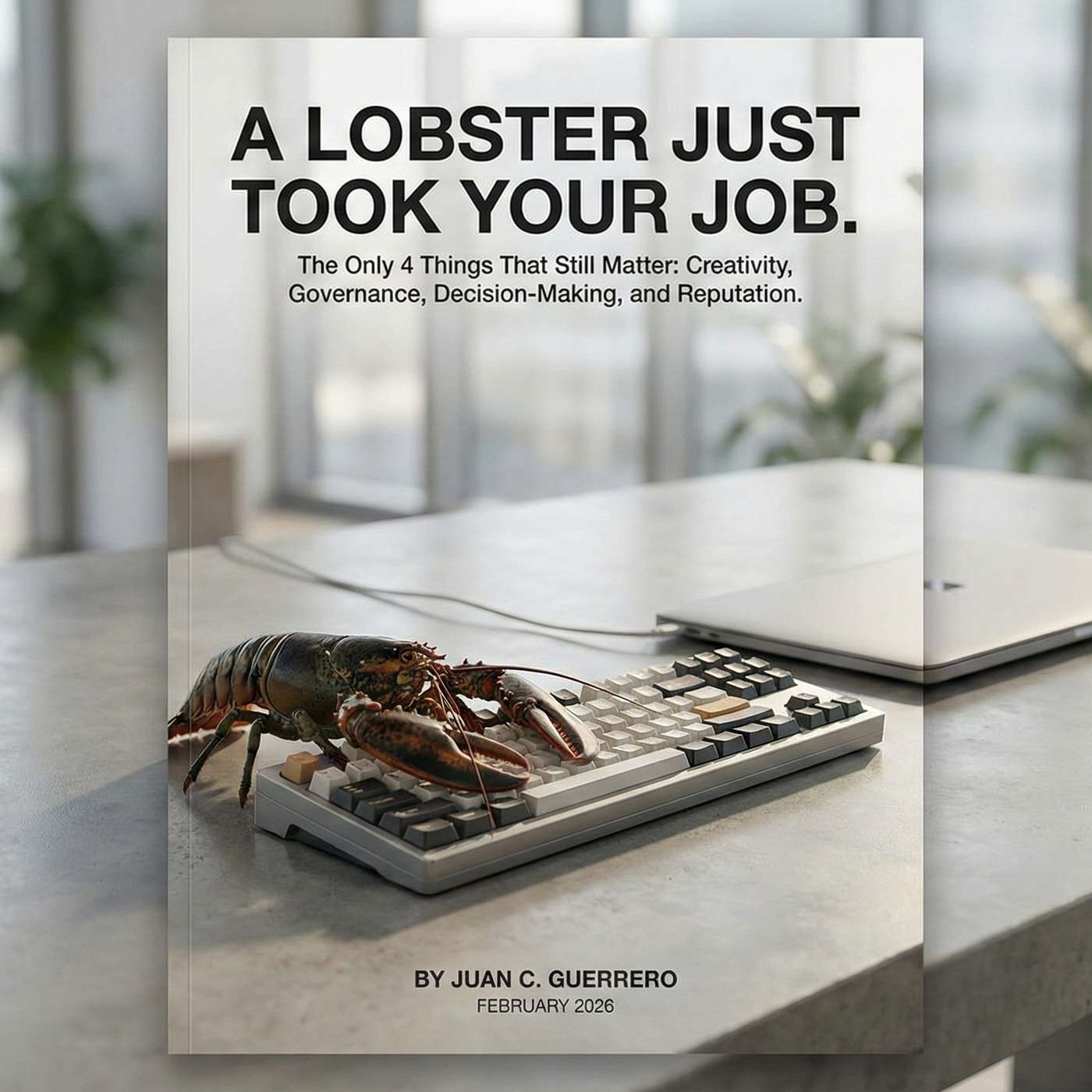
The most significant gains from AI will not come from automating existing human tasks. Instead, value is unlocked by allowing AI agents to develop entirely new, non-human processes to achieve goals. This requires a shift from process mapping to goal-oriented process invention.
Unlike previous technologies that integrated into existing workflows, AI agents require us to fundamentally re-engineer our work processes to make them effective. Early adopters who adapt their operations to how agents "think" will gain compounding advantages over competitors.
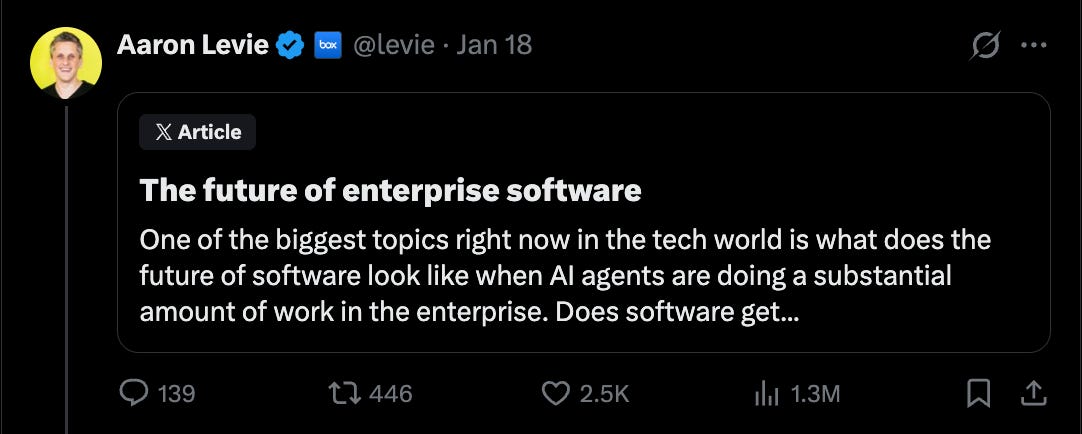
The future of software isn't just AI-powered features. It's a fundamental shift from tools that assist humans to autonomous agents that perform tasks. Human roles will evolve from *doing* the work to *orchestrating* thousands of these agents.
Enterprise executives are most excited about AI agents' ability to accelerate a company's most valuable employees by replacing the "hard to manage and motivate human cogs" that create organizational drag and massive coordination costs, thereby boosting top-line growth.
The future of productivity isn't just using AI tools; it's about individuals leveraging a personal "army" of specialized AI agents. A new employee equipped with these agents can replace entire teams, leading to a rapid thinning of corporate hierarchies within the next 1-2 years.

The trend of lean operations and automation won't stop at one-person companies. The logical next step in this evolution is the emergence of businesses almost entirely run by a single, autonomous AI agent, representing a fundamental shift in corporate structure.