Get your free personalized podcast brief
We scan new podcasts and send you the top 5 insights daily.
OpenAI has publicly acknowledged that the em-dash has become a "neon sign" for AI-generated text. They are updating their model to use it more sparingly, highlighting the subtle cues that distinguish human from machine writing and the ongoing effort to make AI outputs more natural and less detectable.

Related Insights
While AI tools once gave creators an edge, they now risk producing democratized, undifferentiated output. IBM's AI VP, who grew to 200k followers, now uses AI less. The new edge is spending more time on unique human thinking and using AI only for initial ideation, not final writing.
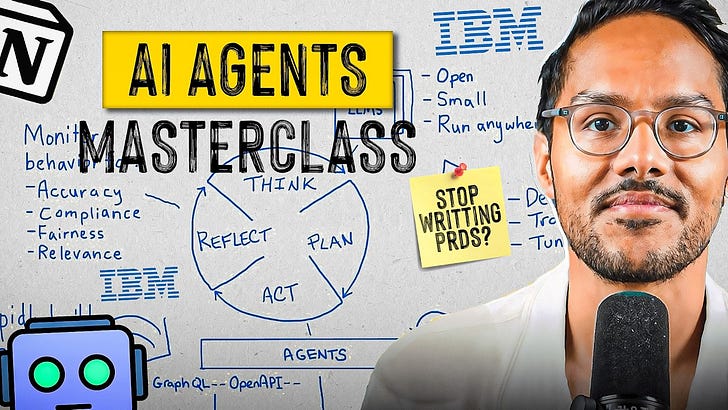
In the age of AI, the new standard for value is the "GPT Test." If a person's public statements, writing, or ideas could have been generated by a large language model, they will fail to stand out. This places an immense premium on true originality, deep insight, and an authentic voice—the very things AI struggles to replicate.

AI's unpredictability requires more than just better models. Product teams must work with researchers on training data and specific evaluations for sensitive content. Simultaneously, the UI must clearly differentiate between original and AI-generated content to facilitate effective human oversight.

Earlier AI models would praise any writing given to them. A breakthrough occurred when the Spiral team found Claude 4 Opus could reliably judge writing quality, even its own. This capability enables building AI products with built-in feedback loops for self-improvement and developing taste.

AI-generated text often falls back on clichés and recognizable patterns. To combat this, create a master prompt that includes a list of banned words (e.g., "innovative," "excited to") and common LLM phrases. This forces the model to generate more specific, higher-impact, and human-like copy.
When an LLM produces text with the wrong style, re-prompting is often ineffective. A superior technique is to use a tool that allows you to directly edit the model's output. This act of editing creates a perfect, in-context example for the next turn, teaching the LLM your preferred style much more effectively than descriptive instructions.
OpenAI's GPT-5.1 update heavily focuses on making the model "warmer," more empathetic, and more conversational. This strategic emphasis on tone and personality signals that the competitive frontier for AI assistants is shifting from pure technical prowess to the quality of the user's emotional and conversational experience.

As models mature, their core differentiator will become their underlying personality and values, shaped by their creators' objective functions. One model might optimize for user productivity by being concise, while another optimizes for engagement by being verbose.
Research highlights "work slop": AI output that appears polished but lacks human context. This forces coworkers to spend significant time fixing it, effectively offloading cognitive labor and damaging perceptions of the sender's capability and trustworthiness.
Instead of forcing AI to be as deterministic as traditional code, we should embrace its "squishy" nature. Humans have deep-seated biological and social models for dealing with unpredictable, human-like agents, making these systems more intuitive to interact with than rigid software.