Get your free personalized podcast brief
We scan new podcasts and send you the top 5 insights daily.
Users despise AI "slop" but admire the "farmer" who creates. This paradox highlights a tension: is an AI content creator still a noble artisan, or just a purveyor of low-quality feed for the masses? The value of "craft" is being re-evaluated.

Related Insights
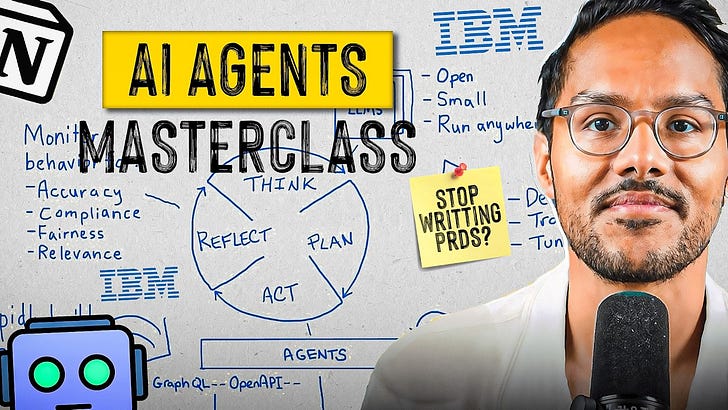
While AI tools once gave creators an edge, they now risk producing democratized, undifferentiated output. IBM's AI VP, who grew to 200k followers, now uses AI less. The new edge is spending more time on unique human thinking and using AI only for initial ideation, not final writing.
The internet's value stems from an economy of unique human creations. AI-generated content, or "slop," replaces this with low-quality, soulless output, breaking the internet's economic engine. This trend now appears in VC pitches, with founders presenting AI-generated ideas they don't truly understand.

Figma CEO Dylan Field argues that while AI can quickly generate "good enough" results, this baseline is no longer sufficient. As AI floods the market with generic software and designs, true differentiation will come from human-led craft, taste, and pushing beyond the initial AI output.
Users are dissatisfied with purely AI-generated creative outputs like interior design, calling it "slop." This creates an opportunity for platforms that blend AI's efficiency with a human's taste and curation, for which consumers are willing to pay a premium.
Sam Altman argues the AI vs. human content debate is a false dichotomy. The dominant creative form will be a hybrid where humans use AI as a tool. Consumers will ultimately judge content on its quality and originality ('is it slop?'), not on its method of creation.

As AI drives the cost of content creation to zero, the world floods with 'average' material. In this environment, the most valuable and scarce skill becomes 'taste'—the ability to identify, curate, and champion high-quality, commercially viable work. This elevates the role of human curators over pure creators.
![Ari Emanuel - The Anti-AI Bet - [Invest Like the Best, EP.448] thumbnail](https://megaphone.imgix.net/podcasts/c5910280-c4dd-11f0-94be-ab6a7a5865b0/image/1e5a2263eb62fcde200846919e24419a.jpg?ixlib=rails-4.3.1&max-w=3000&max-h=3000&fit=crop&auto=format,compress)
As AI makes content creation easy, a cultural divide emerges. 'Lowbrow' culture imitates machines (e.g., using LLM-like speech). 'Highbrow' culture deliberately creates 'machine-resistant' art and communication to distinguish human effort and creativity from automated output.
The negative perception of current AI-generated content ('slop') overlooks its evolutionary nature. Today's low-quality output is a necessary step towards future sophistication and can be a profitable business model, as it represents the 'sloppiest' AI will ever be.

The concept of "taste" is demystified as the crucial human act of defining boundaries for what is good or right. An LLM, having seen everything, lacks opinion. Without a human specifying these constraints, AI will only produce generic, undesirable output—or "AI slop." The creator's opinion is the essential ingredient.

While professional engineers focus on craft and quality, the average user is satisfied if an AI tool produces a functional result, regardless of its underlying elegance or efficiency. This tendency to accept "good enough" output threatens to devalue the meticulous work of skilled developers.
