Get your free personalized podcast brief
We scan new podcasts and send you the top 5 insights daily.
The idea of a single world government, once seen as the logical end to prevent war, is now considered unachievable and undesirable. Deep cultural divisions and current political dysfunction make the prospect of subordinating national sovereignty to a global body seem genuinely unthinkable outside of a dystopian context.

Related Insights
A world order based on coercion invites backlash. Weaker nations, when oppressed by a single superpower, will band together and use surreptitious methods to disrupt and weaken the hegemon. Civilization itself is a model of the weak uniting against the strong.

The current global disarray is often misdiagnosed. The system truly at risk is the deeper, 80-year-old framework created post-WWII to prevent great power war. This is a more profound rupture than the fraying of the 30-year-old, US-led post-Cold War order.

For generations, Western societies have viewed peace and prosperity as the default state. This perception is a historical outlier, making the return to 'dog eat dog' great power politics seem shocking, when in fact it's a reversion to the historical norm of conflict.

History shows that major transformations of the international order, like the League of Nations or the UN/Bretton Woods system, only gain sufficient political will after the devastation of a global war. The failed attempt to reset after the Cold War suggests that without such a cataclysm, only small, incremental changes are possible.

While a unipolar world led by one's own country is advantageous, a multipolar world with competing powers like the U.S. and China creates a dynamic tension. This competition may force more compromised global decisions, potentially leading to a more balanced, albeit more tense, international system than one dominated by a single unchallenged power.

Author Robert Kaplan uses the Weimar Republic not to predict another Hitler, but as an analogy for a world in permanent crisis. Technology has shrunk the globe, creating a claustrophobic, anxious environment where no single power is in control, leading to constant paralysis rather than a clear authoritarian outcome.
The proximity to WWII created a powerful sense of restraint among world leaders in the 1960s. Today, that lived memory is gone. The absence of a deep, culturally ingrained fear of total war has eroded the political will for peace, making the world more dangerous.
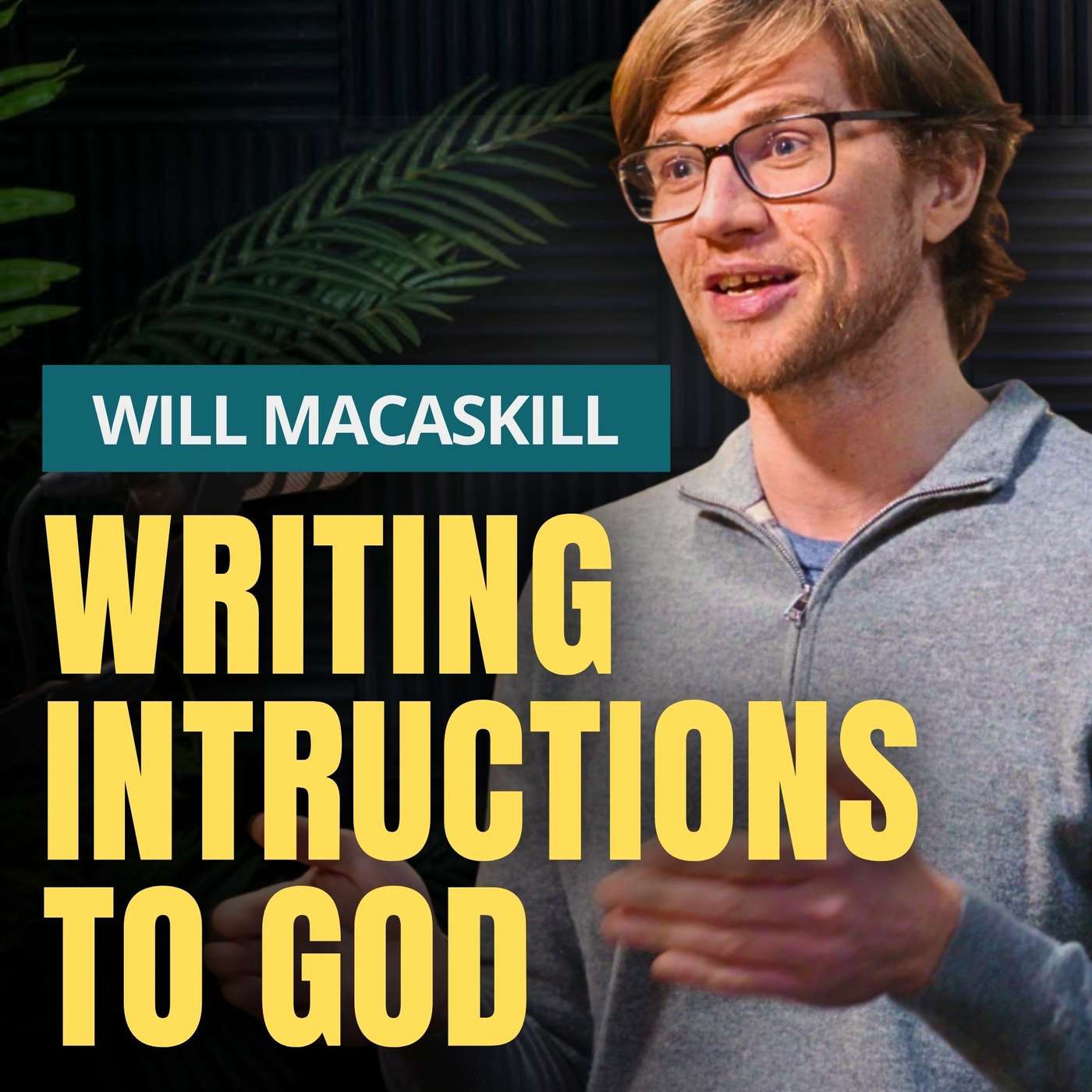
Utopian visions often lead to dystopia because we can't accurately define an ideal future. A better goal is "Viatopia"—a societal state that isn't the final destination but a stable waypoint from which we can safely navigate to a near-best future. It prioritizes a good decision-making process over a specific outcome.
The last 80 years of a rules-based international order was an exception, not the norm. The world is reverting to its historical state of raw power politics, where nations act out of self-interest and military strength.

History shows that most attempts to design a perfect utopia age poorly, often appearing dystopian. A more robust goal, termed 'viatopia' by philosopher Will MacAskill, is to create conditions that improve civilization's ability to navigate to the best possible future, preserving options rather than locking in a specific end-state.
