Get your free personalized podcast brief
We scan new podcasts and send you the top 5 insights daily.
History shows that most attempts to design a perfect utopia age poorly, often appearing dystopian. A more robust goal, termed 'viatopia' by philosopher Will MacAskill, is to create conditions that improve civilization's ability to navigate to the best possible future, preserving options rather than locking in a specific end-state.

Related Insights
Top-down mandates from authorities have a history of being flawed, from the food pyramid to the FDA's stance on opioids. True progress emerges not from command-and-control edicts but from a decentralized system that allows for thousands of experiments. Protecting the freedom for most to fail is what allows a few breakthrough ideas to succeed and benefit everyone.

Entrepreneurs can often bend the world to their will, but it's crucial to differentiate what they *wish* will happen versus what *must* happen due to inevitable trends. Building on the 'must happen' landscape provides a more robust foundation for a startup's long-term success.
Pervasive anxiety about the future stems from its uncertainty. Oxford philosopher Carissa Véliz reframes this uncertainty as good news. A future that isn't written is a future that can be influenced. This means we possess the agency to intervene and create a better world, an opportunity that a fully predictable future would eliminate.

Aligning AI with a specific ethical framework is fraught with disagreement. A better target is "human flourishing," as there is broader consensus on its fundamental components like health, family, and education, providing a more robust and universal goal for AGI.

Traditional "flexible" lab design pre-engineers for every possible future scenario, which is expensive and rigid. A smarter approach is "adaptability": consciously designing pathways and leaving space for future technology without over-investing in systems that may quickly become obsolete.
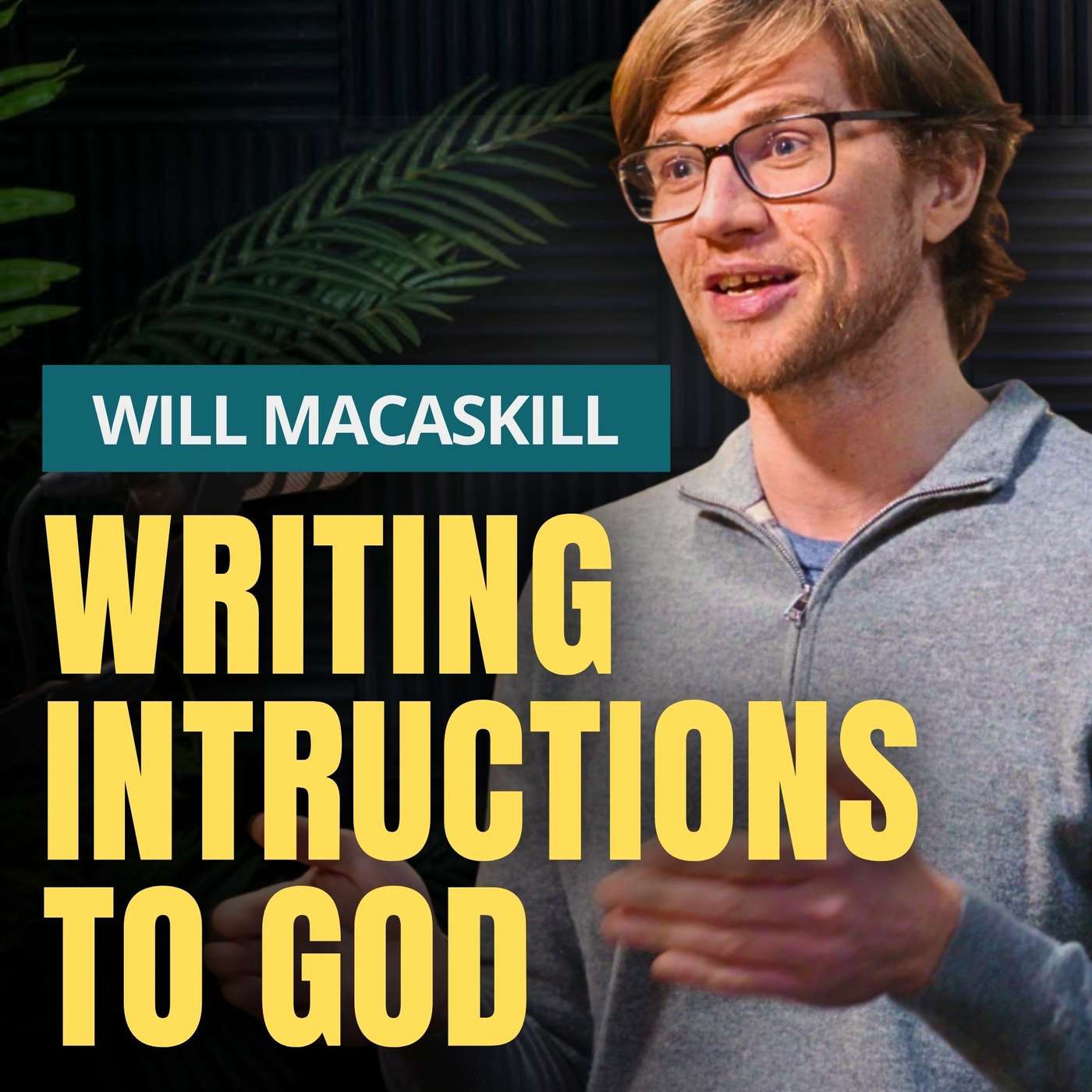
Utopian visions often lead to dystopia because we can't accurately define an ideal future. A better goal is "Viatopia"—a societal state that isn't the final destination but a stable waypoint from which we can safely navigate to a near-best future. It prioritizes a good decision-making process over a specific outcome.
Traditional goal-setting (navigation) fails for life's "wicked problems." Instead, use wayfinding: a prototyping approach of trying things, learning, and adjusting. The jagged, inefficient path is actually the shortest route to an unknown destination.

The narrative around advanced AI is often simplified into a dramatic binary choice between utopia and dystopia. This framing, while compelling, is a rhetorical strategy to bypass complex discussions about regulation, societal integration, and the spectrum of potential outcomes between these extremes.

The tech industry often builds technologies first imagined in dystopian science fiction, inadvertently realizing their negative consequences. To build a better future, we need more utopian fiction that provides positive, ambitious blueprints for innovation, guiding progress toward desirable outcomes.

The most likely future is a "weird" state we can't easily classify as good or bad. Rather than comparing today to a hypothetical endpoint, we should focus on evaluating the desirability of the path, or trajectory, we are on.
