Get your free personalized podcast brief
We scan new podcasts and send you the top 5 insights daily.
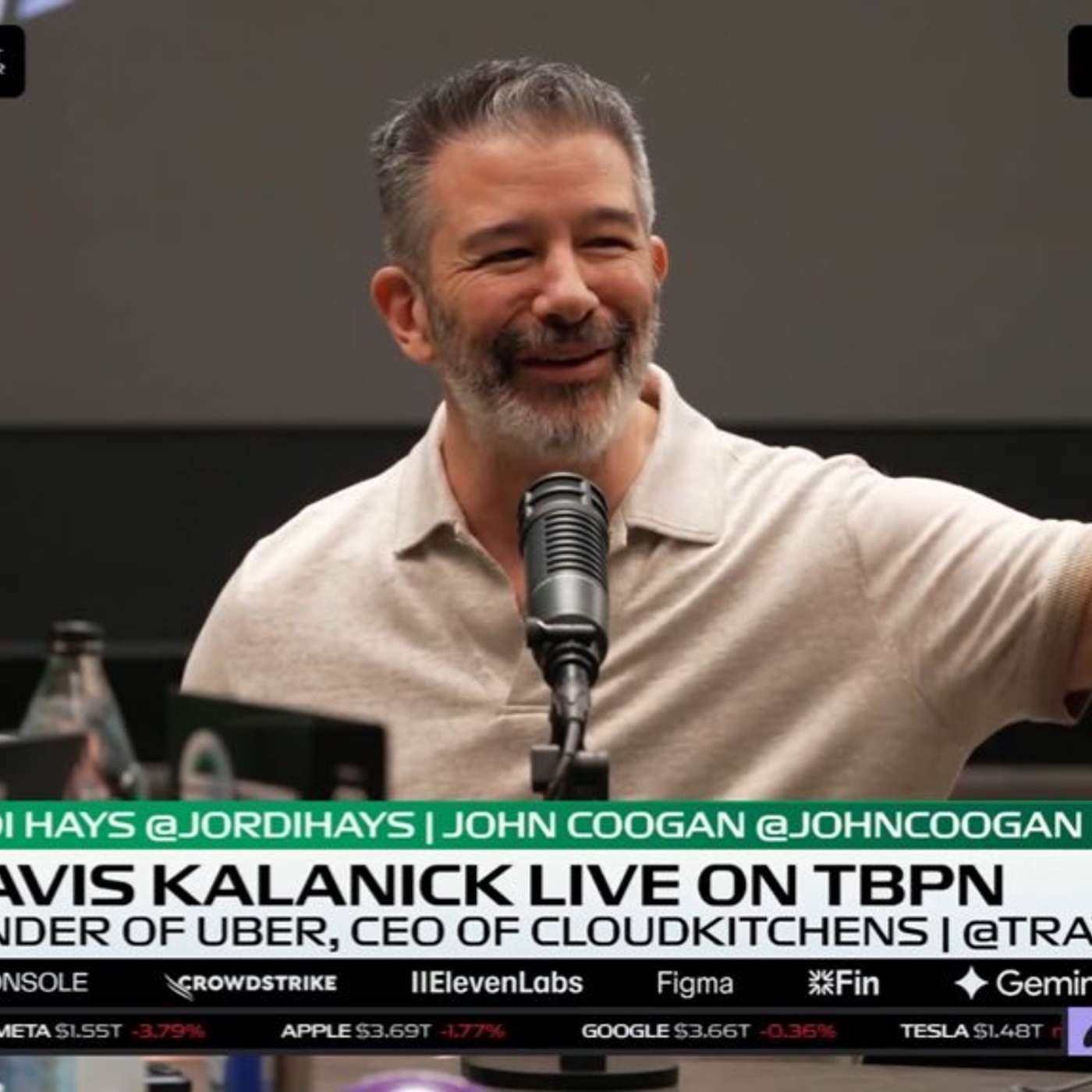
Travis Kalanick believes that if a strategic activity like fundraising feels easy, "you messed up." An easy raise indicates you didn't push hard enough and left value on the table. Excellence requires going "all the way until it hurts" to maximize competitive advantage, rather than settling for a simple close.

Related Insights
Kalanick believes that if a critical process like fundraising feels easy, you've left value on the table. Excellence requires pushing until it hurts, like a marathoner at mile 21. Ease signifies you could have gone harder, been more competitive, and extracted more value from the situation.
Top founders fundraise like a confident person on a first date. They project that their company will succeed with or without a specific investor's money. This shifts the dynamic from seeking capital to offering a strategic partnership, forcing VCs to justify why they should be on the cap table.

While first-time founders often optimize for the highest valuation, experienced entrepreneurs know this is a trap. They deliberately raise at a reasonable price, even if a higher one is available. This preserves strategic flexibility, makes future fundraising less perilous, and keeps options open—which is more valuable than a vanity valuation.
Travis Kalanick contrasts consumer business, where LTV/CAC can be as simple as App Store optimization, with SMB B2B. He calls the latter "life in hard mode" because it requires mastering the complex mechanics of a human sales machine to make the LTV-to-CAC equation work, a far harder challenge.
Kalanick compares his focus on food logistics to his early work in taxis, noting that both were seen as "boring" or "weird" ideas. He believes the best markets are often less competitive because they are difficult and unattractive to others, creating huge potential for founders who embrace the challenge.
Travis Kalanick reveals Uber treated fundraising as a systematized operation, not a discrete event. They ran four rooms in parallel for different check sizes and used a dynamic book-building process to optimize pricing. This turned capital acquisition into a scalable machine, making it a strategic weapon in their "capital wars."
In hyper-competitive, winner-take-all markets like ride-sharing or AI, Kalanick argues that the ability to attract capital is itself a core competency and strategic weapon. Being the best at fundraising is as critical as having the best product, as capital enables scale and endurance against rivals.
Investors like Reid Hoffman see the fundraising negotiation not as a zero-sum game, but as a crucial test of a founder's character, realism, and suitability as a long-term partner. Unreasonable or unrealistic demands, even in a hot deal, are a negative signal that can kill an investment.
During a tough fundraising process, founders should remove emotion and ask themselves a critical question: 'Would I invest my entire personal fortune into this right now?' Answering 'yes' with rational conviction is the key to weathering rejections and ultimately persuading an anchor investor to make the first bet.

The founder advises against always pursuing the highest valuation, noting it can lead to immense pressure and difficulties in subsequent rounds if the market normalizes. Prioritizing investor chemistry and a fair, responsible valuation is a more sustainable long-term strategy.