Get your free personalized podcast brief
We scan new podcasts and send you the top 5 insights daily.
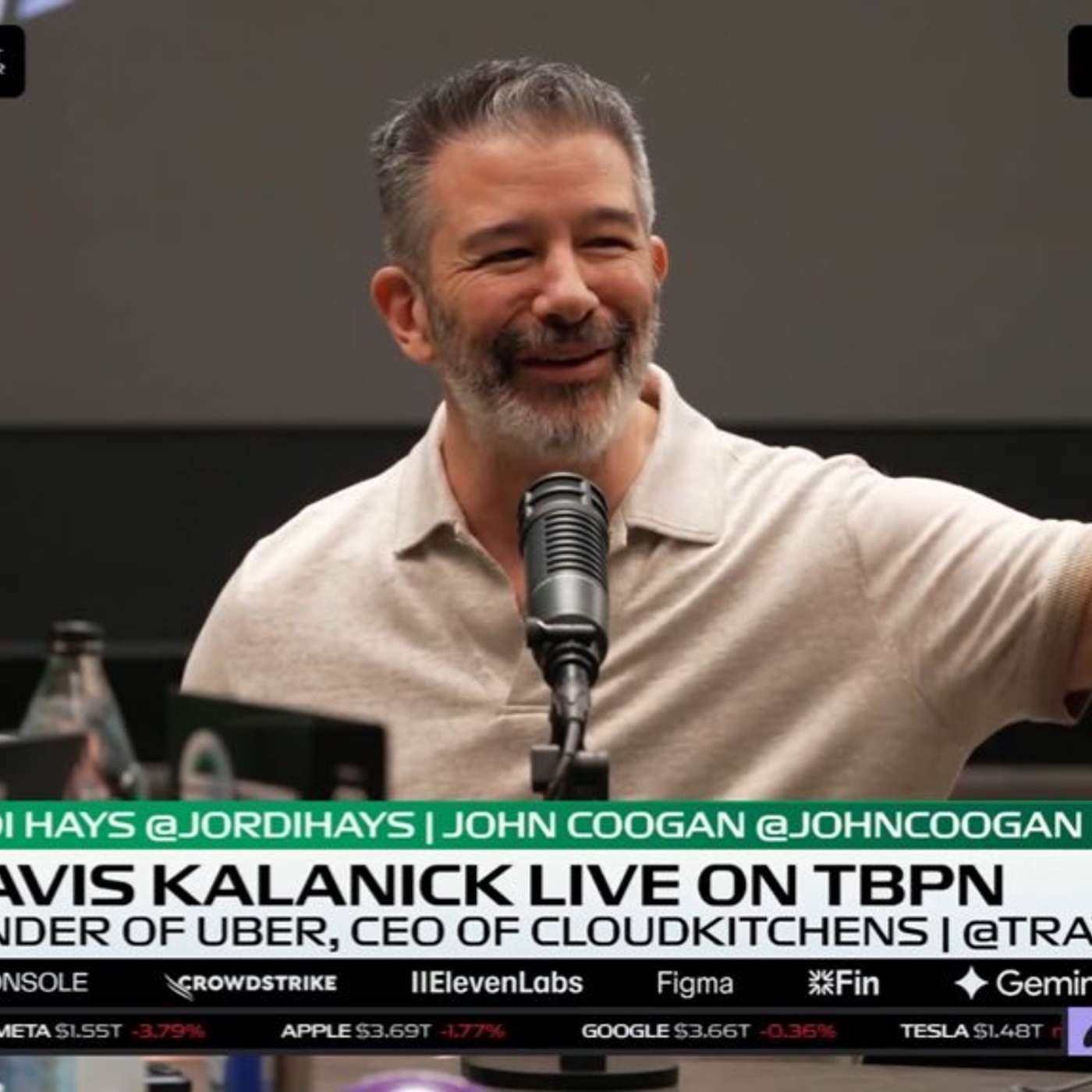
Travis Kalanick reveals Uber treated fundraising as a systematized operation, not a discrete event. They ran four rooms in parallel for different check sizes and used a dynamic book-building process to optimize pricing. This turned capital acquisition into a scalable machine, making it a strategic weapon in their "capital wars."

Related Insights
Travis Kalanick believes that if a strategic activity like fundraising feels easy, "you messed up." An easy raise indicates you didn't push hard enough and left value on the table. Excellence requires going "all the way until it hurts" to maximize competitive advantage, rather than settling for a simple close.
Raise capital when you can clearly see upcoming growth and need resources to service it. Tying your timeline to operational milestones, like onboarding new customers, creates genuine urgency and momentum. This drives investor FOMO and helps close deals more effectively than an arbitrary deadline.

While competitors viewed capital as a strategic weapon, DoorDash focused on capital efficiency. Their goal was to be twice as effective with every dollar spent on customer acquisition. Lin emphasizes that capital is fuel, but it's useless without a 'fire burning'—a product with real engagement.

A powerful fundraising tactic is to continually increase your total round size as you hit initial targets. This allows you to always be '50% closed' or more, constantly signaling momentum and de-risking the opportunity for new investors you speak with.

For startups experiencing hyper-growth, the optimal strategy is to raise capital aggressively and frequently—even multiple times a year—regardless of current cash reserves. This builds a war chest, solidifies a high valuation based on momentum, and effectively starves less explosive competitors of investor attention and capital.

Dara Khosrowshahi describes a two-step innovation process. First, let teams compete to rapidly "hack" a solution and find product-market fit. Second, once a winner emerges, the organization must systematize and automate that solution through engineering to make it scalable and part of the core platform.

In hyper-competitive, winner-take-all markets like ride-sharing or AI, Kalanick argues that the ability to attract capital is itself a core competency and strategic weapon. Being the best at fundraising is as critical as having the best product, as capital enables scale and endurance against rivals.
Financing discussions should carry the same strategic weight as M&A talks. Philip Ross argues the cost of capital from selling stock is often theoretically higher than from selling the entire company. This reframes the decision to dilute ownership for funding as a pivotal choice that boards and management teams should not take lightly.

For mega-rounds, Uber ran a highly systematized process with four parallel rooms for different check sizes, from $25M to over $250M. It used an auction-like model, asking investors for bids at various valuations to build a demand curve and optimize pricing, treating fundraising like a scalable product.
For startups taking on industrial giants, large capital raises are a competitive weapon, not just for growth. Accessing low-cost capital is a strategic advantage that directly lowers product costs, making massive fundraising a prerequisite to even sit at the table.
