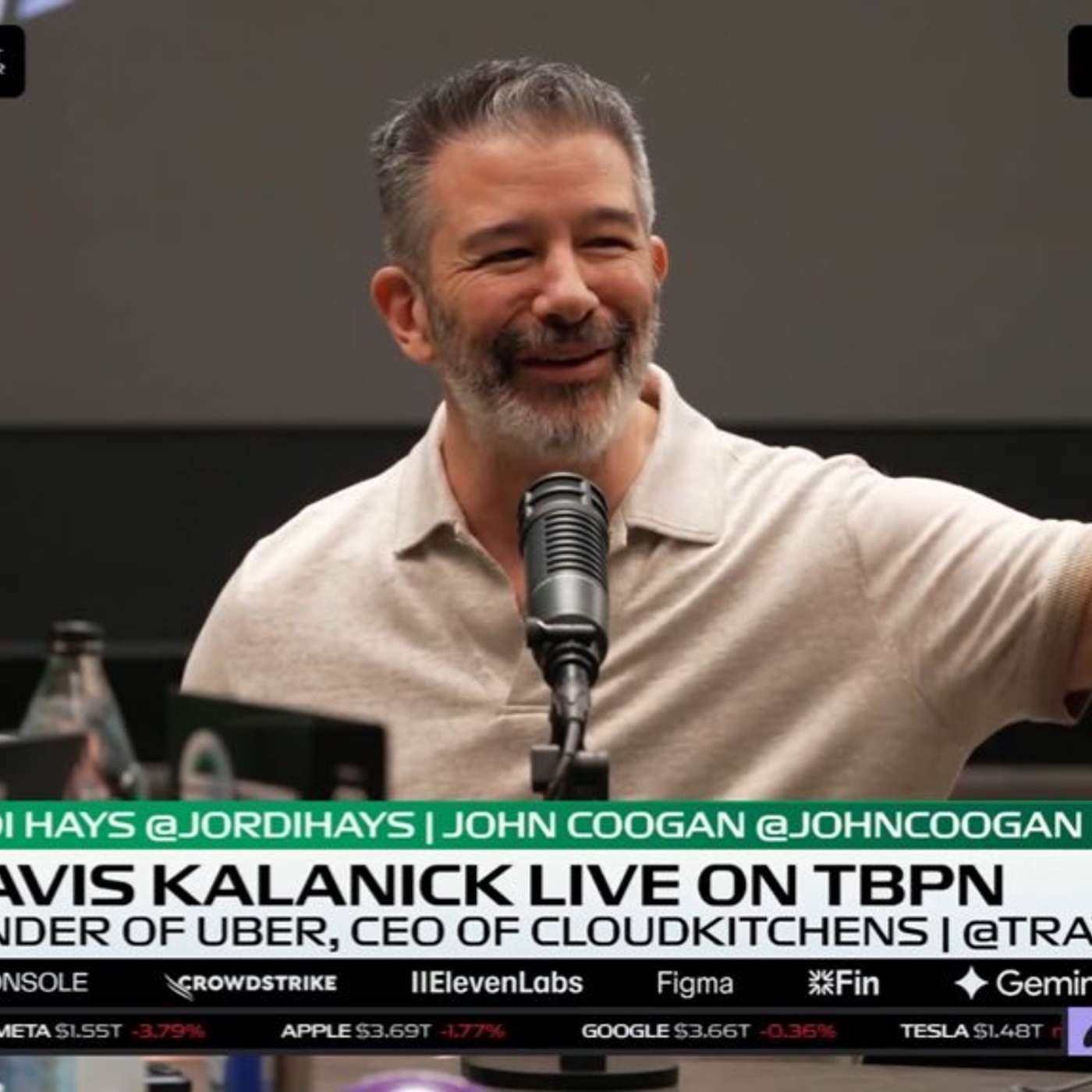
Kalanick believes that if a critical process like fundraising feels easy, you've left value on the table. Excellence requires pushing until it hurts, like a marathoner at mile 21. Ease signifies you could have gone harder, been more competitive, and extracted more value from the situation.
Kalanick posits that as AI automates most tasks, the remaining human-centric jobs (e.g., plumbing) will become the primary bottleneck for progress. This scarcity will make these roles the "long pole in the tent," dramatically increasing their economic value and earning potential until AGI arrives.
In hyper-competitive, winner-take-all markets like ride-sharing or AI, Kalanick argues that the ability to attract capital is itself a core competency and strategic weapon. Being the best at fundraising is as critical as having the best product, as capital enables scale and endurance against rivals.
For mega-rounds, Uber ran a highly systematized process with four parallel rooms for different check sizes, from $25M to over $250M. It used an auction-like model, asking investors for bids at various valuations to build a demand curve and optimize pricing, treating fundraising like a scalable product.
Kalanick's grand strategy is based on a framework where atoms are treated like bits. Manufacturing manipulates atoms (CPU), real estate stores them (Storage), and logistics moves them (Network). This model explains his career progression from Uber (Network) to Cloud Kitchens (Storage) and now robotics (CPU).
Travis Kalanick contrasts consumer business, where LTV/CAC can be as simple as App Store optimization, with SMB B2B. He calls the latter "life in hard mode" because it requires mastering the complex mechanics of a human sales machine to make the LTV-to-CAC equation work, a far harder challenge.
Travis Kalanick's new company operated in deep stealth for eight years, forcing 100% outbound recruiting and sales. This forged operational excellence in those teams and cultivated a culture of builders who derive satisfaction from the work itself, not public recognition.
Unlike Uber's network-effect moat, Adams is building defensibility through capital-intensive physical assets. By owning billions of dollars of real estate for its cloud kitchens, it creates a massive barrier to entry that is prohibitively expensive for competitors to replicate, ensuring a durable moat.