Get your free personalized podcast brief
We scan new podcasts and send you the top 5 insights daily.
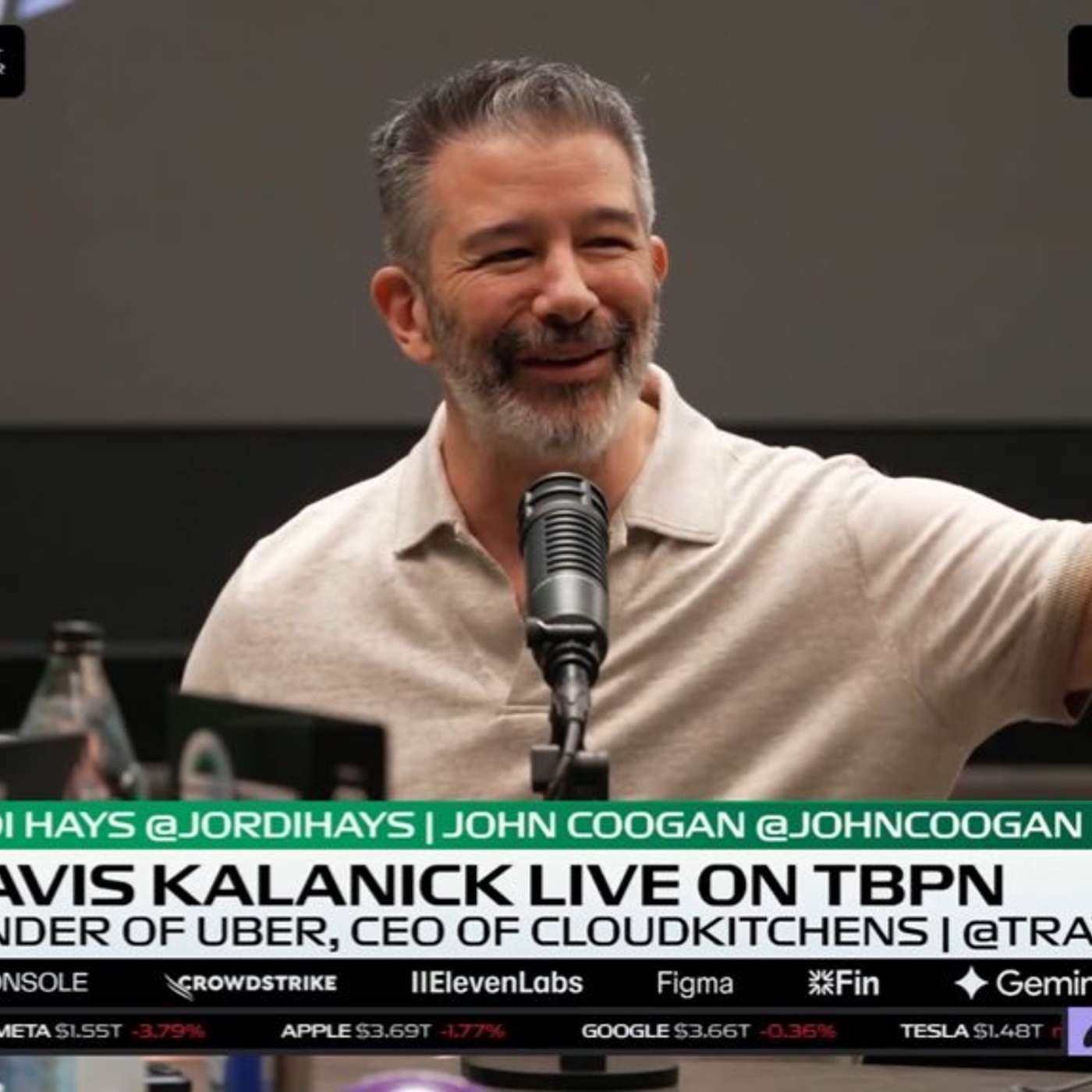
Kalanick compares his focus on food logistics to his early work in taxis, noting that both were seen as "boring" or "weird" ideas. He believes the best markets are often less competitive because they are difficult and unattractive to others, creating huge potential for founders who embrace the challenge.

Related Insights
David Chang posits that tech and venture capital are overly focused on the extremes of the restaurant industry: scalable, low-cost fast food and high-end, exclusive dining. He argues the real, unsolved challenge—and greatest opportunity—is creating technology and business models to help average, 'good' mom-and-pop restaurants survive and scale, as they represent the cultural backbone of the industry.

Focusing only on trendy sectors leads to intense competition where the vast majority of startups fail. True opportunity lies in contrarian ideas that others overlook or dismiss, as these markets have fewer competitors.

Travis Kalanick believes that if a strategic activity like fundraising feels easy, "you messed up." An easy raise indicates you didn't push hard enough and left value on the table. Excellence requires going "all the way until it hurts" to maximize competitive advantage, rather than settling for a simple close.
Legacy industries are often slow to adapt due to inertia and arrogance, creating massive opportunities. Flexport built a simple duty calculator in three days that the entire trade industry adopted, proving that a startup's key to success can be entering a field where competitors are technologically complacent.
Travis Kalanick contrasts consumer business, where LTV/CAC can be as simple as App Store optimization, with SMB B2B. He calls the latter "life in hard mode" because it requires mastering the complex mechanics of a human sales machine to make the LTV-to-CAC equation work, a far harder challenge.
Industries widely considered "terrible businesses," like restaurants, often signal opportunity. The high failure rate is usually due to a low barrier to entry and a lack of business acumen among participants. A disciplined, business-first approach in such an environment can create a massive and durable competitive advantage.
![Nick Kokonas - Know What You Are Selling - [Invest Like The Best, REPLAY] thumbnail](https://megaphone.imgix.net/podcasts/c7f11b7e-e516-11f0-8700-239aa8e47bb9/image/552faf7d658b75e441e80eef4cf6b0b3.jpg?ixlib=rails-4.3.1&max-w=3000&max-h=3000&fit=crop&auto=format,compress)
Chesky observes that the vast majority of AI startups focus on enterprise applications, leaving a significant opportunity in consumer-facing products. He argues that the largest companies will be those that impact daily life and advises entrepreneurs not to shy away from the harder, "hits-driven" consumer market.

Lyft's CEO argues the competition is not a binary battle with Uber for their combined 2.5 billion annual rides. Instead, the true target market is the 160 billion rides Americans take in their own cars. This reframes the opportunity from market share theft to massive market expansion and conversion.

To challenge an incumbent with massive network effects, Dara Khosrowshahi suggests startups shouldn't attack head-on. Instead, they should find a niche, like a smaller city or a specific service (e.g., two-wheelers), build concentrated local liquidity there, and then replicate that model city-by-city.

Significant change doesn't come from the established core of an industry but from the margins. This is where smaller, private companies and overlooked founders operate, making private markets a crucial hunting ground for the most disruptive investment opportunities.