Get your free personalized podcast brief
We scan new podcasts and send you the top 5 insights daily.
Advanced generative media workflows are not simple text-to-video prompts. Top customers chain an average of 14 different models for tasks like image generation, upscaling, and image-to-video transitions. This multi-model complexity is a key reason developers prefer open-source for its granular control over each step.

Related Insights
A common pattern for developers building with generative media is to use two types of models. A cheaper, lower-quality 'workhorse' model is used for high-volume tasks like prototyping. A second, expensive, state-of-the-art 'hero' model is then reserved for the final, high-quality output, optimizing for cost and quality.
To build a durable business on top of foundation models, go beyond a simple API call. Gamma creates a moat by deeply owning an entire workflow (visual communication) and orchestrating over 20 different specialized AI models, each chosen for a specific sub-task in the user journey.

The computational requirements for generative media scale dramatically across modalities. If a 200-token LLM prompt costs 1 unit of compute, a single image costs 100x that, and a 5-second video costs another 100x on top of that—a 10,000x total increase. 4K video adds another 10x multiplier.
While today's focus is on text-based LLMs, the true, defensible AI battleground will be in complex modalities like video. Generating video requires multiple interacting models and unique architectures, creating far greater potential for differentiation and a wider competitive moat than text-based interfaces, which will become commoditized.
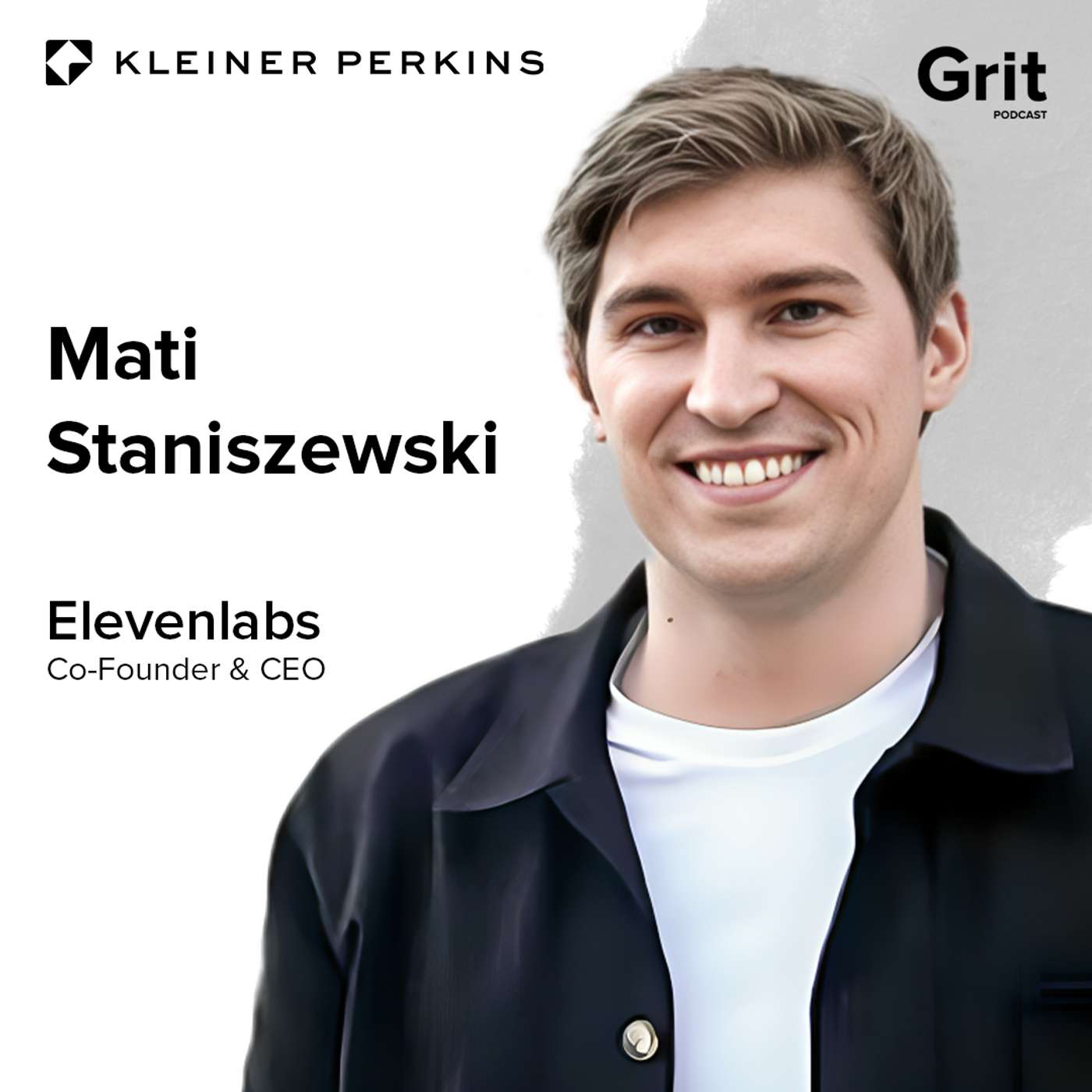
ElevenLabs' CEO predicts AI won't enable a single prompt-to-movie process soon. Instead, it will create a collaborative "middle-to-middle" workflow, where AI assists with specific stages like drafting scripts or generating voice options, which humans then refine in an iterative loop.
Traditional video models process an entire clip at once, causing delays. Descartes' Mirage model is autoregressive, predicting only the next frame based on the input stream and previously generated frames. This LLM-like approach is what enables its real-time, low-latency performance.

The generative video space is evolving so rapidly that a model ranked in the top five has a half-life of just 30 days. This extreme churn makes it impractical for developers to bet on a single model, driving them towards aggregator platforms that offer access to a constantly updated portfolio.
To create unique, on-brand invite cards at scale, the designer chained multiple AI tools together. She used Midjourney for initial concepts, trained custom models on Civit AI, then used FAL AI to blend models and variabilize prompts for generation. This demonstrates a sophisticated workflow beyond single-prompt image creation.
When analyzing video, new generative models can create entirely new images that illustrate a described scene, rather than just pulling a direct screenshot. This allows AI to generate its own 'B-roll' or conceptual art that captures the essence of the source material.

Instead of offering a model selector, creating a proprietary, branded model allows a company to chain different specialized models for various sub-tasks (e.g., search, generation). This not only improves overall performance but also provides business independence from the pricing and launch cycles of a single frontier model lab.
