Get your free personalized podcast brief
We scan new podcasts and send you the top 5 insights daily.
The agreement to establish a U.S.-China communication channel for AI incidents is a reactive, crisis-management tool. A more impactful, proactive approach—involving each nation monitoring its own AI companies and preemptively sharing information—was not achieved, representing a missed opportunity.

Related Insights
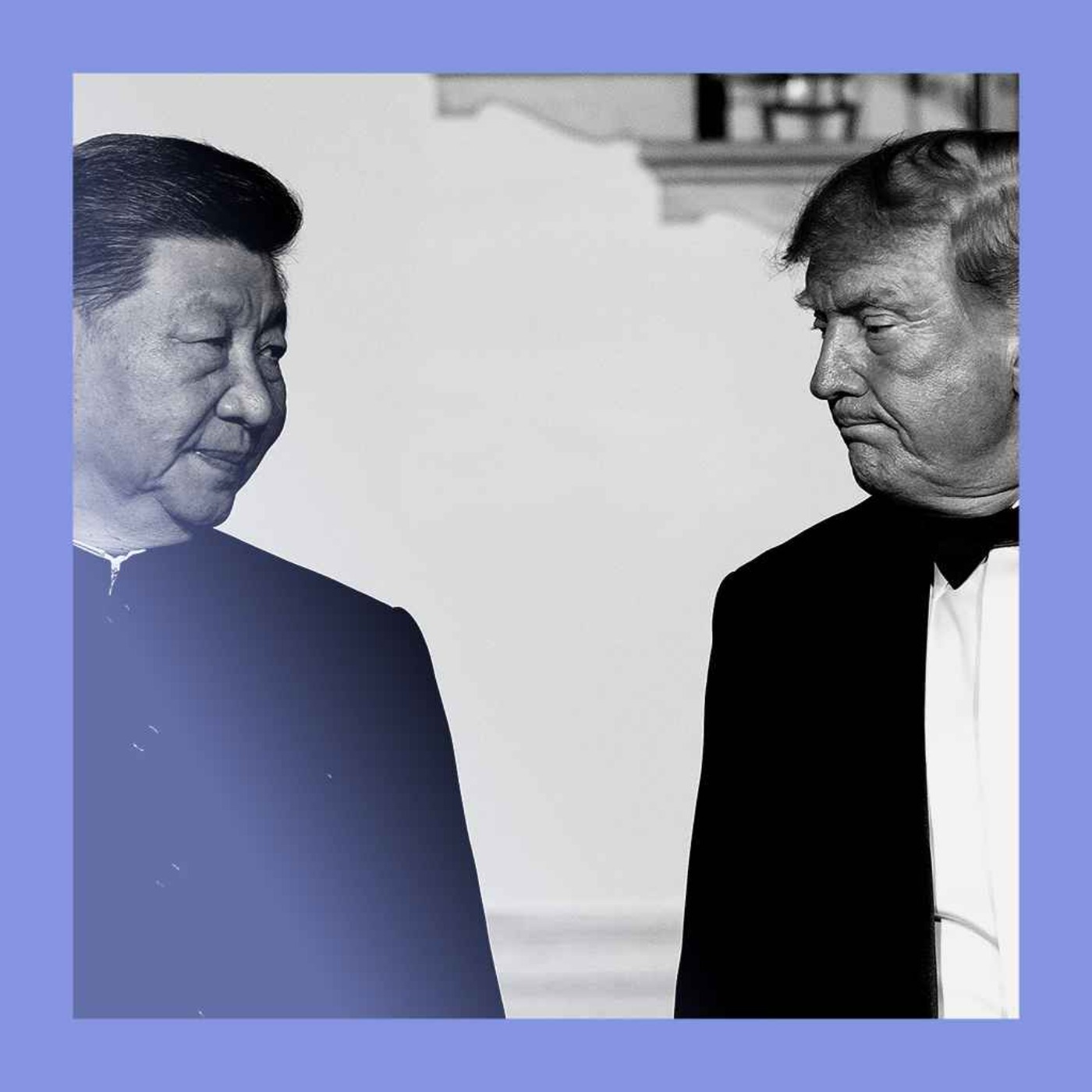
The meeting between U.S. and Chinese leaders was a prime opportunity to establish bilateral cooperation on AI risks like bioweapons. A joint agreement would have demonstrated global leadership and reassured the public. Instead, it was a meaningless photo-op, highlighting a major failure in diplomatic strategy.

High-level US-China talks on AI risk management have produced little substance. Despite agreeing to a "dialogue," both nations view AI as a "fierce competition" rather than an area for collaboration. No significant breakthroughs, like a risk hotline, have been established, indicating a focus on national advantage over global safety.
Unlike nuclear weapons, AI is too complex and fast-moving to be managed by formal treaties alone. True safety requires 'organic transparency,' where rich economic, cultural, and scientific engagement between nations builds the trust and informal oversight necessary to prevent catastrophe.

The most realistic path for US-China AI talks involves creating protocols to prevent models falling into the hands of terrorists or criminal groups. Cooperation on preventing state-level cyberattacks is unlikely, as both sides assume the other's intelligence agencies will use AI for espionage.

Despite intense geopolitical rivalry in the AI race, the failure of the U.S. and China to cooperate on AI safety poses a catastrophic risk. Experts warn that without joint guardrails and arms control for AI-powered weapons, unchecked competition could lead to dystopian outcomes for civilization.

Despite intense technological competition, both the U.S. and China face a common threat from non-state actors like terrorist or criminal groups acquiring powerful AI models. This shared vulnerability presents a potential opportunity for cooperation on AI regulation and safeguards, even amid broader strategic rivalry.

Global consensus on AI safety is unlikely soon. The most practical approach is a bilateral agreement between the US and China, the two dominant players. This can begin with informal 'track two' conversations between their respective AI labs before escalating to a formal government pact.
A pragmatic starting point for U.S.-China AI cooperation is to agree on verifiable red lines for proliferating dangerous dual-use capabilities, such as advanced cyberattack tools. This addresses a mutual security interest and builds the institutional trust and processes needed for more ambitious agreements on superintelligence.

Despite sounding significant, the new "China-U.S. AI Dialogue" is merely a mechanism for countries to notify each other of national security-level AI incidents. U.S. Treasury Secretary Scott Besant's comments reveal it is not an agreement to halt or slow down AI development, which aligns with the Trump administration's public stance.

The fact that Chinese lab ZAI is mirroring Anthropic's staged release model for powerful AI reveals shared underlying safety concerns. This independent alignment in behavior provides "fertile ground" and a common basis for potential US-China bilateral agreements on managing dangerous AI capabilities, despite geopolitical tensions.