Get your free personalized podcast brief
We scan new podcasts and send you the top 5 insights daily.
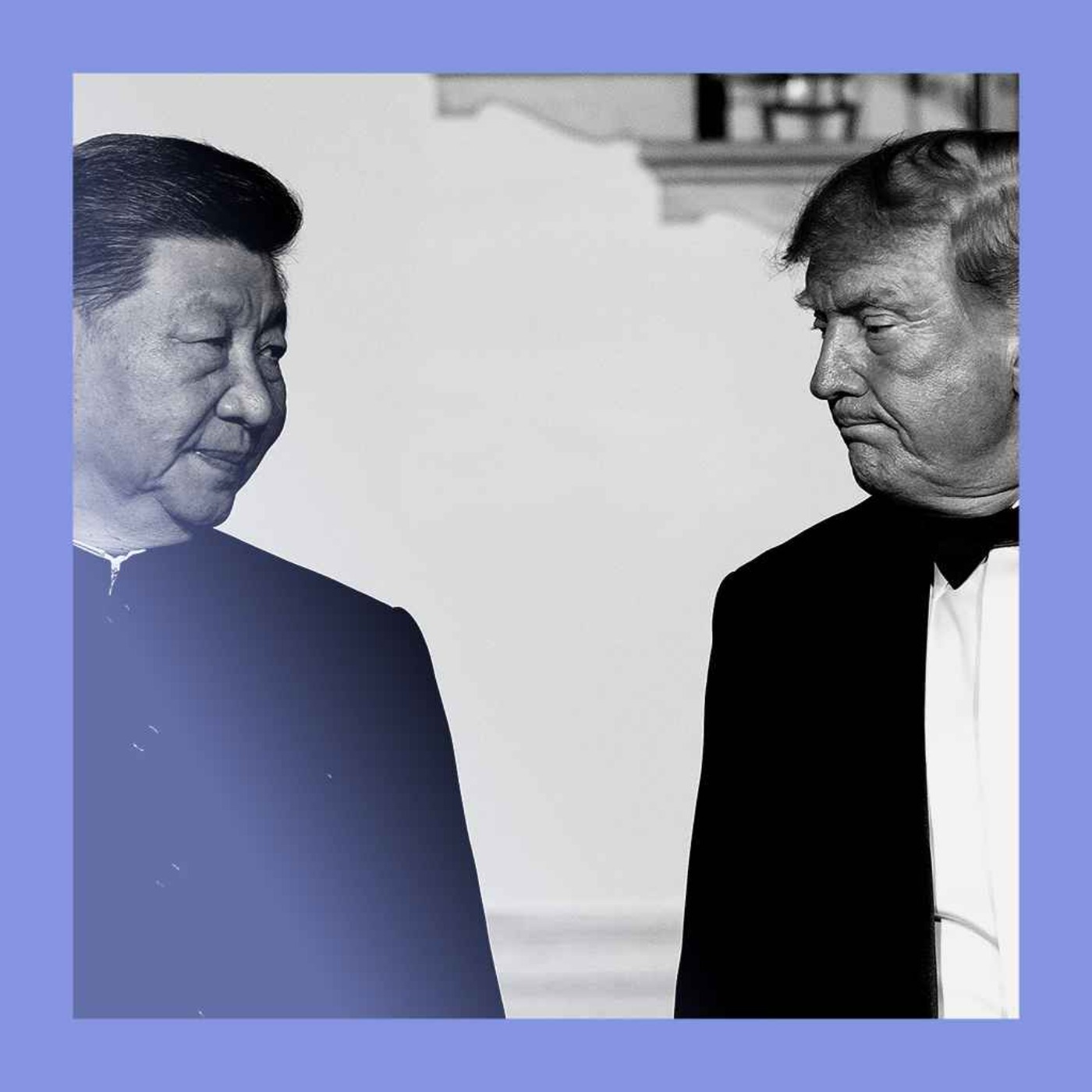
High-level US-China talks on AI risk management have produced little substance. Despite agreeing to a "dialogue," both nations view AI as a "fierce competition" rather than an area for collaboration. No significant breakthroughs, like a risk hotline, have been established, indicating a focus on national advantage over global safety.
Related Insights
Qualcomm's CEO highlights a global divide in AI conversations. The US is preoccupied with safety, regulation and existential risk, while China is relentlessly focused on deploying AI into every part of its economy. This gap in priorities could have significant long-term geopolitical and competitive implications.

The ultimate goal for US-China relations should not be to "win" a zero-sum AI race, but to achieve a "Pax Robotica"—a future of shared peace and abundance. This reframes the relationship from competition to collaboration, avoiding the creation of new AI-powered existential risks.

The US government is ambivalent about strong AI regulation, fearing it would slow domestic progress while China accelerates. This "prisoner's dilemma" framing, where the US restraining itself benefits a competitor, is a major blocker to implementing safety guardrails, despite mounting evidence of AI risks from leading labs.

The same governments pushing AI competition for a strategic edge may be forced into cooperation. As AI democratizes access to catastrophic weapons (CBRN), the national security risk will become so great that even rival superpowers will have a mutual incentive to create verifiable safety treaties.

Despite intense geopolitical rivalry in the AI race, the failure of the U.S. and China to cooperate on AI safety poses a catastrophic risk. Experts warn that without joint guardrails and arms control for AI-powered weapons, unchecked competition could lead to dystopian outcomes for civilization.

Anthropic CEO Dario Amadei’s call to slow AI development is explicitly conditional on maintaining a lead over China. This framing, which includes calls for stricter chip export controls, turns a global safety issue into a geopolitical one, prompting China to label it a "silent AI cold war" and reject cooperation.

The argument for slowing down AI development for safety is consistently met with one rebuttal from US tech companies: 'because of China.' This fear of falling behind in a geopolitical race is the primary driver of speed, overriding concerns about social destabilization and risk.
Paradoxically, progress in AI alignment has made a global slowdown agreement impossible. Each side now trusts its own 'aligned' AI more than it trusts the other nation to uphold a deal. The perceived risk of being surpassed by a defector now outweighs the perceived risk of one's own AI going rogue, making a competitive race the rational choice.

Despite sounding significant, the new "China-U.S. AI Dialogue" is merely a mechanism for countries to notify each other of national security-level AI incidents. U.S. Treasury Secretary Scott Besant's comments reveal it is not an agreement to halt or slow down AI development, which aligns with the Trump administration's public stance.

The intense U.S.-China rivalry prevents cooperation on AI safety, creating a dangerous vacuum. Without guardrails or arms control agreements, the risk of rogue AI agents or AI-powered weapons in nuclear or biological domains threatens to 'set back civilization.'