Get your free personalized podcast brief
We scan new podcasts and send you the top 5 insights daily.
Operating only one type of aircraft, like Copa's Boeing 737 fleet, drastically reduces costs. This strategy simplifies everything from pilot training and maintenance procedures to spare parts inventory, creating a significant efficiency advantage over carriers managing diverse fleets.

Related Insights
GM operates on a functional model, not siloed brand divisions, to maximize economies of scale. By developing a single core platform that can be adapted for different brands like Chevrolet and Cadillac, the company leverages its global scale to offer more features and technology at competitive price points, a key advantage in the capital-intensive auto industry.

Counterintuitively, Airshare discovered that expanding from a regional to a national model would increase operational efficiency. By analyzing flight data, they realized their planes were flying long, empty "deadhead" legs to reposition for regional customers. A national footprint allowed them to better utilize their fleet.

Based in Panama, Copa can reach all of the Americas using efficient, single-aisle 737s. This unique position allows them to avoid the "payload penalty," where long-haul flights must sacrifice paying customers or cargo for extra fuel, giving them a hard-to-replicate cost advantage.
The fractional ownership model is growing fastest because it offers the benefits of private flight without the operational headaches of whole ownership. Customers pay fixed fees and avoid surprise costs, an appealing proposition even for those who could afford their own plane but prefer simplicity.
The jet engine market is not a simple free-for-all. Competition is first structured by airframers like Boeing and Airbus, who decide whether to offer a single 'sole source' engine or 'dual source' options on a new aircraft. This initial strategic decision dictates the competitive landscape before airlines ever make their choice.
![GE Aerospace: Full Throttle - [Business Breakdowns, EP.234] thumbnail](https://megaphone.imgix.net/podcasts/b4e183c0-c0f9-11f0-9cb9-1fd84f161334/image/52fc2070fb32ee2a270fcf835e7c161a.jpg?ixlib=rails-4.3.1&max-w=3000&max-h=3000&fit=crop&auto=format,compress)
SpaceX's success isn't from one tactic but a reinforcing system. First principles identify waste in cost, vertical integration provides the control to eliminate it, and standardization creates the volume needed to make that control profitable. Removing any one part breaks the system.

Zipline's 50% cost reduction for its next-gen aircraft wasn't just from supply chain optimization. The primary driver was a design philosophy focused on eliminating components entirely ("the best part is no part"), which also improves reliability.

A significant portion of both Volaris's and Viva's fleets are grounded due to a defect in Pratt & Whitney engines. While a financial drag, this has impacted both major low-cost carriers equally because they operate identical fleets. This symmetrical headwind prevents one from gaining a market share advantage while the other is capacity constrained.

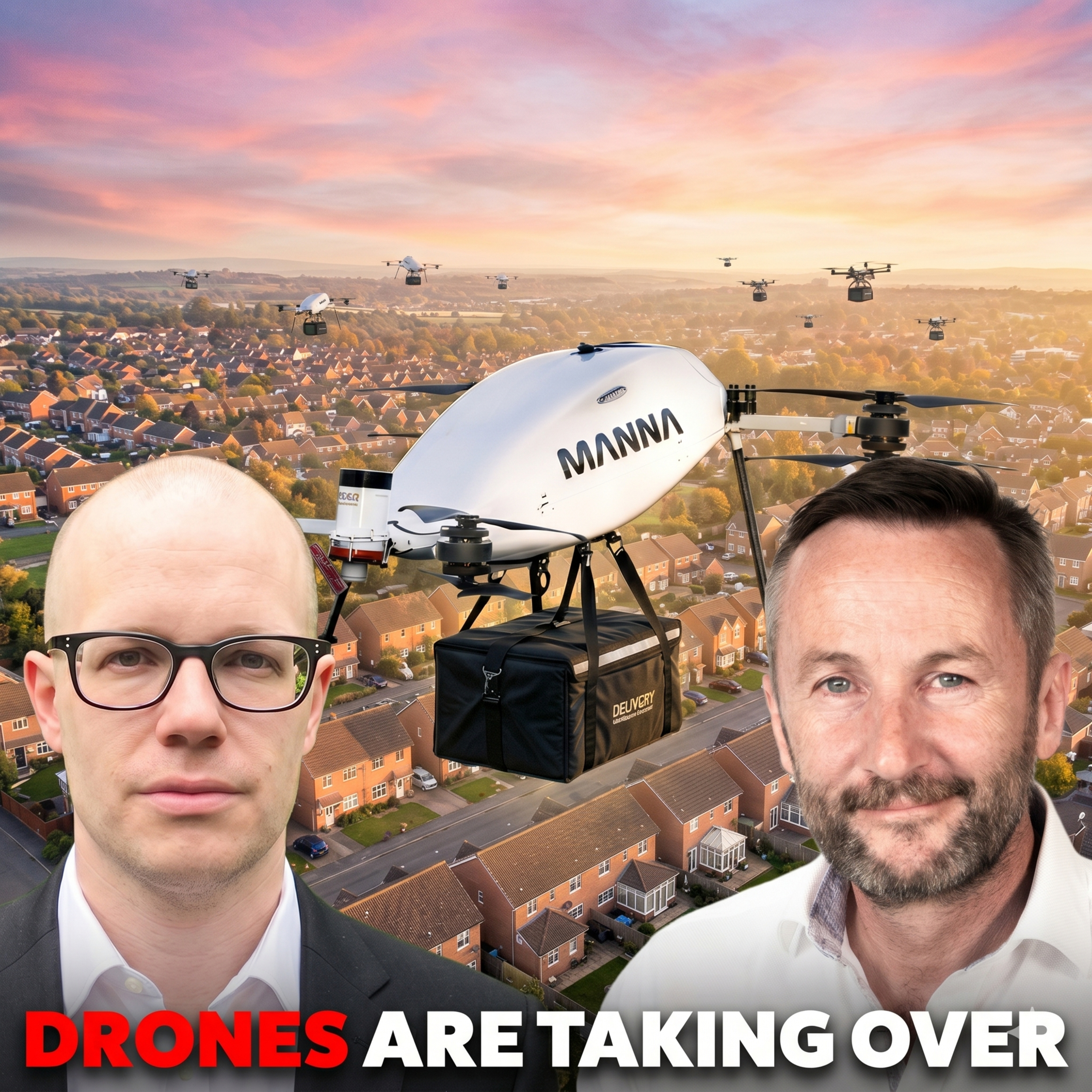
Mana views drone delivery not as a tech product but as a commodity for delivering goods like burritos. This forces an obsessive focus on operational efficiency and unit cost, adopting a low-cost airline mentality to win on price and scale, rather than on flashy technology.
To compare airlines, one must look at costs they actually control. Since fuel prices are set by global markets, analysts use "Cost per Available Seat Mile excluding fuel" (ex-fuel CASM). This metric reveals the true underlying efficiency of an airline's operations.