Get your free personalized podcast brief
We scan new podcasts and send you the top 5 insights daily.
Beyond features or community, the primary driver for adopting open-source AI tools like OpenClaw over proprietary ones is cost. The goal is to make powerful AI accessible to billions of internet users for free, not just those who can afford "luxury AI" subscriptions.

Related Insights
In the emerging AI agent space, open-source projects like 'Claude Bot' are perceived by technical users as more powerful and flexible than their commercial, venture-backed counterparts like Anthropic's 'Cowork'. The open-source community is currently outpacing corporate product development in raw capability.
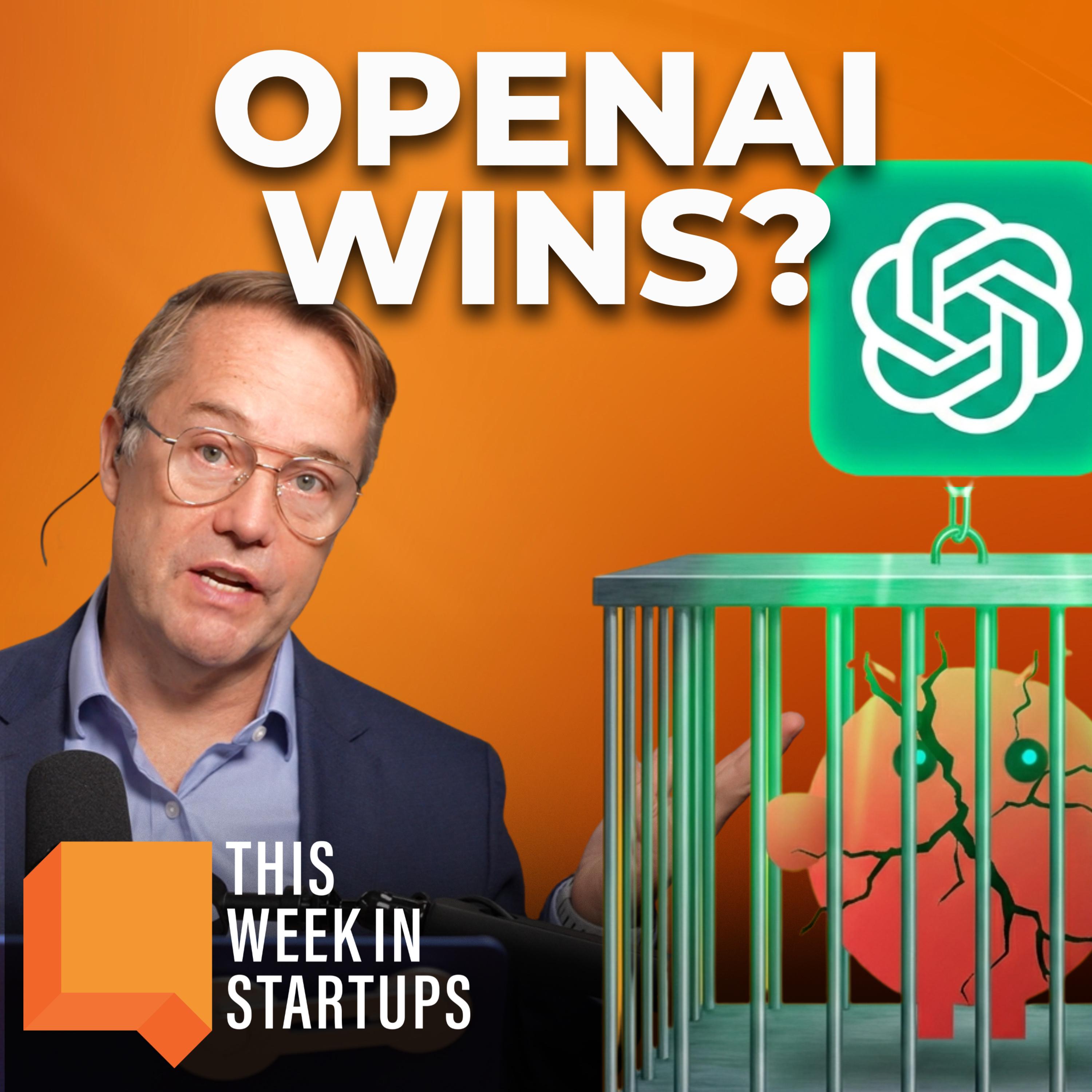
To counteract OpenAI's potential control over the OpenClaw project, venture firm Launch announced a dedicated investment thesis to fund startups building core infrastructure around it. The strategy is to foster a decentralized ecosystem focused on security, ease of use, hosting, and skills to ensure the project remains open.
The core appeal of open-source projects like OpenClaw is that they run locally on user hardware, granting full control over personal data. This contrasts with cloud-based agents from Meta, positioning data ownership and privacy as a key differentiator against convenience.
Companies like Z.ai are not abandoning open source but using it strategically. They release lightweight models to attract developers and build a user base, while reserving their most powerful, agentic systems for proprietary, revenue-generating enterprise products, creating a clear monetization funnel.

According to Jerry Murdock, AI-native startups are using open-source autonomous agents like OpenClaw to write code so effectively that they view heavily-funded tools like Cursor as obsolete. This highlights the existential threat that fast-moving open-source AI poses to established players.

As AI becomes an essential utility for families, the cumulative monthly subscription cost for cloud models could reach hundreds of dollars. This economic pressure, more than just privacy concerns, will likely drive a significant shift toward one-time purchases of local hardware and open-source models.

To avoid a future where a few companies control AI and hold society hostage, the underlying intelligence layer must be commoditized. This prevents "landlords" of proprietary models from extracting rent and ensures broader access and competition.

The VC firm FinCapital decided against investing in major proprietary LLMs. Their thesis was that open-source alternatives would significantly improve and compete on key metrics like intelligence, speed, and cost, which has been happening with projects like OpenClaw.

Open source AI models don't need to become the dominant platform to fundamentally alter the market. Their existence alone acts as a powerful price compressor. Proprietary model providers are forced to lower their prices to match the inference cost of open-source alternatives, squeezing profit margins and shifting value to other parts of the stack.

Misha Laskin, CEO of Reflection AI, states that large enterprises turn to open source models for two key reasons: to dramatically reduce the cost of high-volume tasks, or to fine-tune performance on niche data where closed models are weak.
