Get your free personalized podcast brief
We scan new podcasts and send you the top 5 insights daily.
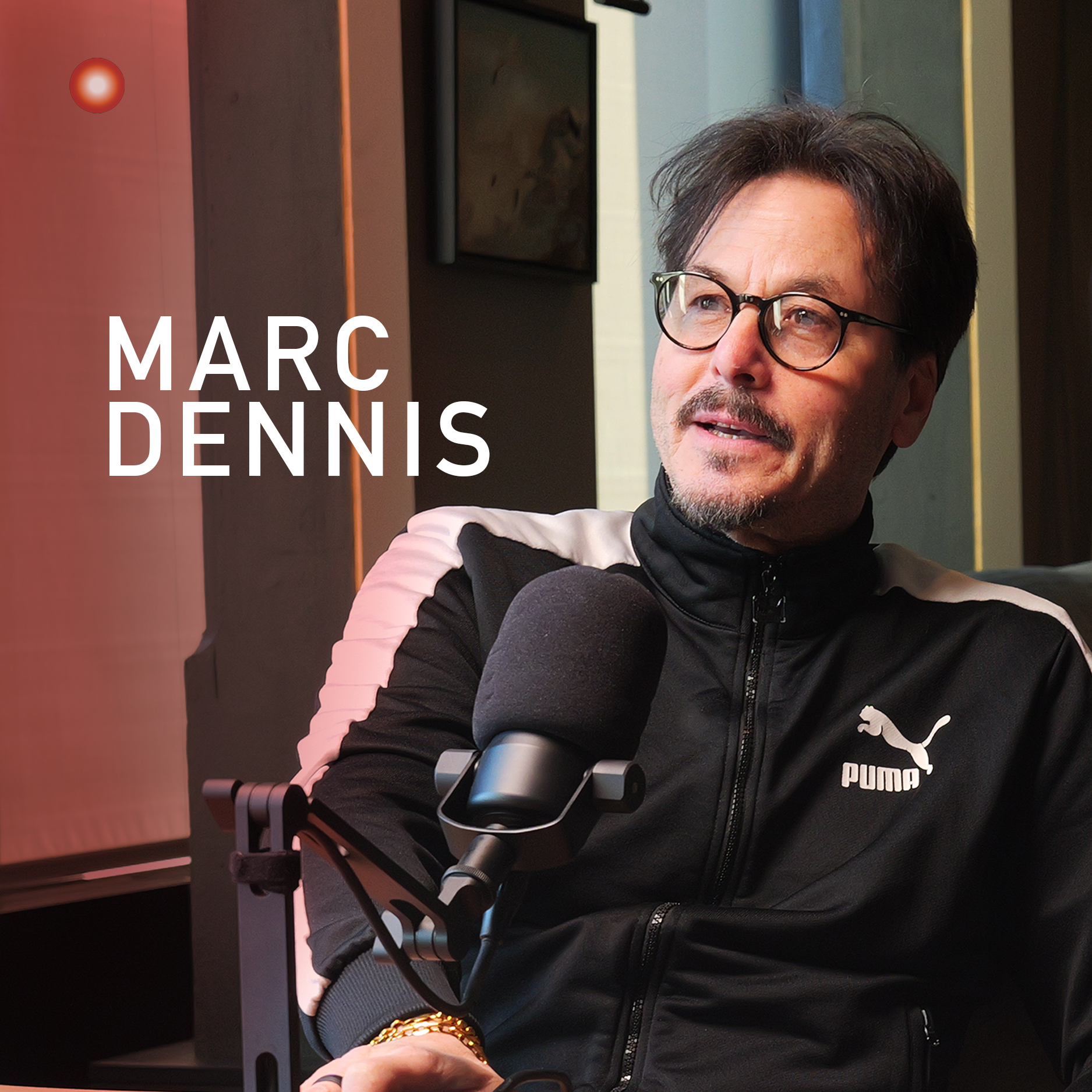
Artist Marc Dennis's career truly took off only after he resigned from a tenured professorship. By removing the security of a "Plan B" and going "all in" on being a full-time artist, he created the necessary pressure and focus to achieve breakthrough professional success.
Related Insights
By achieving financial independence, creators can treat passion projects as pure art, free from the pressure of immediate ROI. This artistic integrity often becomes its own best marketing, attracting bigger opportunities and paradoxically leading to greater commercial success down the line.

At age 44, Matt Spielman reframed his career pivot not as a risk, but as a mitigation of a greater one: staying on the wrong path. He believed waking up at 55 having not pursued his passion would be a far worse outcome than the uncertainty of starting his coaching practice.
![[REPLAY] Matt Spielman – Executive Coaching in Asset Management (Capital Allocators, EP.210) thumbnail](https://static.libsyn.com/p/assets/f/b/7/6/fb76e1c8bfb69e8dd959afa2a1bf1c87/CA_Square_logo_light_background_6.26.24.jpg)
When you take a professional risk, the result is binary: either you succeed, or you fail. While failure might sting, it provides a definitive answer, freeing you from the mental anguish of wondering 'what if.' Both outcomes are superior to the paralysis and prolonged uncertainty of inaction.

Facing a dead-end job, Amy Weaver chose to resign without another position lined up, guided by the principle: "First you leap and then you grow wings." This counterintuitive approach of creating a void, though terrifying, can be the necessary catalyst for finding a better opportunity, as it was when Salesforce called two months later.

When facing a major career crossroads, the goal isn't to find the objectively "best" option, as it's unknowable. The key is to make a decision based on intuition, commit to it fully, and refuse to entertain "what if" scenarios about the paths not taken.

John Grisham's career change wasn't solely a flight from the pressures of law. He was pulled by the "huge dream that became all-consuming" of becoming a full-time writer. This illustrates that a powerful, positive vision for the future provides more sustained motivation for a difficult transition than simply the desire to escape a negative situation.

People are already "pros" in their day jobs because the structure enforces discipline. When pursuing a creative passion, they often drop this mindset. The key is to transfer that same non-negotiable, show-up-every-day attitude to your own projects.

Amy Porterfield quit a prestigious contracting job that provided income and connections because it distracted from her primary goal of building her own business. This highlights the need to shed even good opportunities to fully commit to and achieve your main objective.

Despite knowing he wanted to be a speaker after his accident, Dean Otto didn't commit until a second health crisis acted as a "baseball bat" forcing him to act. This shows that even with a clear calling, a significant life change often requires a final, undeniable catalyst to overcome inertia and risk.

There's a fundamental irony in creative careers: to succeed professionally, artists must often master the very business skills they initially disdained. The passion for the art form—be it drumming or painting—is not enough. A sustainable career is built upon learning marketing, finance, and management, effectively turning the artist into an entrepreneur to support their own creative output.