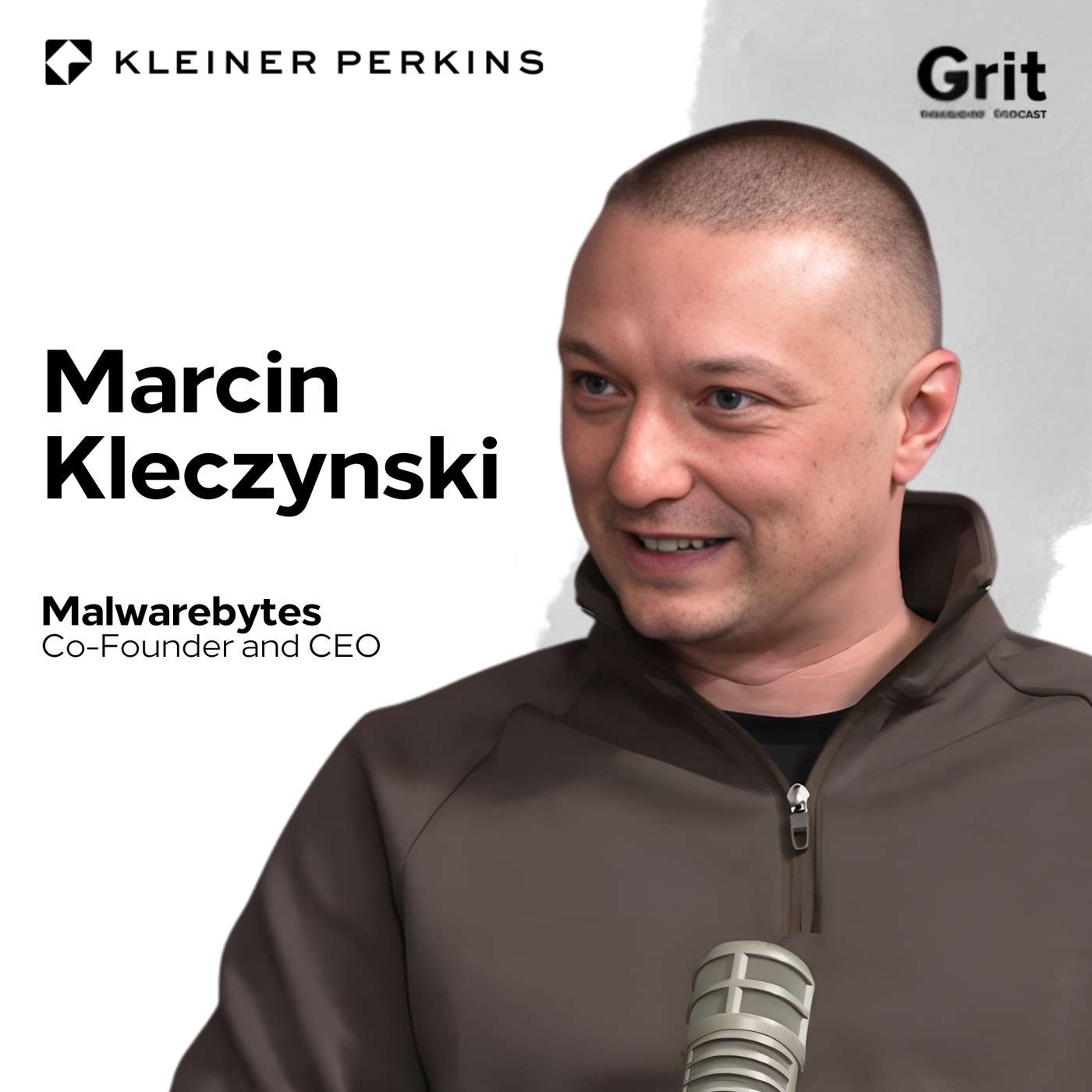
Marcin Kleczynski observed that candidates with flashy resumes from top companies often underperform. Conversely, candidates who appear less experienced on paper but possess strong will and motivation frequently exceed expectations, suggesting pedigree can be a misleading signal.
Once a company establishes a precedent for remote or hybrid work, it is almost impossible to increase in-office requirements. Founders find that trying to "put the genie back in the bottle" leads to significant employee resistance, making the initial policy decision a critical, one-way door.
As a highly profitable business, Malwarebytes didn't need capital for operations. Instead, its three major funding rounds (VC, crossover, PE) were used entirely for secondary transactions, providing liquidity to early founders and investors without diluting the company or adding cash to the balance sheet.
To get genuine interactions, the CEO of Malwarebytes often tells people he's 'just an engineer.' This approach stems from a servant leadership philosophy and allows him to receive unfiltered feedback about the company and its products, avoiding the pretense that comes with the CEO title.
The company's growth stalled while trying to serve consumers and businesses with one team and brand. They made the difficult decision to separate into two distinct businesses, Malwarebytes (consumer) and ThreatDown (B2B), each with its own leadership, which revitalized focus, profitability, and growth.
Standard reference calls are predictably positive. To get the truth, ask the reference, "What job do we need to hire next to help this person be successful?" The description of the required role will almost always be a perfect antonym of the candidate's skills, revealing their weaknesses.
Accepting significant capital before establishing a repeatable growth model is dangerous. It leads to premature salary inflation, aggressive hiring disconnected from revenue, cultural dilution, and a false sense of success that erodes the team’s grit and hunger.
To last 18+ years as CEO, Marcin Kleczynski had to "settle in." He stopped pulling all-nighters, realizing that a few hours of sleep allowed him to solve complex problems in minutes that he had fruitlessly struggled with for hours while exhausted.
For founders, work isn't always "fun" in a leisurely sense but provides a feeling of being intensely "alive" with a clear purpose. This state is preferable to the "dull" feeling of lacking a mission, even though it comes with a constant "stress tax" that dampens pure enjoyment.
In its early days, Malwarebytes sold perpetual licenses for $25 as "donationware." The company continues to honor these licenses for anyone who supported them between 2008 and 2014, a commitment that has fostered deep customer loyalty and a powerful, trusted brand.