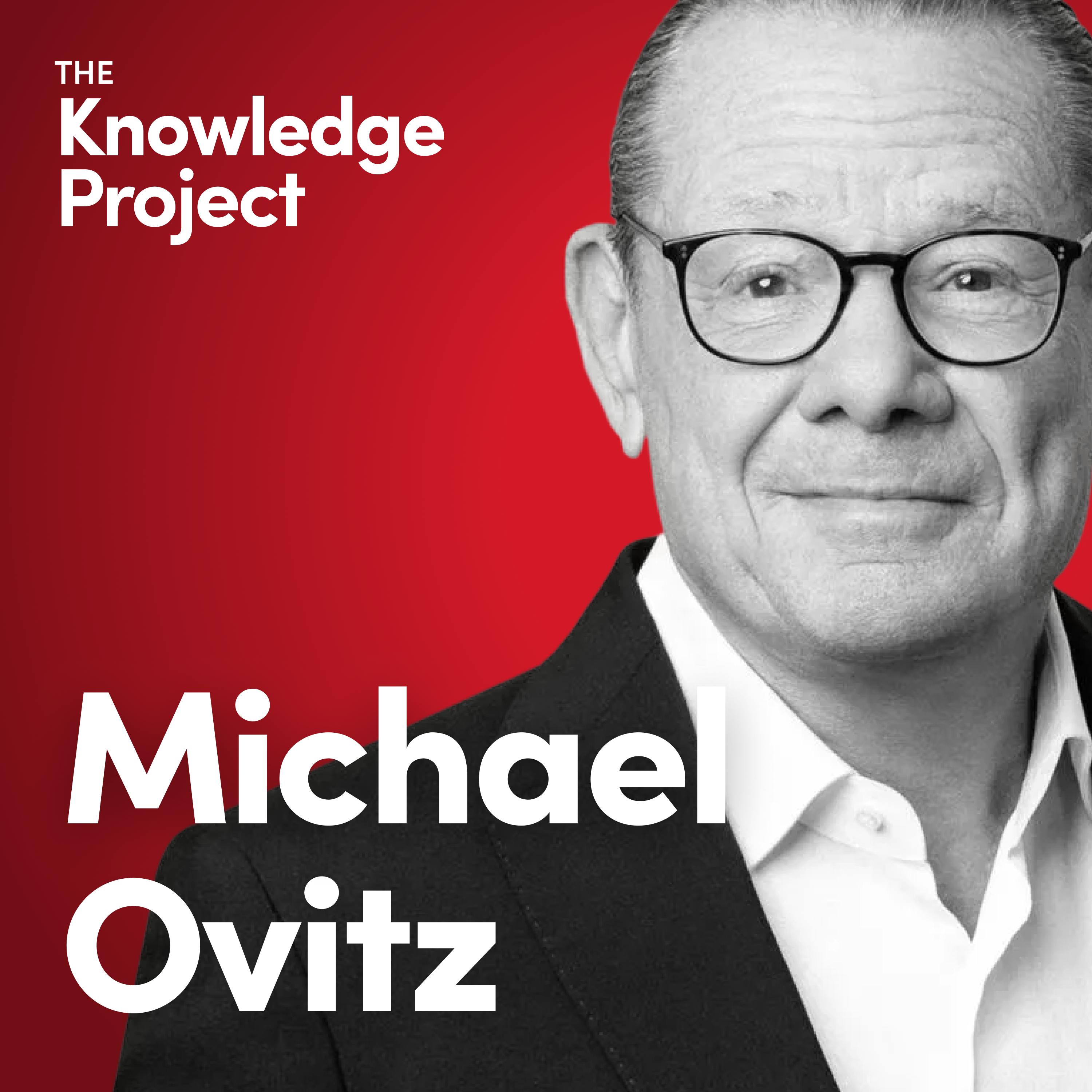
In an industry where everyone faked answers, talent agency CAA made it a rule to admit ignorance and promise to find the answer. This simple act of honesty built trust and became a competitive advantage.
Michael Ovitz identifies self-deception as the primary reason people fail in Hollywood and beyond. When you start believing you are superior or that your press is accurate, you become vulnerable to making critical mistakes.
Michael Ovitz believes momentum is the critical element that turns second-place teams into first-place winners and drives success in any venture. It must be consciously built through relentless, industrious, and educated hard work.
Ovitz realized the core tech of a struggling NFT company—neural fingerprinting—could solve a much bigger problem: watermarking and protecting IP for music, film, and sports, creating a massive new business.
Instead of the industry-standard "one client, one agent" model, CAA assigned multiple agents to every client. This ensured clients always had someone to talk to and prevented them from leaving if they tired of one person.
Ovitz observed that people who badmouth others, even their own partners, do so from a place of insecurity to make themselves look better. He implemented a strict "no badmouthing" rule at CAA to build a stronger, more positive culture.
CAA maintained a list of executives who supported them early on. If anyone on that list later fell on hard times, the agency made it their duty to find them a job, preserving their dignity and demonstrating extreme loyalty.
Ovitz argues that unlike in many other cultures where business failure brings shame, the American system allows and even encourages entrepreneurs to fail, learn, and try again. This resilience is a key driver of innovation.
Michael Ovitz views power as an ephemeral, fleeting concept, not a permanent attribute. He compares it to a lease with a closed, and never good, end. This mindset helps leaders stay grounded and focused on tangible results.
Marc Andreessen and Ben Horowitz told Michael Ovitz that his work—packaging talent, ideas, and capital—was functionally identical to their work in venture capital. This reveals a universal pattern for creating value across different industries.
When meeting Michael Ovitz, Patrick Collison ignored his successes. Instead, he bookmarked every mistake in Ovitz's memoir to analyze the conditions and decision-making, viewing this as a wiser path to learning.
In hindsight, Ovitz believes he could have cut back 10% of his work time and allowed the momentum he had built—along with his team—to carry the business forward. This reclaimed time could then be invested in family and personal interests.