Get your free personalized podcast brief
We scan new podcasts and send you the top 5 insights daily.
Because CD20 x CD3 bispecific antibodies require CD20 target engagement, antigen downregulation or loss is a primary resistance mechanism in patients experiencing early relapse. Dr. Elizabeth Budde highlights that verifying CD20 expression via repeat biopsy is clinically mandatory prior to initiating bispecific treatment or determining post-relapse therapy, ensuring the target antigen remains present on lymphoma cells.

Related Insights
Indefinite treatment with bispecific antibodies is likely unnecessary and exposes DLBCL patients to risks like hypogammaglobulinemia and recurrent infections. A fixed duration of no more than one year is a reasonable approach, with a readiness to stop earlier for patients in a deep, sustained complete response, potentially guided by ctDNA.
An exploratory strategy for DLBCL patients involves using ctDNA to detect minimal residual disease after CAR T-cell therapy. This allows for early intervention with bispecific antibodies when the disease burden is low, potentially preventing full clinical progression, a shift from reactive to proactive treatment.
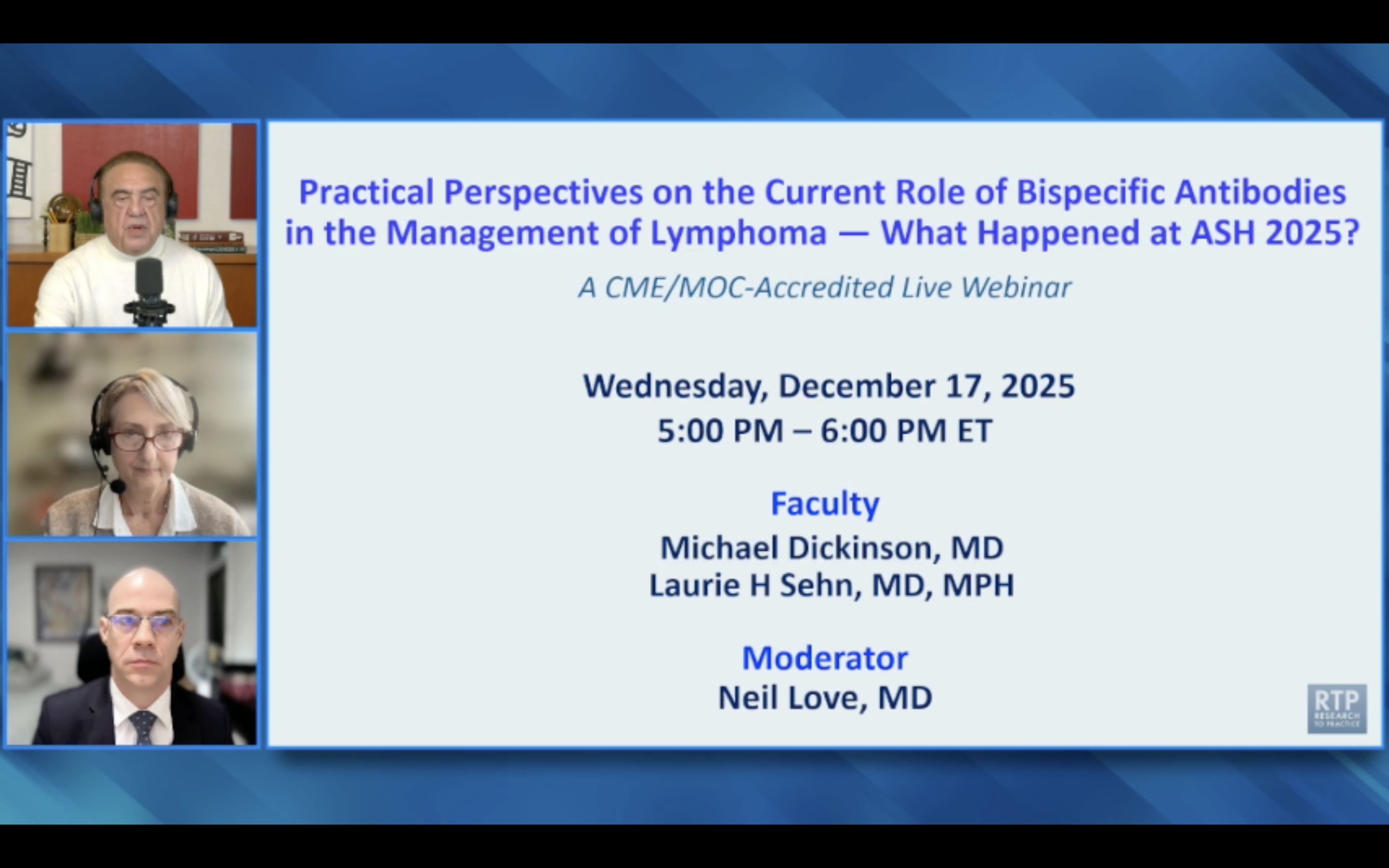
Not all CD20-targeting bispecifics can be combined with rituximab. Mosunetuzumab binds the same epitope, causing competition. However, glofitamab and epcoritamab bind different epitopes, allowing for logical and potentially synergistic combinations with rituximab-based regimens.
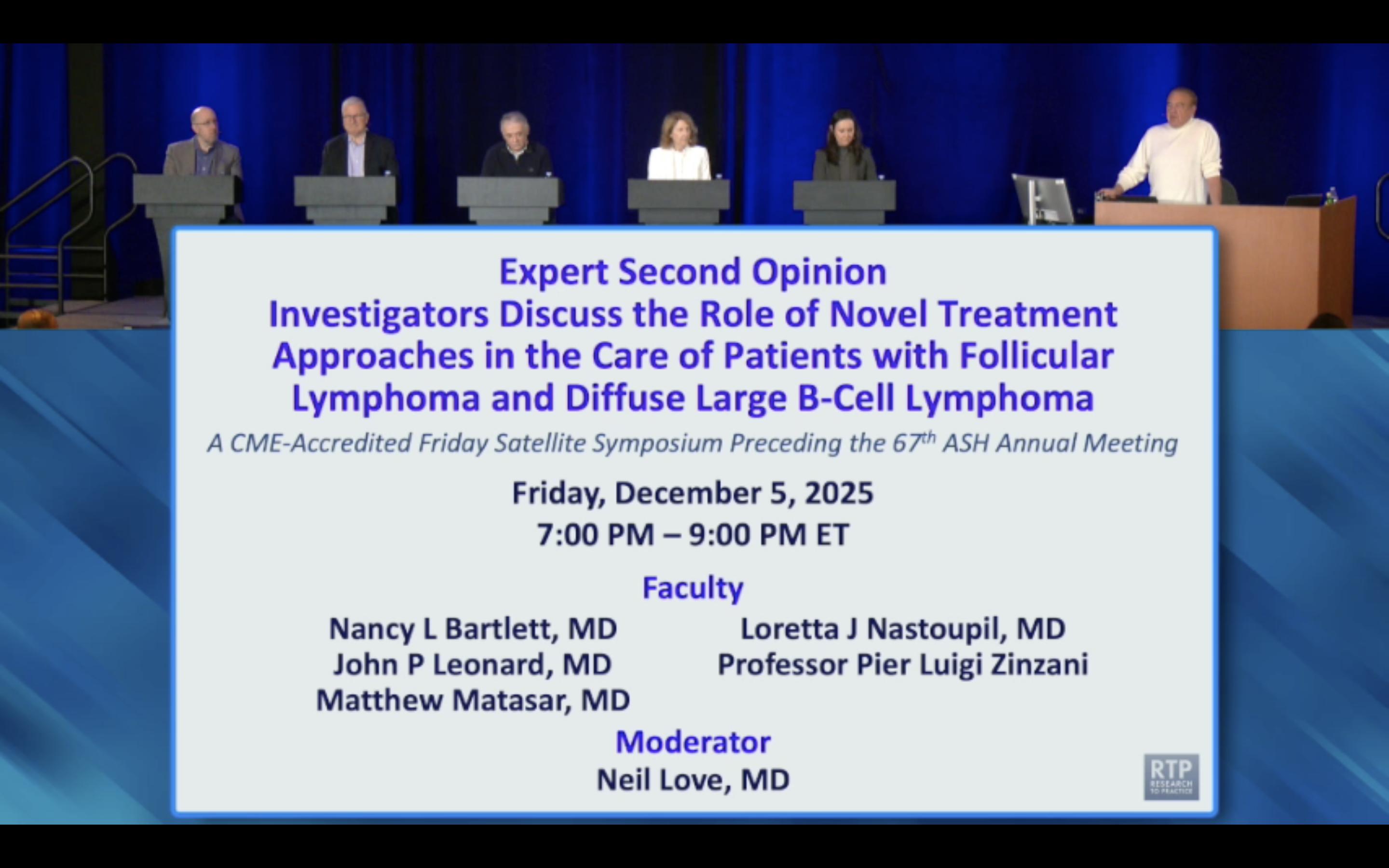
For DLBCL patients awaiting CAR-T cell therapy, particularly those with aggressive disease, bispecific antibodies are the preferred bridging strategy. This approach effectively controls disease and reduces tumor burden for better CAR-T outcomes, while avoiding the T-cell depleting effects of traditional chemotherapy.
An expert treating DLBCL states they no longer use bispecific antibodies as monotherapy. Combining them with partners like chemotherapy (GemOx) or ADCs (Polatuzumab) raises the complete response rate by 15-20%, offering a better chance of benefit for patients.

Prior CAR T-cell therapy does not compromise the clinical efficacy of CD20 x CD3 bispecific antibodies in diffuse large B-cell lymphoma. In phase 2 trials, epcoritamab achieved a 36% complete remission rate in post-CAR T patients compared to 39% overall. Similarly, glofitumab demonstrated complete remission rates in patients with prior CAR T exposure comparable to those who were CAR T-naive, with durable remissions observed in both groups.
In clinical practice for relapsed large cell lymphoma, glofitumab is a preferred bispecific antibody. Clinicians favor it over epcoritamab because it is time-limited (vs. indefinite treatment) and has a more patient-friendly every-three-week schedule, while also being more active than mosunetuzumab.
Before initiating a CD20-targeting bispecific antibody in patients who have failed CAR-T therapy, a new biopsy is mandatory. Up to 30% of these patients experience CD20 antigen loss, which would render the bispecific therapy ineffective and necessitates choosing a drug with a different target.
Long-term follow-up from the pivotal epcoritamab trial reveals that 46% of DLBCL patients who achieve a complete remission maintain it at four years. This durability provides strong evidence that bispecific monotherapy, not just CAR-T, can be a curative treatment for a subset of patients.
In heavily pretreated relapsed/refractory follicular lymphoma, it's crucial to perform a tumor biopsy to check for CD20 expression before choosing a CD20-targeting bispecific antibody. Prior treatments can lead to loss of the antigen, which would render the bispecific ineffective.