Get your free personalized podcast brief
We scan new podcasts and send you the top 5 insights daily.
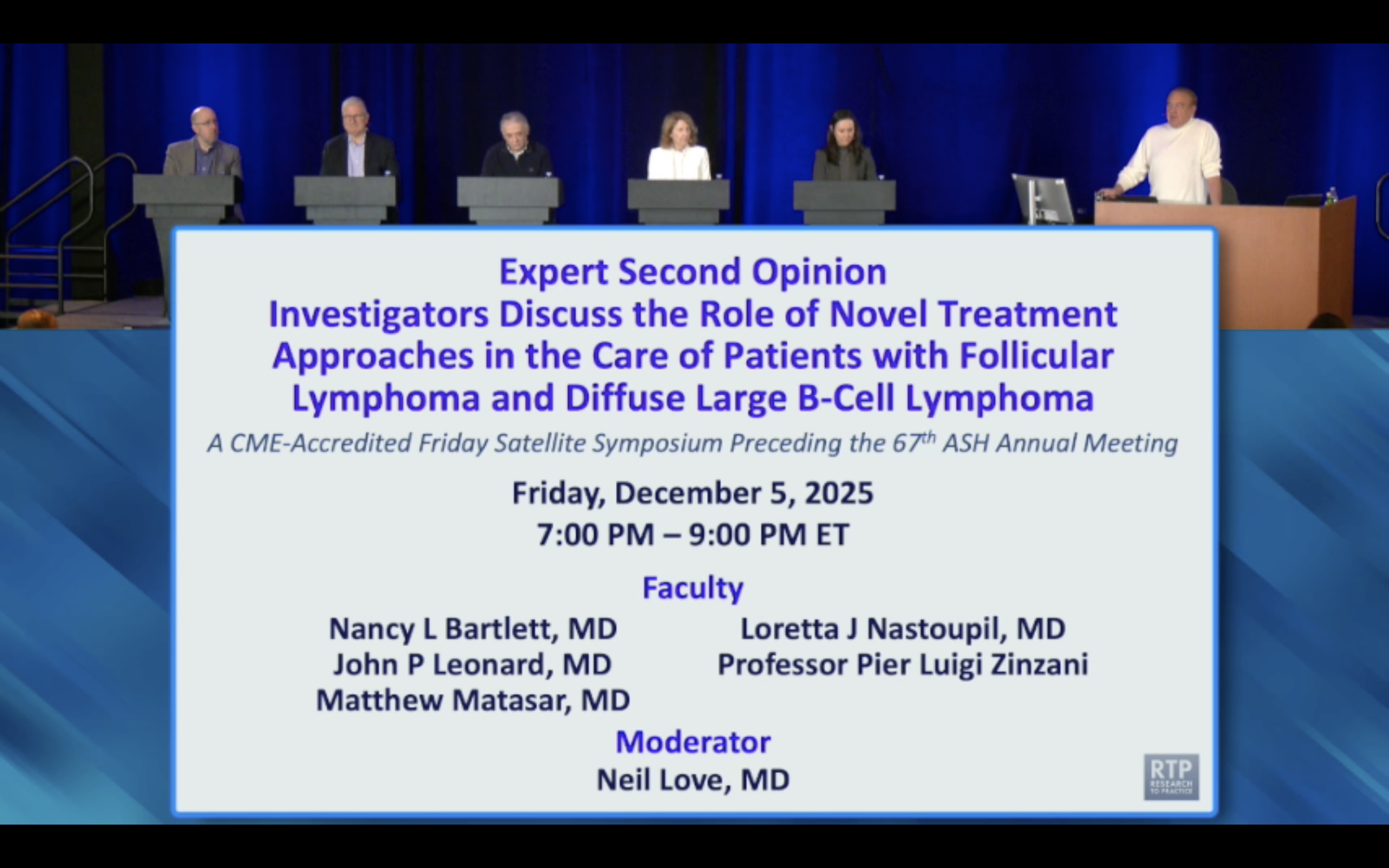
Not all CD20-targeting bispecifics can be combined with rituximab. Mosunetuzumab binds the same epitope, causing competition. However, glofitamab and epcoritamab bind different epitopes, allowing for logical and potentially synergistic combinations with rituximab-based regimens.
Related Insights
The future of advanced prostate cancer treatment may involve combining ADCs with bispecific T-cell engagers. This strategy could use ADCs for a short duration to deliver a potent hit, followed by immunotherapy to achieve durable remission, potentially reducing toxicity and enabling earlier use.

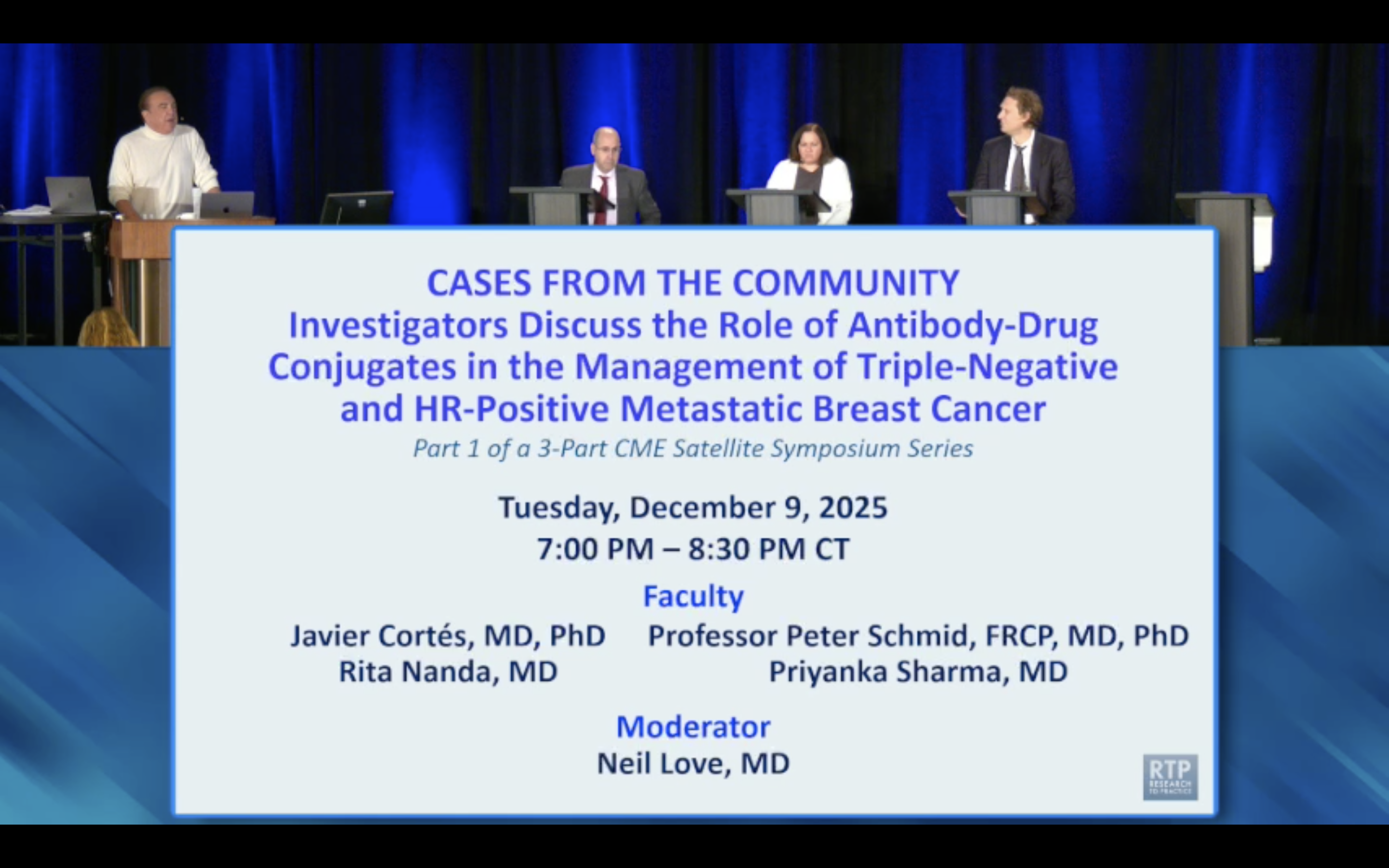
Real-world data suggests that using one antibody-drug conjugate (ADC) immediately after another is often ineffective. A potential strategy to overcome this resistance is to administer a different class of chemotherapy before starting the second ADC.
Data from J&J's Majestic 3 trial suggests its off-the-shelf bispecific combination could rival the efficacy of its own blockbuster CAR-T, Carvykti. This sets up an internal competition where a more accessible therapy could challenge a complex, personalized one in earlier lines of treatment.

An innovative strategy for solid tumors involves using bispecific T-cell engagers to target the tumor stroma—the protective fibrotic tissue surrounding the tumor. This novel approach aims to first eliminate this physical barrier, making the cancer cells themselves more vulnerable to subsequent immune attack.

In follicular lymphoma, the treatment goal is durable remission with manageable toxicity, not necessarily a cure. Therefore, clinicians frequently prefer using a bispecific antibody first, reserving the more complex and toxic CAR-T cell therapy for transformed disease or after a bispecific fails.
The BRUIN-313 trial successfully compared pirtobrutinib to bendamustine-rituximab (BR). However, BR is no longer the frontline standard of care. This 'straw man' comparator makes it difficult to position pirtobrutinib against current preferred treatments like other BTK inhibitors or venetoclax regimens, limiting immediate clinical applicability.

Using a BCMA bispecific antibody first can exhaust a patient's T-cells or cause tumors to lose the BCMA target, rendering a subsequent BCMA-targeted CAR-T therapy ineffective. The optimal sequence is CAR-T first, which preserves T-cell function and BCMA expression, leaving bispecifics as a viable later-line option.

Before initiating a CD20-targeting bispecific antibody in patients who have failed CAR-T therapy, a new biopsy is mandatory. Up to 30% of these patients experience CD20 antigen loss, which would render the bispecific therapy ineffective and necessitates choosing a drug with a different target.
Bi-specific T-cell engagers (BiTEs) are highly immunogenic because the mechanism activating T-cells to kill cancer also primes them to mount an immune response against the drug itself. This 'collateral effect' is an inherent design challenge for this drug class.

The ECHELON-3 trial showed that brentuximab vedotin plus R-squared is effective in relapsed/refractory DLBCL, even in patients with negligible CD30 expression. This suggests the drug's benefit may stem from immune synergy or other mechanisms, not just direct CD30 targeting.