Get your free personalized podcast brief
We scan new podcasts and send you the top 5 insights daily.
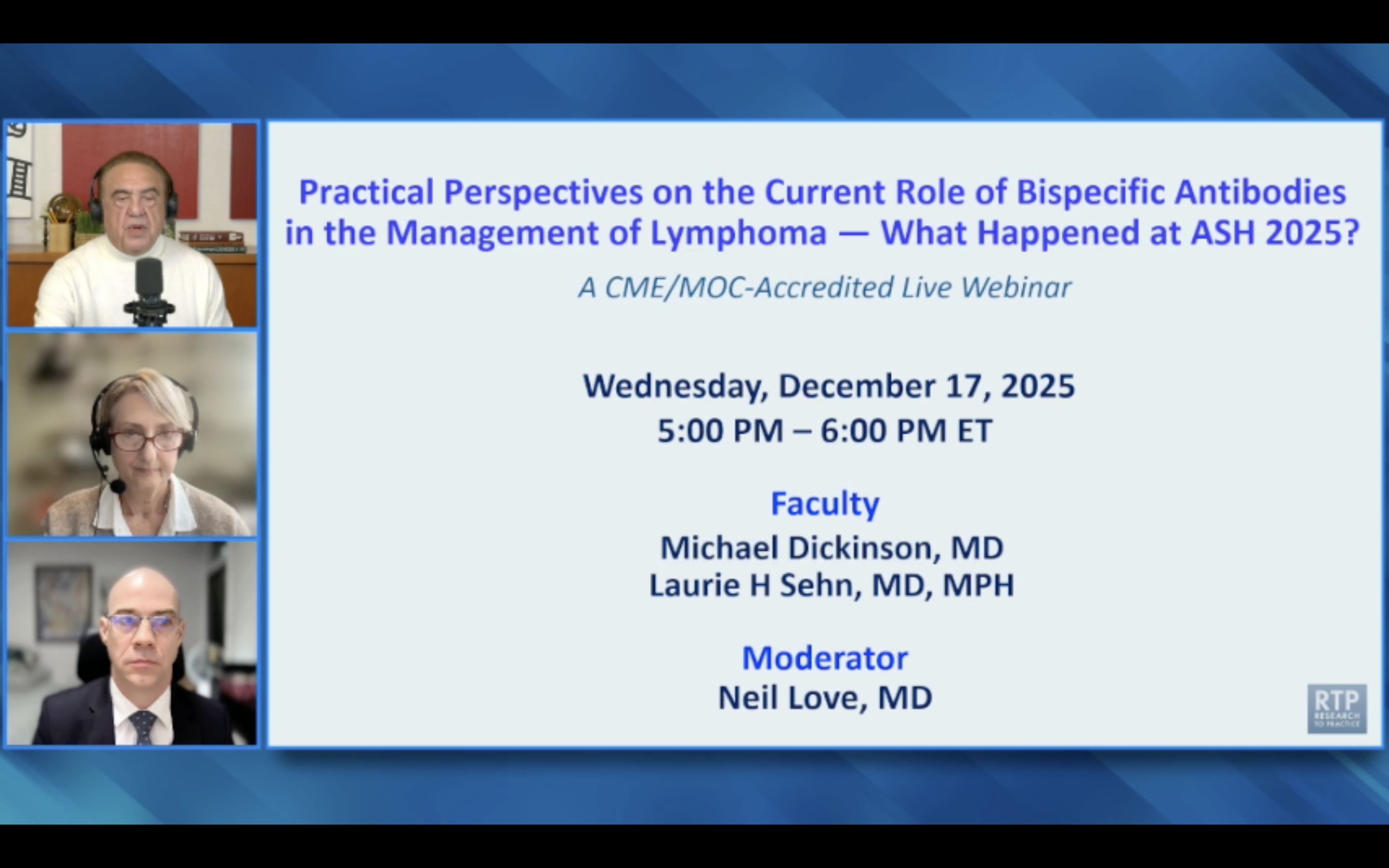
Prior CAR T-cell therapy does not compromise the clinical efficacy of CD20 x CD3 bispecific antibodies in diffuse large B-cell lymphoma. In phase 2 trials, epcoritamab achieved a 36% complete remission rate in post-CAR T patients compared to 39% overall. Similarly, glofitumab demonstrated complete remission rates in patients with prior CAR T exposure comparable to those who were CAR T-naive, with durable remissions observed in both groups.

Related Insights
For DLBCL patients awaiting CAR-T cell therapy, particularly those with aggressive disease, bispecific antibodies are the preferred bridging strategy. This approach effectively controls disease and reduces tumor burden for better CAR-T outcomes, while avoiding the T-cell depleting effects of traditional chemotherapy.
As CAR-T cell therapies are increasingly adopted for second-line treatment of large cell lymphoma, epcoritamab is solidifying its role as a critical, potentially curative replacement option in the third-line setting. This establishes a clear sequential treatment pathway for patients who continue to relapse.
Clinicians should not be deterred from using CD19 CAR T-cell therapy in patients who have previously received other CD19-targeting agents like tafasitamab. Preclinical and retrospective clinical data suggest prior exposure does not impair CAR T efficacy, and therefore re-testing for CD19 expression is unnecessary.

Beyond their direct anti-myeloma effects, CELMoDs potently activate the immune system. This positions them as ideal partners for immunotherapies like CAR T and bispecifics, with the potential to restore immune function and overcome resistance to T-cell redirecting therapies.

Early trial data for single-agent bispecific antibodies in elderly or frail patients with large cell lymphoma reveals surprisingly high efficacy. This success is prompting discussions about a chemotherapy-free future for this population, with combinations like glofitumab-polatuzumab potentially replacing traditional regimens.
In relapsed/refractory mantle cell lymphoma, the bispecific antibody glofitimab is achieving complete remission rates above 75%. This is unprecedented and notably better than existing CAR-T therapy data, suggesting an accessible, off-the-shelf immunotherapy can outperform more complex cellular therapies in this setting.

In clinical practice for relapsed large cell lymphoma, glofitumab is a preferred bispecific antibody. Clinicians favor it over epcoritamab because it is time-limited (vs. indefinite treatment) and has a more patient-friendly every-three-week schedule, while also being more active than mosunetuzumab.
Before initiating a CD20-targeting bispecific antibody in patients who have failed CAR-T therapy, a new biopsy is mandatory. Up to 30% of these patients experience CD20 antigen loss, which would render the bispecific therapy ineffective and necessitates choosing a drug with a different target.
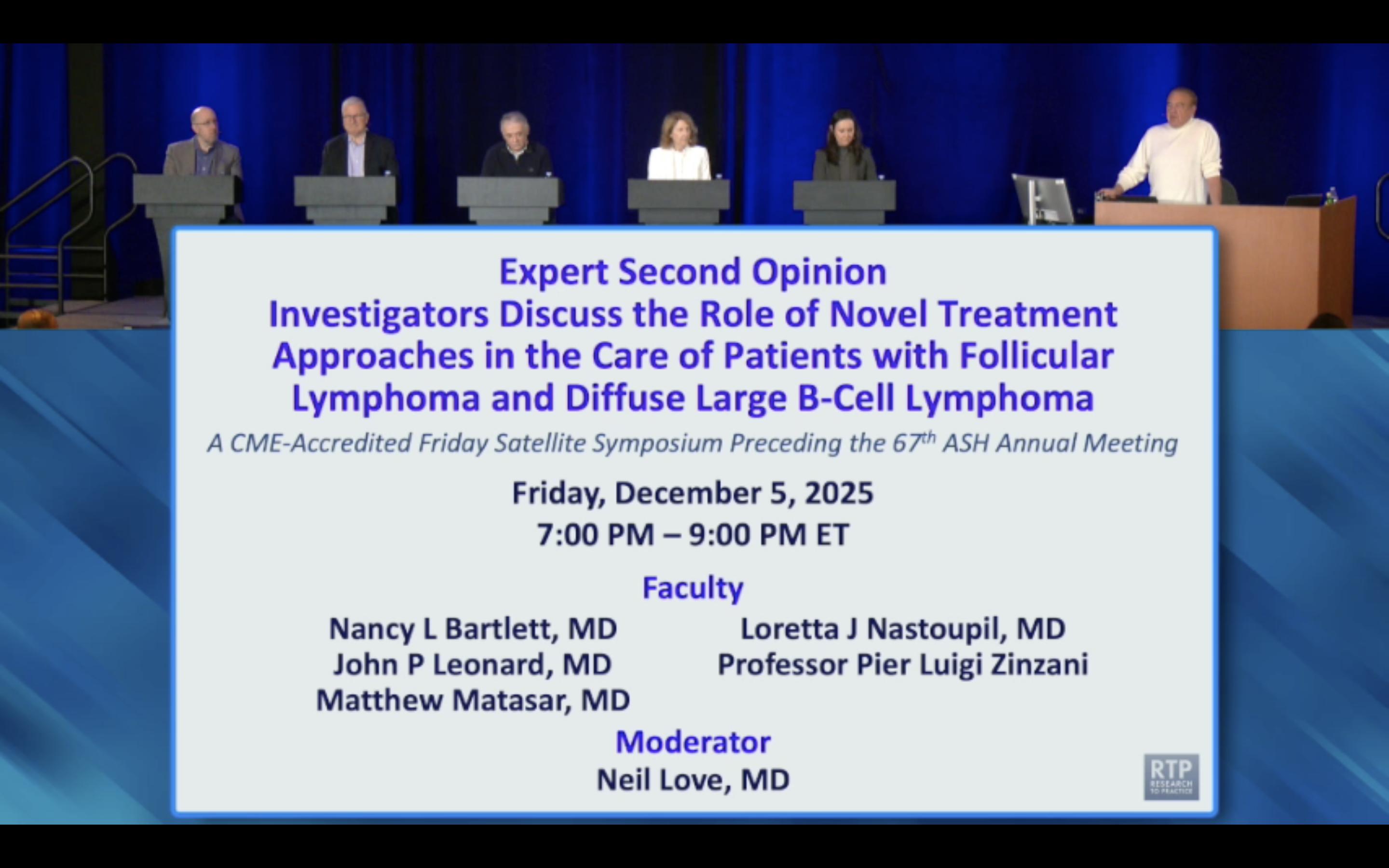
Moving CAR T-cell therapy from the third-line to the second-line setting for high-risk DLBCL doesn't just improve survival curves, it meaningfully increases the cure fraction from approximately 40% to 50-55%. This quantifiable benefit provides a strong rationale for using CAR T therapy earlier in the disease course.
Long-term follow-up from the pivotal epcoritamab trial reveals that 46% of DLBCL patients who achieve a complete remission maintain it at four years. This durability provides strong evidence that bispecific monotherapy, not just CAR-T, can be a curative treatment for a subset of patients.