Get your free personalized podcast brief
We scan new podcasts and send you the top 5 insights daily.
An expert treating DLBCL states they no longer use bispecific antibodies as monotherapy. Combining them with partners like chemotherapy (GemOx) or ADCs (Polatuzumab) raises the complete response rate by 15-20%, offering a better chance of benefit for patients.

Related Insights
The future of advanced prostate cancer treatment may involve combining ADCs with bispecific T-cell engagers. This strategy could use ADCs for a short duration to deliver a potent hit, followed by immunotherapy to achieve durable remission, potentially reducing toxicity and enabling earlier use.

Combining polatuzumab vedotin with bispecific antibodies appears particularly effective for patients with double-hit lymphoma. This is significant because these high-risk patients, who have poor prognoses, were notably excluded from pivotal trials like STAR GLOW, suggesting a potential new standard for this specific subgroup.
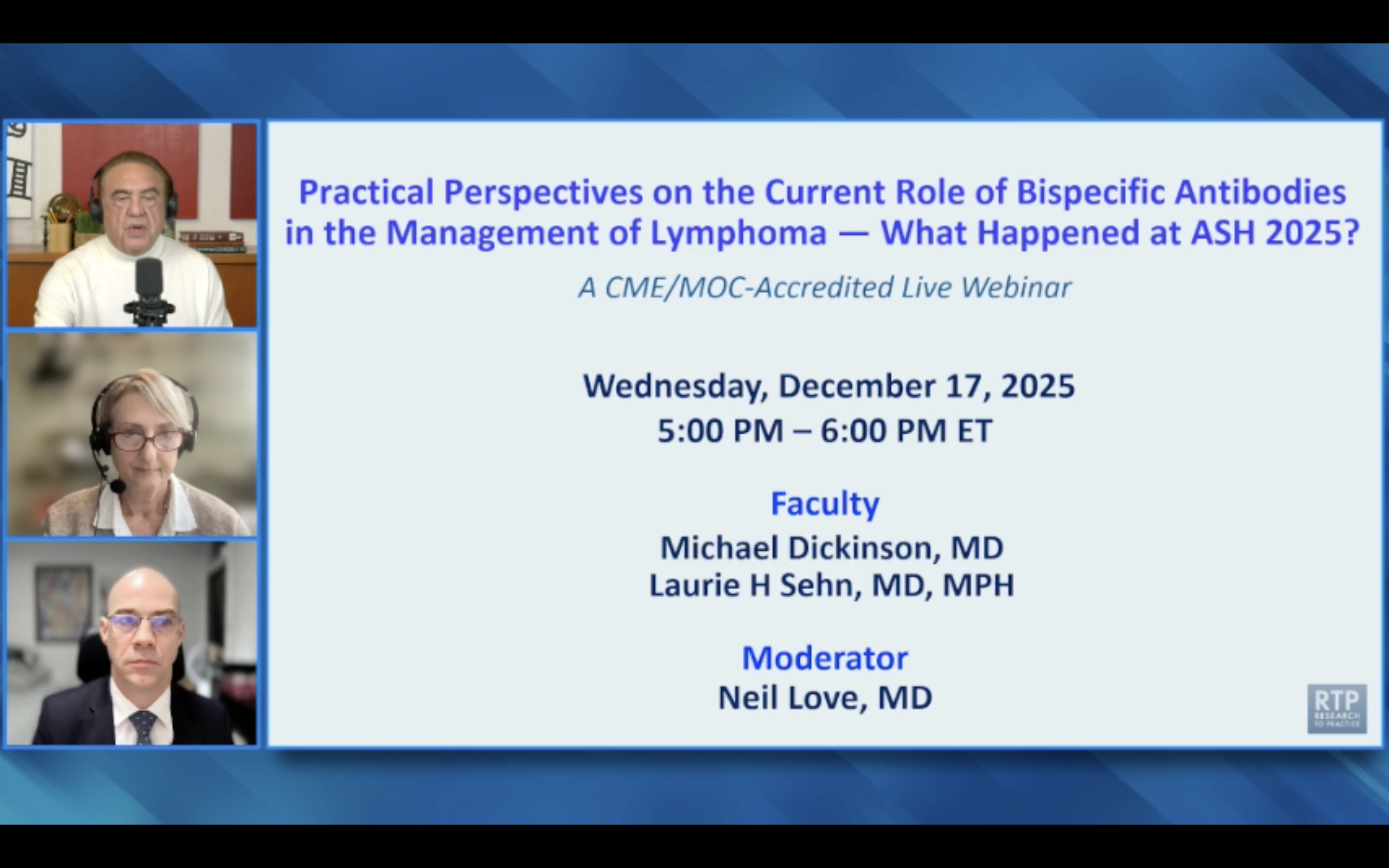
Dr. Patrick Baeuerle suggests that instead of engineering complex co-stimulatory signals into T-cell engagers, a more effective strategy is to combine them with standard-of-care treatments like chemotherapy or ADCs. This approach dramatically augments efficacy and has already prompted multiple Phase 3 trials.

Combining the ADC Loncastuximab before a bispecific antibody may lower the bispecific's toxicity, potentially through a debulking effect. This surprising finding suggests a strategy to improve the tolerability and delivery of bispecifics, especially in community settings.
In follicular lymphoma, the treatment goal is durable remission with manageable toxicity, not necessarily a cure. Therefore, clinicians frequently prefer using a bispecific antibody first, reserving the more complex and toxic CAR-T cell therapy for transformed disease or after a bispecific fails.
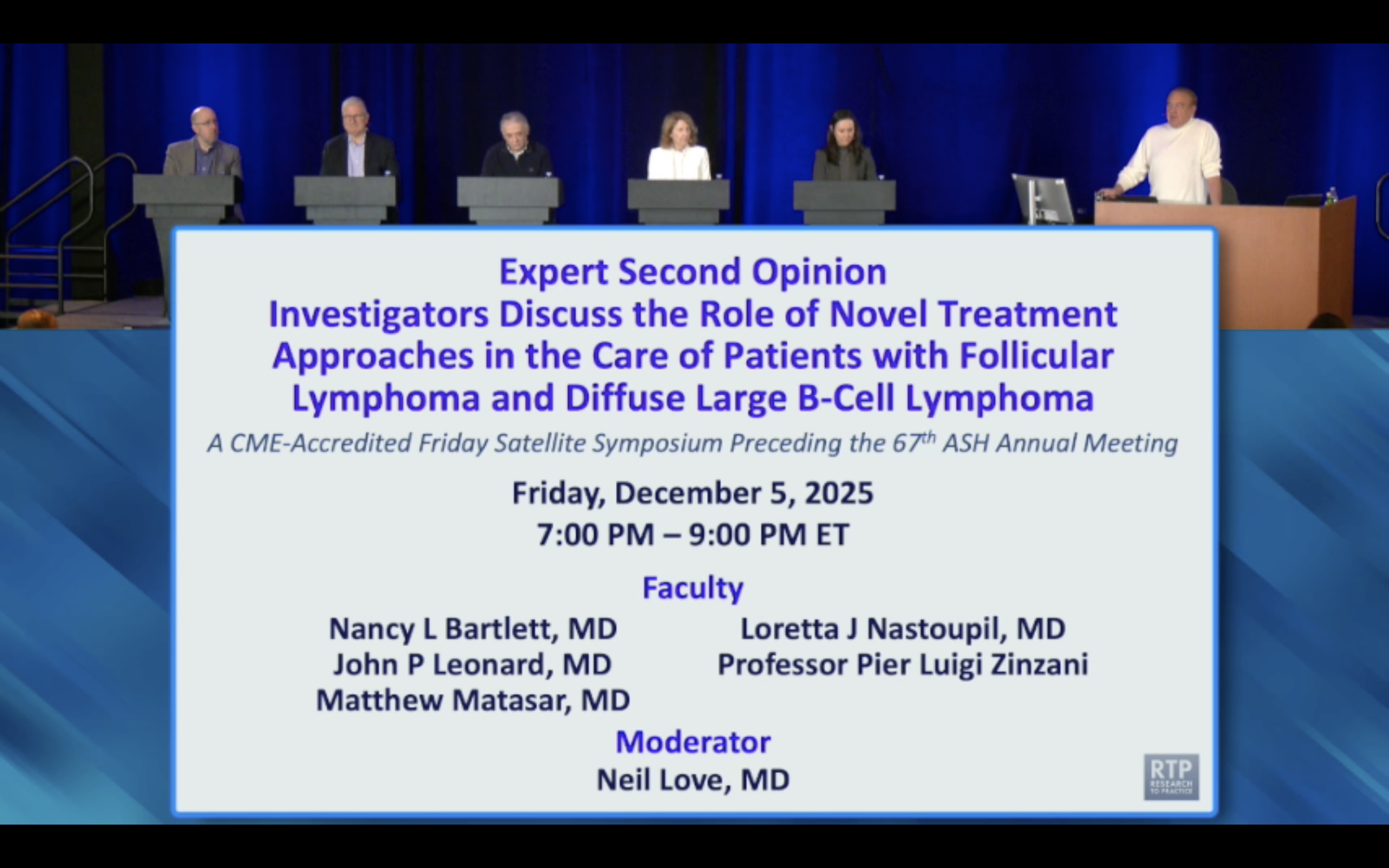
Not all CD20-targeting bispecifics can be combined with rituximab. Mosunetuzumab binds the same epitope, causing competition. However, glofitamab and epcoritamab bind different epitopes, allowing for logical and potentially synergistic combinations with rituximab-based regimens.
The long-standing platinum doublet backbone for frontline SCLC may soon be challenged. The high efficacy of novel agents like antibody-drug conjugates and bispecific antibodies in later lines is prompting trials that consider moving them into the first-line setting, a strategy previously considered "unthinkable."

Emerging data reveals significant synergy when combining antibody-drug conjugates (ADCs) like polatuzumab vedotin with bispecific antibodies like glofitumab. These combinations show impressive results in relapsed/refractory non-Hodgkin lymphoma, signaling a major future direction for developing more potent therapies.
Long-term follow-up from the pivotal epcoritamab trial reveals that 46% of DLBCL patients who achieve a complete remission maintain it at four years. This durability provides strong evidence that bispecific monotherapy, not just CAR-T, can be a curative treatment for a subset of patients.
In heavily pretreated relapsed/refractory follicular lymphoma, it's crucial to perform a tumor biopsy to check for CD20 expression before choosing a CD20-targeting bispecific antibody. Prior treatments can lead to loss of the antigen, which would render the bispecific ineffective.