Get your free personalized podcast brief
We scan new podcasts and send you the top 5 insights daily.
The future of IT support is proactive, not reactive. By ingesting historical ticket data and system logs, AI can perform root cause analysis to identify underlying issues—like an outdated driver causing crashes—and automatically deploy a fix before users are even aware a problem exists.

Related Insights
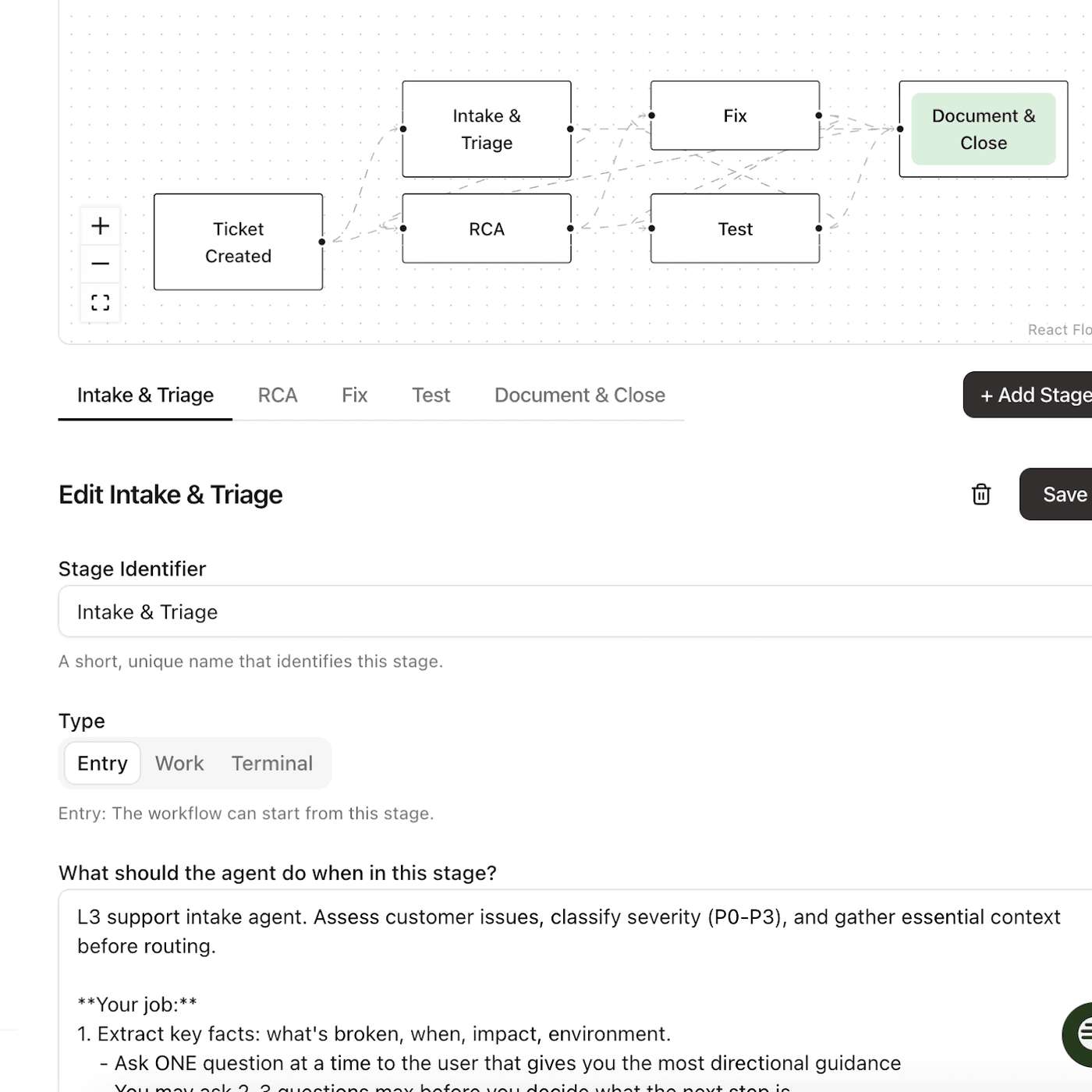
An AI agent monitors a support inbox, identifies a bug report, cross-references it with the GitHub codebase to find the issue, suggests probable causes, and then passes the task to another AI to write the fix. This automates the entire debugging lifecycle.

AI can analyze a customer's support history to predict their behavior. For instance, if a customer consistently calls about shipping delays, an AI agent can proactively contact them with an update before they reach out, transforming a reactive, negative interaction into a positive customer experience.

Create a virtuous cycle for your knowledge base. Use AI to analyze closed support tickets, identify the core issue and solution, and propose a new FAQ entry if one doesn't exist. A human then reviews and approves the suggestion, continuously improving the AI's data source.
Traditional customer service waits for a problem to occur and then tries to solve it. Agentic AI is moving this function 'upstream' into the digital experience itself. By anticipating and addressing issues within the user journey before they become problems, companies can prevent customer friction entirely.

The AI's power stems from creating a holistic knowledge graph. It integrates deep codebase analysis—including regressions and fixes—with contextual data from project management and support tools like Jira and Zendesk. This mimics how a top-tier human engineer synthesizes disparate information to solve problems.
The traditional Quarterly Business Review (QBR) is an outdated, reactive process based on past events. An AI agent can act as a continuous, real-time QBR, constantly monitoring customer progress, identifying gaps, and proactively engaging them, preventing issues before they happen.

Instead of just fielding calls, the contact center can act as an early warning system. By monitoring call influx and themes in real-time, leaders can identify systemic issues, like a website bug, and proactively alert agents and the broader business, turning reactive support into a strategic intelligence hub.

An IT head with two decades of experience believes AI will fundamentally change IT support. Traditional ITSM, reliant on manual ticketing and workflows, is being replaced by AI agents that can instantly understand intent, map requests to workflows, and fulfill them, collapsing resolution times.

Newman's most critical infrastructure for AI-assisted development is a universal logging service for all his apps (front-end, back-end, mobile). When a bug appears, he can tell an AI agent to "debug this," and it can analyze the comprehensive logs to find the root cause without guesswork.

To automate bug fixing, connect an AI agent to your error reporting (Sentry), database (Supabase), and log drains (Acxiom). When a bug is reported, the agent can autonomously replay events from logs, diagnose the root cause of the failure, and eventually fix it, creating a powerful self-healing loop for your application.