Get your free personalized podcast brief
We scan new podcasts and send you the top 5 insights daily.
Shaka Senghor introduces the concept of "well-intended prisons"—actions that seem helpful but are actually restrictive. A helicopter parent, for example, thinks they are protecting their child but is actually preventing them from developing resilience and making their own choices.

Related Insights
By identifying and stepping back from her lifelong role as the "responsible child" who always acted first, the speaker's mother created the necessary space for her siblings to step up. This shows how self-perception can inadvertently prevent others from demonstrating their own capabilities.

The home should be a sanctuary of warmth and nurturing. Hard-driving discipline and skill-building criticism are often more effectively delivered by external figures like coaches or teachers. This strategy preserves the positive parent-child relationship while still allowing children to develop resilience and grit in structured settings.

The mere presence of an adult shifts responsibility away from children. They come to expect adults to enforce safety and solve conflicts, which discourages them from developing their own problem-solving skills, risk assessment, and self-reliance.
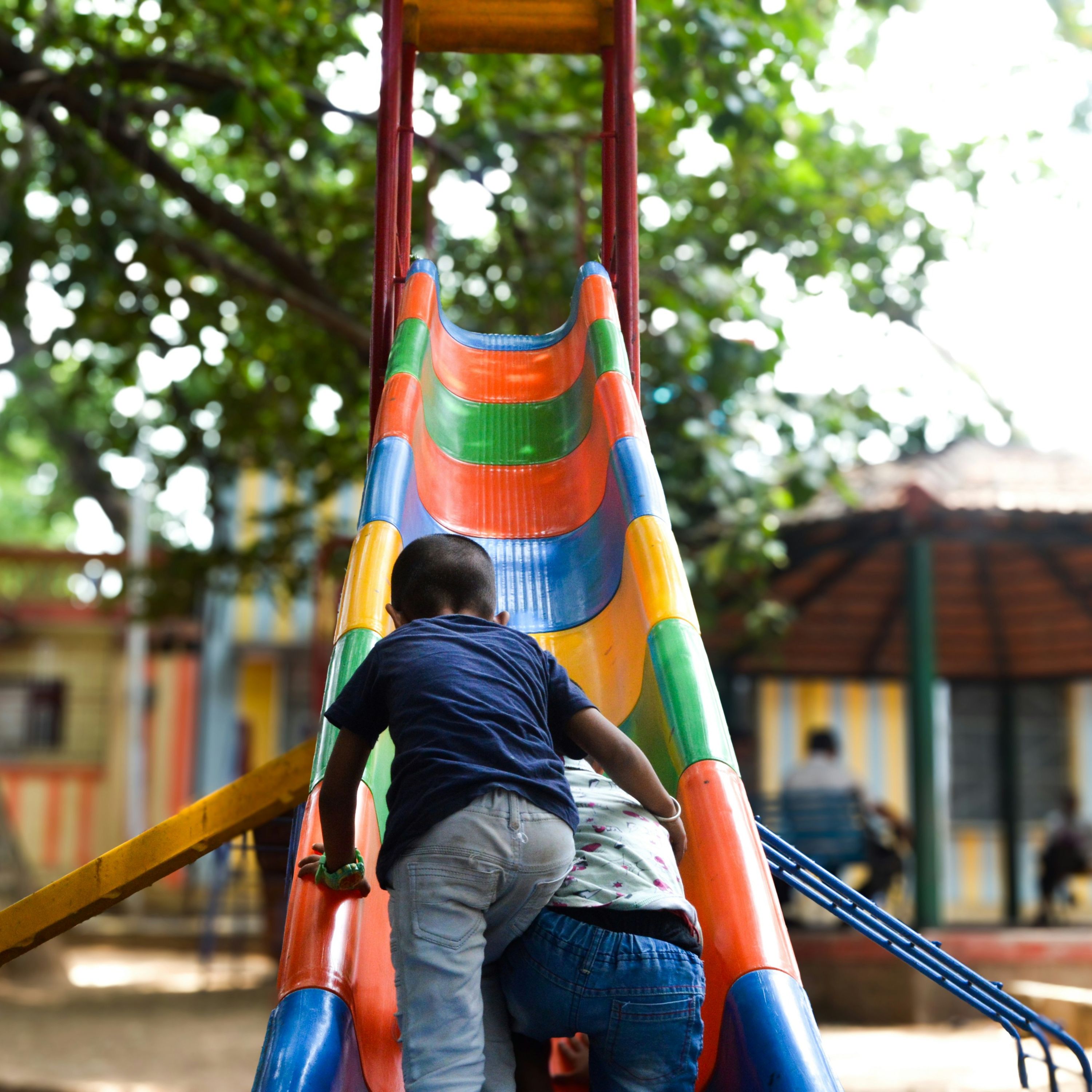
The rise of 'helicopter parenting'—driven by high-profile but statistically rare media stories—has stripped childhood of unstructured, challenging experiences. Without facing minor physical and social risks (like playground fights), younger generations perceive intellectual disagreements as severe threats, leading to higher anxiety and depression.

While well-intentioned, attending every single school recital or sports game can create unrealistic expectations for children. Occasionally missing an event teaches resilience, adaptability, and the reality that life sometimes gets in the way, better preparing them for adulthood.

When reacting to a negative experience, like having an absent parent, the tendency is to swing to the extreme opposite, like being an over-present parent. This overcorrection often creates a new set of problems instead of finding a healthy balance, perpetuating a cycle of dysfunction.
When adults intervene in children's unstructured play to "teach" them the "right" way to do things, they often strip the activity of its imaginative joy and engagement. This transforms a creative game into a boring, adult-led lesson, diminishing learning and happiness.
The speaker highlights a critical flaw in modern parenting, citing NYU's Jonathan Haidt. Parents often heavily supervise children's physical activities but fail to provide adequate safeguards for the more dangerous and unregulated digital world, creating a harmful imbalance in risk exposure.
Pediatrician Donald Winnicott argued that children must learn to handle frustration and disappointment. A "perfect" parent who shields a child from all difficulty inadvertently robs them of the chance to develop coping mechanisms for the real world.

Author Shaka Senghor posits that internal prisons built from negative emotions like grief, shame, and trauma are more powerful and restrictive than literal ones. Overcoming them requires deep internal work, not a change in external circumstances.