Get your free personalized podcast brief
We scan new podcasts and send you the top 5 insights daily.
The mere presence of an adult shifts responsibility away from children. They come to expect adults to enforce safety and solve conflicts, which discourages them from developing their own problem-solving skills, risk assessment, and self-reliance.
Related Insights
Young employees' perceived lack of resilience isn't a generational flaw but a result of parenting that shielded them from hardship. The decline of teenagers working difficult, blue-collar summer jobs has created adults who are less prepared for the realities of the workplace.

The home should be a sanctuary of warmth and nurturing. Hard-driving discipline and skill-building criticism are often more effectively delivered by external figures like coaches or teachers. This strategy preserves the positive parent-child relationship while still allowing children to develop resilience and grit in structured settings.

Over the same decades that children's independent play has declined, rates of youth anxiety and depression have steadily risen. Unsupervised play is crucial for developing an "internal locus of control," which allows kids to learn they can handle life’s challenges and builds resilience.
Research shows children engage in more complex, "authentic communication" when playing with peers because they are constantly negotiating and problem-solving. In contrast, adult-child interactions are often didactic and less challenging, stunting the development of sophisticated language skills.
While well-intentioned, attending every single school recital or sports game can create unrealistic expectations for children. Occasionally missing an event teaches resilience, adaptability, and the reality that life sometimes gets in the way, better preparing them for adulthood.
When adults intervene in children's unstructured play to "teach" them the "right" way to do things, they often strip the activity of its imaginative joy and engagement. This transforms a creative game into a boring, adult-led lesson, diminishing learning and happiness.
Unlike organized activities with fixed rules, unstructured play forces children to invent, negotiate, and adapt rules themselves. This teaches them that rules are not sacrosanct but are mutable agreements created to facilitate fun and fairness for the group.
Pediatrician Donald Winnicott argued that children must learn to handle frustration and disappointment. A "perfect" parent who shields a child from all difficulty inadvertently robs them of the chance to develop coping mechanisms for the real world.

To develop a child's patience and ability to manage expectations, a parent can strategically delay fulfilling their requests. This real-world version of the famous "marshmallow test" trains the skill of delayed gratification, which is linked to long-term success and self-control.
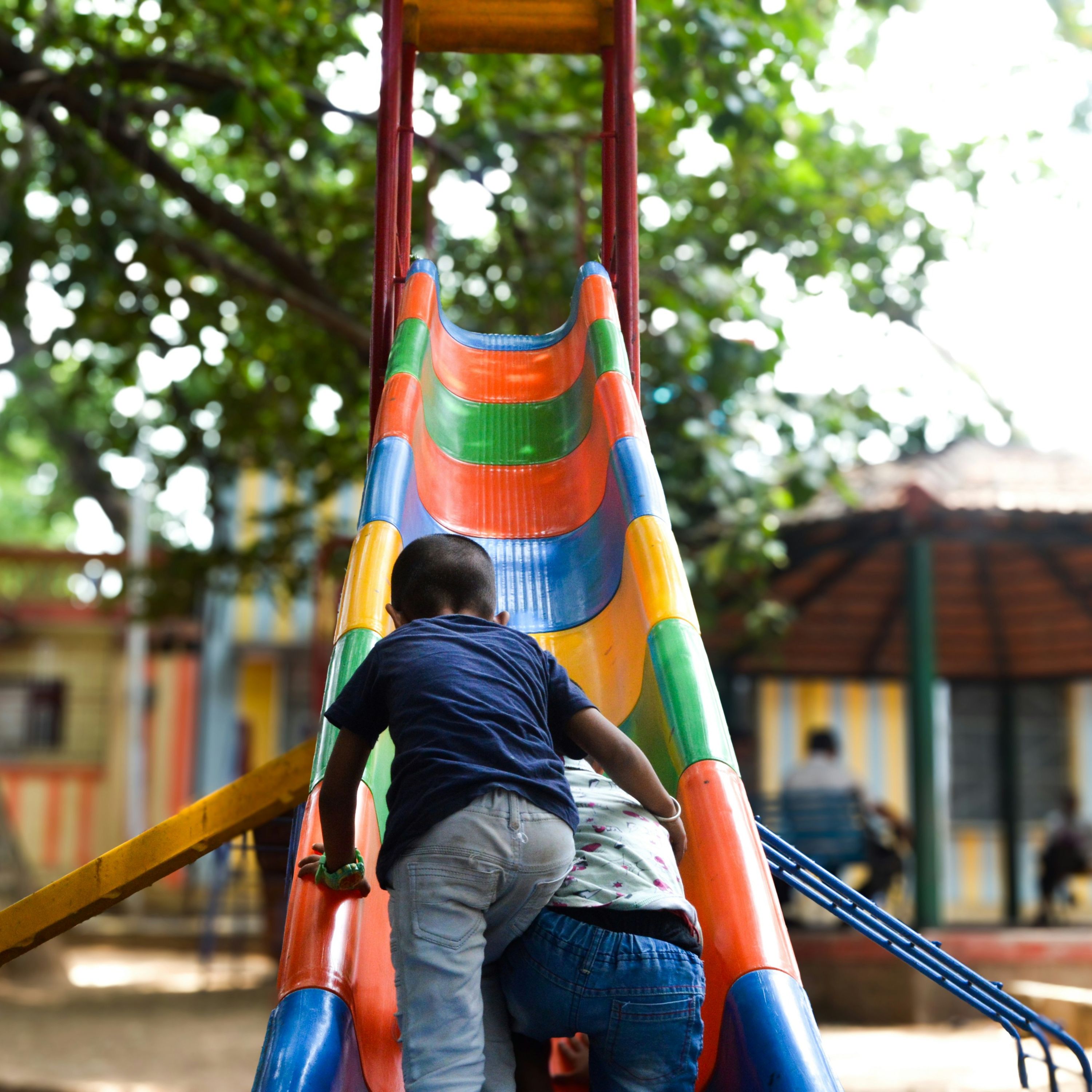
Contrary to the goal of eliminating all danger, progressive playground design intentionally incorporates managed risk. This "risky play" is psychologically vital for children to learn physical limits, problem-solving, and resilience in a controlled environment, which ultimately makes them safer.
