Get your free personalized podcast brief
We scan new podcasts and send you the top 5 insights daily.
Board isn't competing with hardcore board games or video games. It's creating a new category for multi-generational family play by removing common friction points like complex rule-learning and skill gaps between players of different ages, making it more accessible.
Related Insights
Board's IP strategy, inspired by Monopoly Go, is not to simply port classic games. Instead, they partner with major IP holders to create new, native experiences that leverage the unique capabilities of their physical-digital platform, making the IP feel fresh.
The company's core philosophy is not to create entertaining games, but to create "games that make the people you're playing with entertaining." This principle guides their design to focus on facilitating interaction and connection, treating the game as a catalyst for a social experience rather than the experience itself.

Hasbro uses its "GEM Squared" framework (Gamified, Entertainment driven, Multipurpose, Multipurchase, Multigenerational) to guide all strategic and investment decisions, replacing vague concepts like "kidults" with actionable criteria.

As life commitments increase, gaming's purpose can shift from competitive achievement to being a crucial tool for maintaining social connections. It becomes a reliable weekly ritual for friends to connect, talk, and have "group therapy sessions" in a shared virtual space.

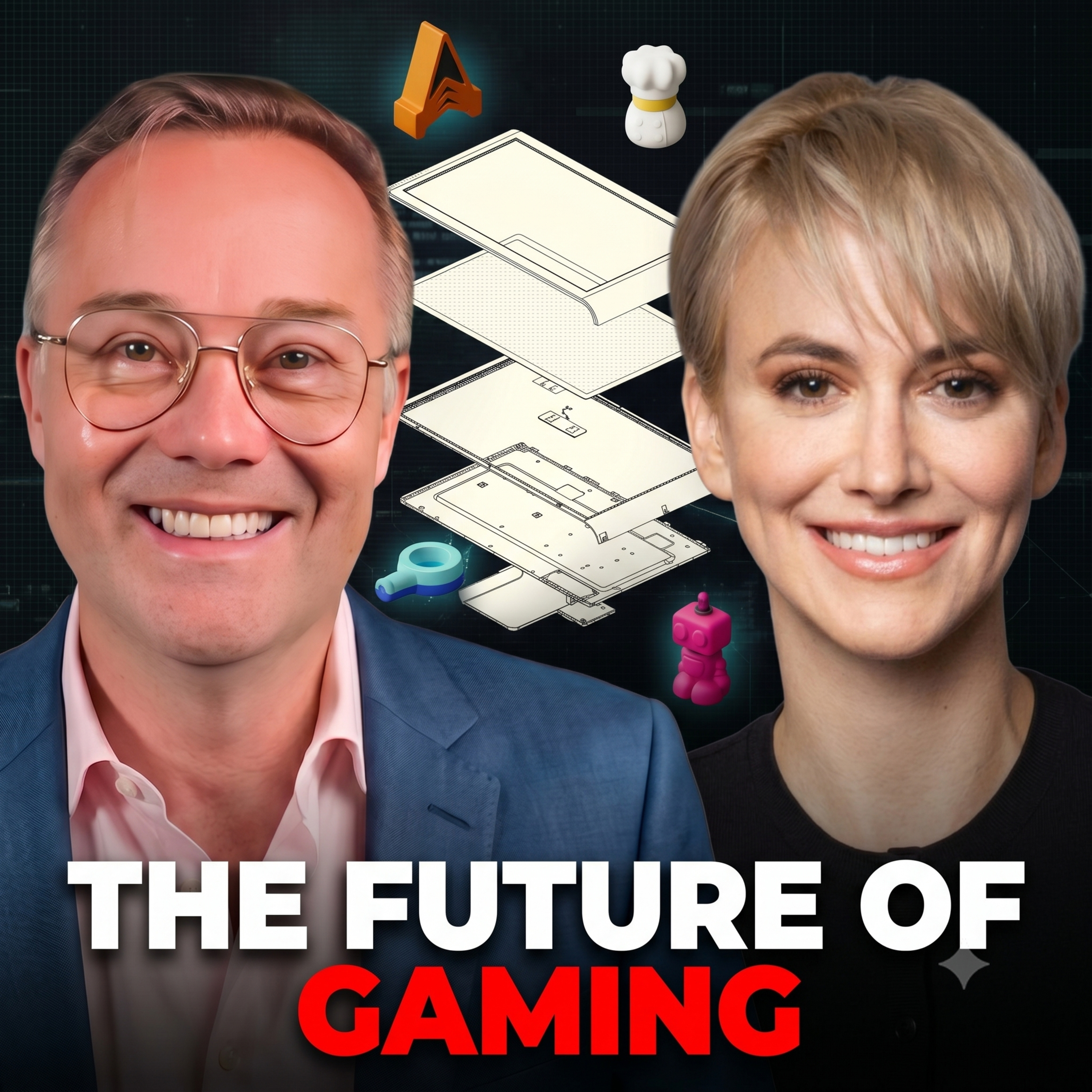
Board sells its gaming console at a low margin but monetizes through a high-margin ecosystem. A key driver is selling new physical game pieces required to unlock digital games, effectively creating a recurring, high-margin collectibles business model.
To create a truly unique value proposition, the "Bored" team prioritized game mechanics that leveraged the combination of physical pieces and a digital surface. For example, one game uses the height (Z-axis) of stackable pieces, an interaction that cannot be replicated on a standard tablet.

The team initially saw the large digital game board as the main feature. They later realized the unique, tangible game pieces were the most compelling differentiator from tablets or consoles and pivoted the entire marketing strategy to feature them front and center.
The most surprising development for the interactive tabletop console Bored is that families are using its SDK and AI tools to create their own games. Founder Brynn Putnam notes that the creative process itself has become a primary form of entertainment, shifting the company's focus to building better creation tools.

Roblox's leadership frames their total addressable market beyond the $200 billion gaming industry. They are building for the "human co-experience market," viewing their platform as a new communication medium akin to a sci-fi holodeck where people share experiences.

Instead of adhering to rigid academic definitions, creators should focus on whether their target audience perceives the experience as a valuable game. The players are the final arbiters of a product's category and value, rendering internal debates about definitions moot.
