Get your free personalized podcast brief
We scan new podcasts and send you the top 5 insights daily.
The most surprising development for the interactive tabletop console Bored is that families are using its SDK and AI tools to create their own games. Founder Brynn Putnam notes that the creative process itself has become a primary form of entertainment, shifting the company's focus to building better creation tools.

Related Insights
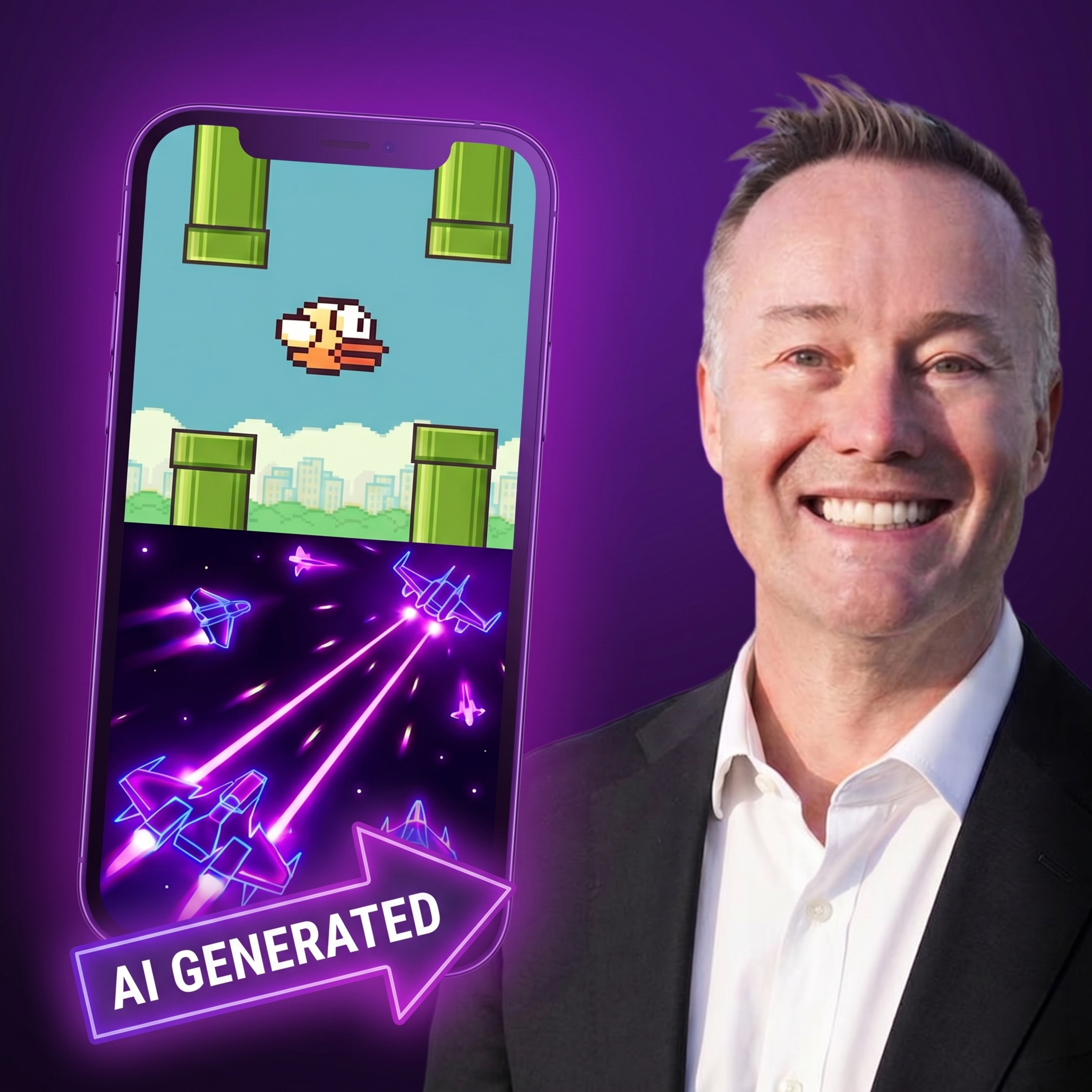
Nanogram, a 'TikTok for games' app, uses AI agents and a custom engine to allow users to generate fully playable 3D games from simple text prompts. What once took a programmer a week can now be accomplished in about 90 seconds, dramatically lowering the barrier to game creation.
Today's dominant AI tools like ChatGPT are perceived as productivity aids, akin to "homework helpers." The next multi-billion dollar opportunity is in creating the go-to AI for fun, creativity, and entertainment—the app people use when they're not working. This untapped market focuses on user expression and play.

To create a truly unique value proposition, the "Bored" team prioritized game mechanics that leveraged the combination of physical pieces and a digital surface. For example, one game uses the height (Z-axis) of stackable pieces, an interaction that cannot be replicated on a standard tablet.

While AI promises significant cost reductions in game development, its most transformative potential lies beyond efficiency. The technology will likely unlock entirely new forms of interactive entertainment and gameplay mechanics that were previously unimaginable or economically unfeasible to create.

The highly engaging, flow-state experience of creating with AI is so enjoyable that people will willingly trade traditional entertainment expenses, like going to the movies, for more AI model credits and development time.

BuzzFeed is using AI-powered toolkits that allow creative staff, like writers, to design and launch interactive products such as games. This dramatically increases the speed and volume of new product experimentation without relying on traditional engineering resources.

Many users of generative AI tools like Suno and Midjourney are creating content for their own enjoyment, not for professional use. This reveals a 'creation as entertainment' consumer behavior, distinct from the traditional focus on productivity or job displacement.

As articulated by Reid Hoffman, AI platforms like Replit allow anyone to instantly craft bespoke software tools to solve specific problems. This transforms work into a game-like experience where challenges are "levels" and AI helps you "craft" the perfect tool to win, moving beyond one-size-fits-all software.

AI coding assistants have radically lowered the barrier to software creation. A 14-year-old with no coding background successfully built a complex game in seven days by writing a PRD-like document and feeding it to an AI tool, demonstrating the new accessibility of development.

Children growing up with AI naturally integrate it into their workflows, not just as a tool but as a creative partner. They use it for everything from simulating historical scenes in Minecraft with AI-generated audio to creating guided learning paths, demonstrating a fluid, second-nature approach to human-AI collaboration.
