Get your free personalized podcast brief
We scan new podcasts and send you the top 5 insights daily.
Psychologist Adam Grant's "defensive pessimist" is a creator who oscillates between excitement for an idea and certainty of its failure. This fear of failure then fuels intense work to prevent it, turning a seemingly negative trait into a powerful driver of execution.

Related Insights
The fundamental difference in mindset is the initial reaction to an idea. A founder acknowledges risks but frames them as manageable challenges in pursuit of the opportunity, while a non-founder's mind goes straight to why it won't work.

Innovation requires moving beyond a 'failure culture' to an 'anti-fragility' mindset. This means proactively pushing boundaries with the expectation that a percentage of work will fail, then using that failure to fundamentally adjust your thinking and become stronger.

Humans are hardwired to focus on potential downsides ('what if?'), which often leads to inaction and regret. Consciously shifting to a 'why not?' perspective reframes risk as opportunity and empowers you to pursue ambitious goals you might otherwise abandon.

True innovation requires leaders to adopt a venture capital mindset, accepting that roughly nine out of ten initiatives will fail. This high tolerance for failure, mirroring professional investment odds, is a prerequisite for the psychological safety needed for breakthrough results.

Rejection can spark creativity by closing an obvious path, forcing you to find an alternative. As interviewee Andy Kramer said, if you hit a wall, you must look for a door. This constraint forces innovative thinking and can lead to unexpected, often superior, outcomes that you wouldn't have discovered otherwise.

To achieve breakthrough work, leaders must embrace spectacular failure. A mediocre "6 out of 10" idea is worse than a "1 out of 10" born from an ambitious attempt at a "10." Mediocrity signals a culture of playing it safe, which kills innovation.

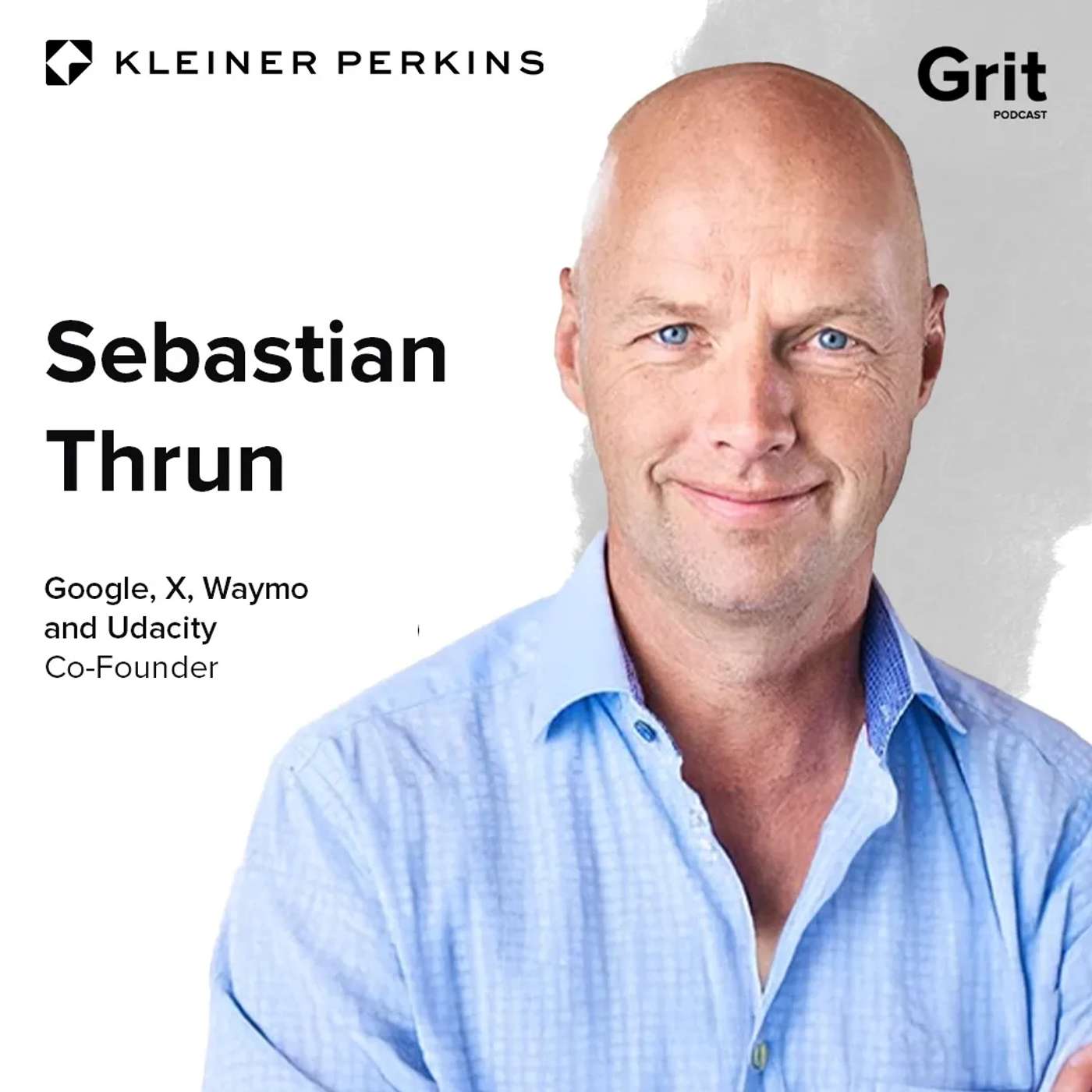
Sebastian Thrun advises innovators to eliminate guilt and fear, estimating 80% of his work is correcting mistakes. Feeling guilty about errors stifles risk-taking and leads to safe, incremental work. Instead, he treats mistakes purely as learning opportunities to be applied in the future.
The belief that confidence is a prerequisite for success is a myth. High-achievers consistently feel fear and self-doubt. The key is not to eliminate these feelings but to continue taking action and producing work regardless of them.

Adopting a curious mindset—constantly asking "what if" and "could this be better?"—mitigates the fear of failure by framing pursuits as experiments. It also prevents the complacency that follows success by encouraging continuous exploration and improvement.

The most successful people, from Nobel laureates to elite athletes, fail more often than their peers. Their success is a direct result of their willingness to take smart risks and push boundaries, knowing failure is a possible outcome. They adopt a mindset of playing to win rather than the more defensive posture of playing not to lose.
