Get your free personalized podcast brief
We scan new podcasts and send you the top 5 insights daily.
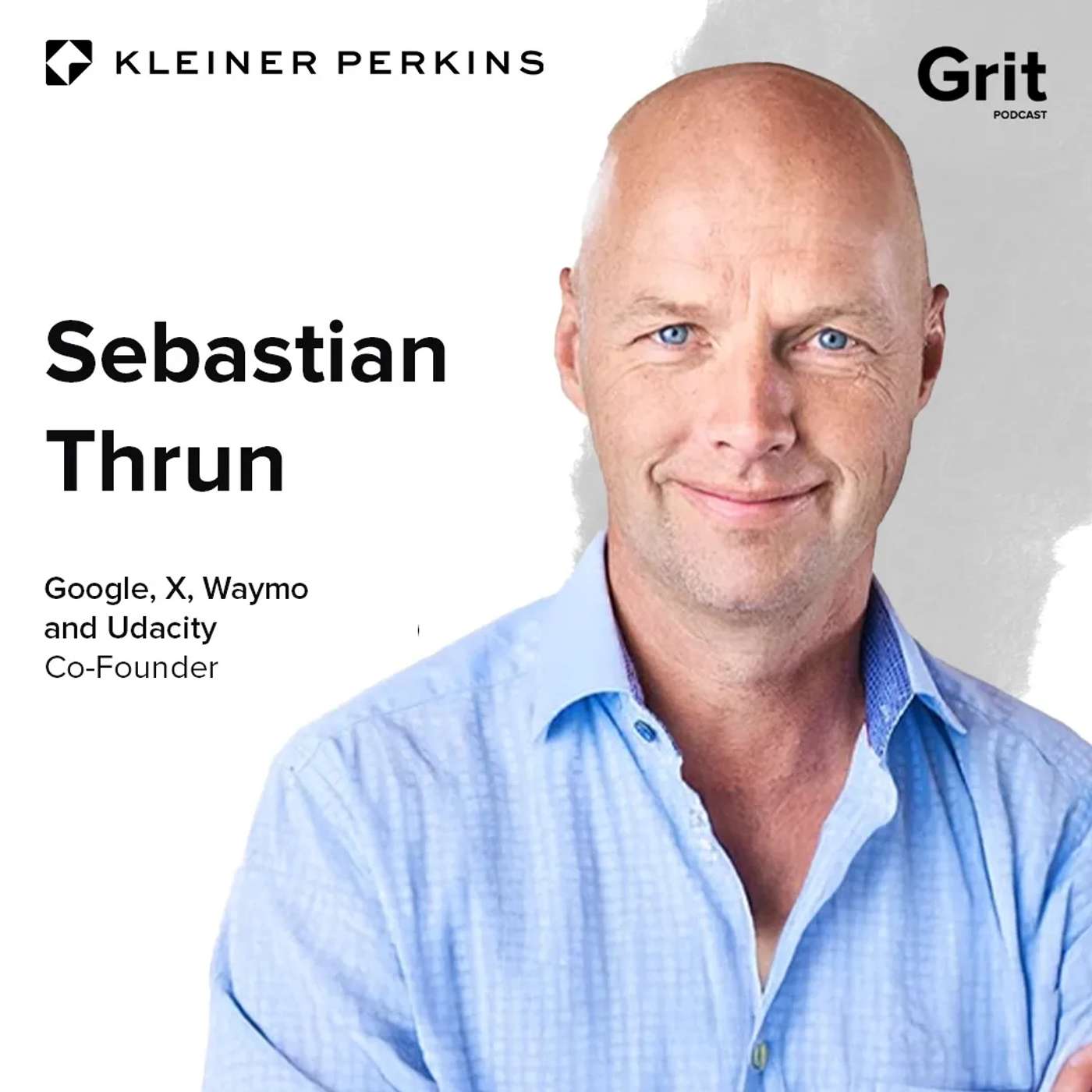
Sebastian Thrun advises innovators to eliminate guilt and fear, estimating 80% of his work is correcting mistakes. Feeling guilty about errors stifles risk-taking and leads to safe, incremental work. Instead, he treats mistakes purely as learning opportunities to be applied in the future.
Related Insights
Early ventures that failed weren't seen as setbacks but as low-cost learning opportunities. This perspective, framed by his grandfather's high-risk business, eliminated fear and built foundational skills with minimal downside, making eventual success more likely.

When pursuing breakthrough ideas ("10x thinking"), the process is inherently uncomfortable. It's crucial to distinguish this discomfort, which signals you're pushing boundaries, from the feeling of being wrong. Embracing this discomfort is key to innovation in ambiguous, early-stage product development.

The default assumption for any 'moonshot' idea is that it is likely wrong. The team's immediate goal is to find the fatal flaw as fast as possible. This counterintuitive approach avoids emotional attachment and speeds up the overall innovation cycle by prioritizing learning over being right.

Many people are held back by an intense fear of what others will think of their failures. This fear, often a product of childhood conditioning, prevents them from taking necessary risks. Embracing public failure as a learning process is the key to unlocking potential and reducing anxiety.

For ambitious 'moonshot' projects, the vast majority of time and effort (90%) is spent on learning, exploration, and discovering the right thing to build. The actual construction is a small fraction (10%) of the total work. This reframes failure as a critical and expected part of the learning process.
Dr. Li attributes her presence at pivotal moments in AI history (Stanford's SAIL, Google Cloud AI) to being intellectually fearless. This means taking risks, like restarting a tenure clock to join a better ecosystem, and diving into new, unproven areas without over-analyzing potential failures. It's a crucial trait for anyone aiming to make a significant impact.

While it's easy to regret known bad decisions, like passing on an investment, the far greater mistakes are the unseen ones. The meeting you canceled or the connection you didn't pursue could have been the pivotal moment of your career. This mindset liberates you from the fear of making visible errors and encourages action.
Entrepreneurs often view early mistakes as regrettable detours to be avoided. The proper framing is to see them as necessary, unskippable steps in development. Every fumble, pivot, and moment of uncertainty is essential preparation for what's next, transforming regret into an appreciation for the journey itself.

Rewarding successful outcomes incentivizes employees to choose less risky, less innovative projects they know they can complete. To foster true moonshots, Alphabet's X rewards behaviors like humility and curiosity, trusting that these habits are the leading indicators of long-term breakthroughs.
Entrepreneurs are natural risk-takers. Relying solely on logic, which is designed to keep you safe by recalling past failures, stifles the very creative and intuitive superpowers that drive entrepreneurial success.
