Get your free personalized podcast brief
We scan new podcasts and send you the top 5 insights daily.
Selling a standard Ford Mustang to the military is a simple transaction. But if the government asks for armor and bulletproof glass, it becomes a different contract for a weaponized product. This model helps distinguish between selling a general-purpose AI and customizing it for lethal applications.

Related Insights
Claims by AI companies that their tech won't be used for direct harm are unenforceable in military contracts. Militaries and nation-states do not follow commercial terms of service; the procurement process gives the government complete control over how technology is ultimately deployed.
While a general-purpose model like Llama can serve many businesses, their safety policies are unique. A company might want to block mentions of competitors or enforce industry-specific compliance—use cases model creators cannot pre-program. This highlights the need for a customizable safety layer separate from the base model.

If one AI company, like Anthropic, ethically refuses to remove safety guardrails for a government contract, a competitor will likely accept. This dynamic makes it nearly inevitable that advanced AI will be used for military purposes, regardless of any single company's moral stance.

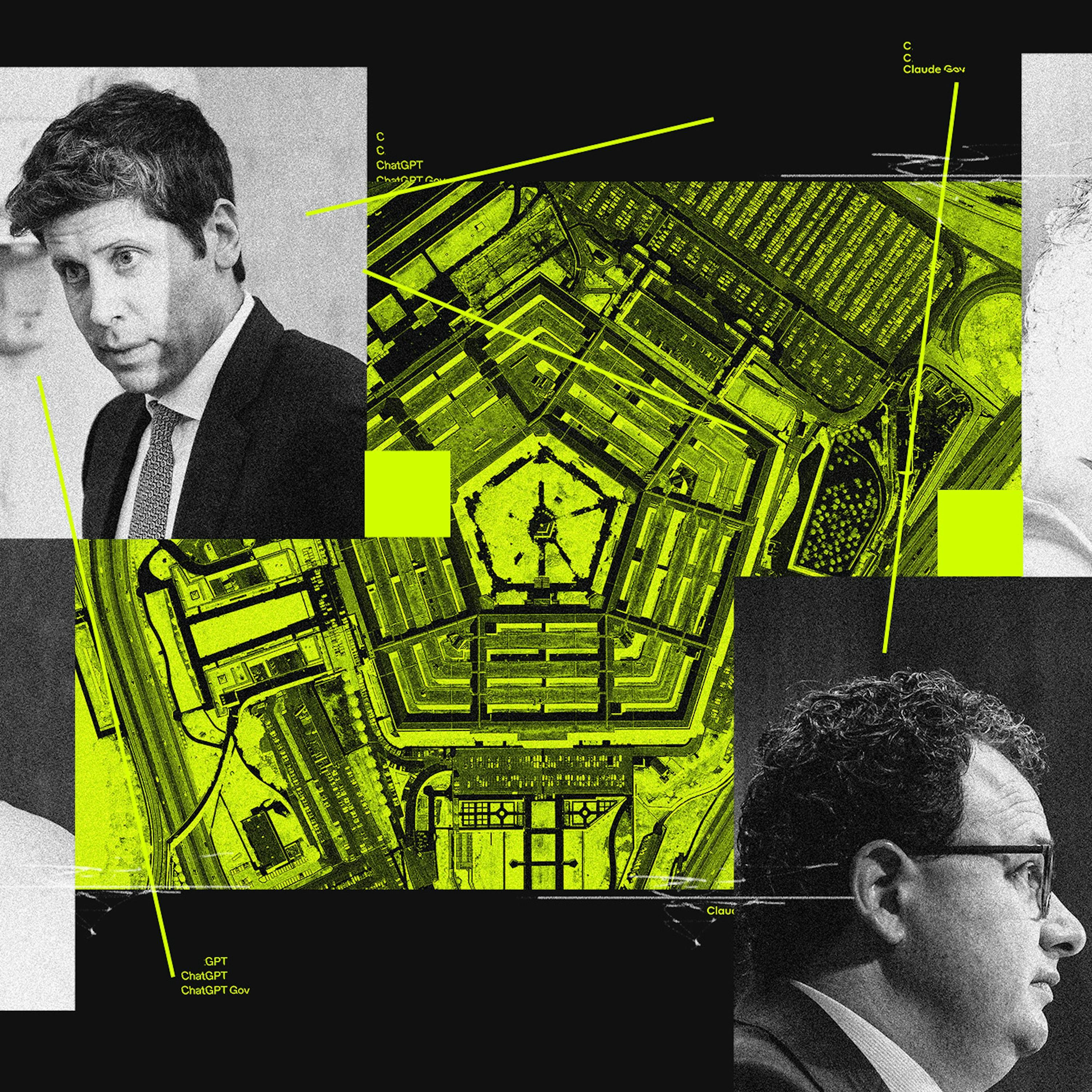
By refusing to allow its models for lethal operations, Anthropic is challenging the U.S. government's authority. This dispute will set a precedent for whether AI companies act as neutral infrastructure or as political entities that can restrict a nation's military use of their technology.

Unlike contractors who oversell a '20 percent solution,' Anthropic's CEO is transparently stating their AI isn't reliable for lethal uses. This 'truth in advertising' is culturally bizarre in a defense sector accustomed to hype, driving the conflict with a Pentagon that wants partners to project capability.

The conflict over whether to use "lawful purposes" or specific "red lines" in government AI contracts is more than a legal disagreement. It represents the first major, public power struggle between an AI developer and a government over who ultimately determines how advanced AI is used, especially for sensitive applications like autonomous weapons and surveillance.
The Department of War's top AI priority is "applied AI." It consciously avoids building its own foundation models, recognizing it cannot compete with private sector investment. Instead, its strategy is to adapt commercial AI for specific defense use cases.

The core conflict is not a simple contract dispute, but a fundamental question of governance. Should unelected tech executives set moral boundaries on military technology, or should democratically elected leaders have full control over its lawful use? This highlights the challenge of integrating powerful, privately-developed AI into state functions.
The DoD insists that tech providers agree to any lawful use of their technology, arguing that debates over controversial applications like autonomous weapons belong in Congress, not in a vendor's terms of service.

Contrary to popular belief, military procurement involves some of the most rigorous safety and reliability testing. Current generative AI models, with their inherent high error rates, fall far short of these established thresholds that have long been required for defense systems.