Get your free personalized podcast brief
We scan new podcasts and send you the top 5 insights daily.
Traditional AI strategy consulting involves periodic, static assessments that quickly become outdated. Agent-based systems like the host's "Holmes" and "Mycroft" offer a paradigm shift. They provide persistent, ongoing analysis and recommendations that are continuously updated based on new internal data and external AI capabilities, acting as a digital chief AI officer.

Related Insights
Instead of static documents, companies can embed their strategy into an AI agent. This agent assists in planning, identifies cross-departmental conflicts, and can be queried in real-time during decision-making to ensure constant alignment, making strategy a dynamic part of daily operations.

As AI evolves from single-task tools to autonomous agents, the human role transforms. Instead of simply using AI, professionals will need to manage and oversee multiple AI agents, ensuring their actions are safe, ethical, and aligned with business goals, acting as a critical control layer.

AI-powered platforms transform how leaders consume insights. Instead of passively receiving periodic reports from a central analyst, leaders are empowered to pull real-time information on demand for immediate needs. This enables more timely decision-making without creating an analytical bottleneck.

The current cyber defense model is reactive, using triage for endless alerts. Asymmetric Security's AGI-premised strategy is to shift this paradigm to proactive, continuous digital forensics. AI agents provide the 'infinite intelligent labor' needed to conduct deep investigations constantly, not just after a breach is suspected.

The future consulting model may flip traditional roles. Instead of hiring firms for primary analysis, organizations could develop their own 'agentic AI' for strategy creation and use external human experts simply to validate the AI's output, relegating consultants to a secondary role.

A one-size-fits-all AI assistant is suboptimal. The host's system splits responsibilities: "Holmes" focuses on personalized AI tool recommendations for individual employees' workflows, while "Mycroft" handles the company's overarching AI strategy, governance, and roadmap. This separation ensures both micro and macro-level needs are met effectively.
Create AI agents that embody key executive personas to monitor operations. A 'CFO agent' could audit for cost efficiency while a 'brand agent' checks for compliance. This system surfaces strategic conflicts that require a human-in-the-loop to arbitrate, ensuring alignment.

The era of prompt engineering is ending. The future is proactive AI agents working in the background to surface critical information. These agents will automatically monitor for and alert teams to competitor launches, new patent filings, and regulatory changes, shifting from a manual 'pull' to an automated 'push' model of intelligence.

Clawdbot can autonomously identify market trends (like X's new article feature), propose new product features, and even write the code for them, acting more like a chief of staff than a simple task-doer.
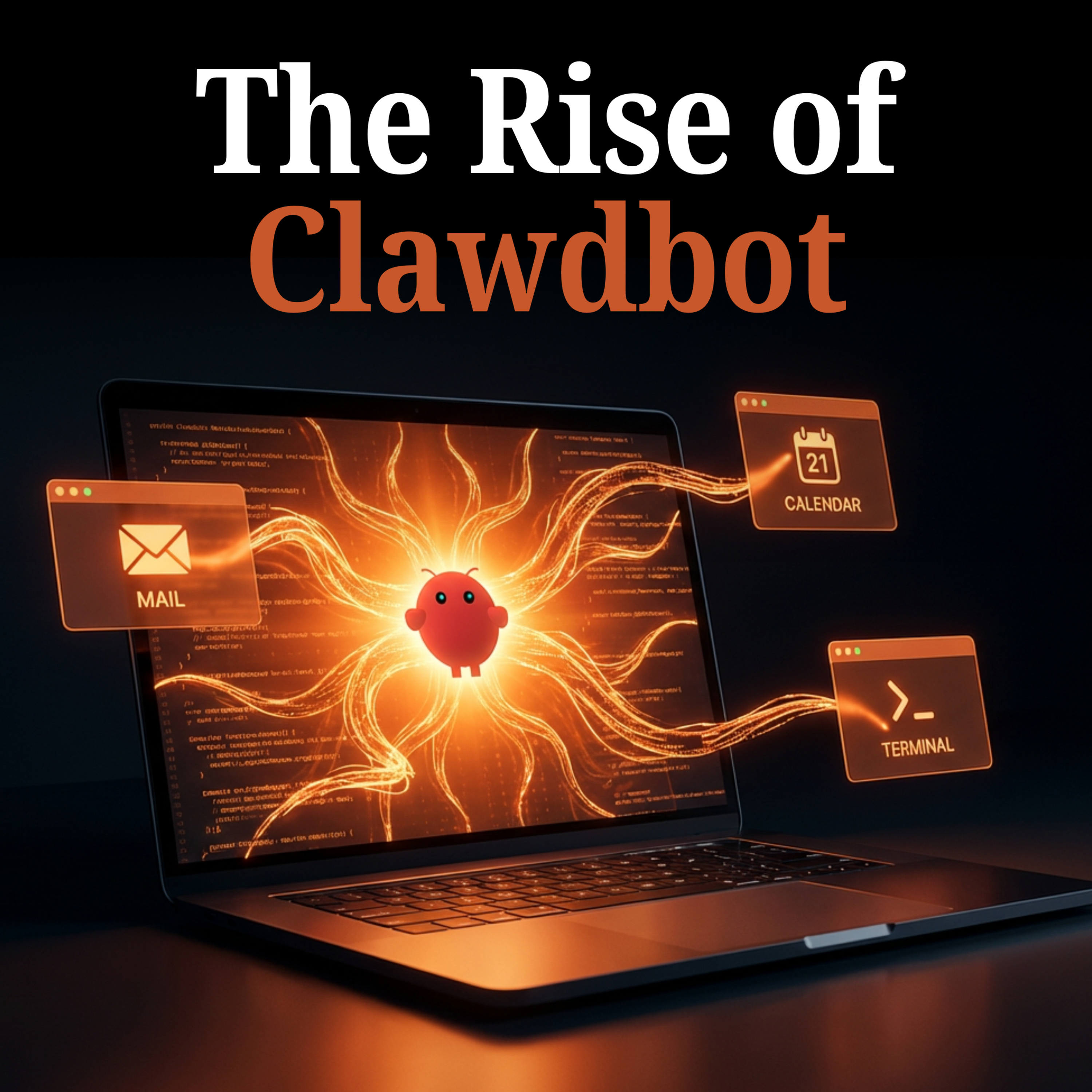
Unlike session-based chatbots, locally run AI agents with persistent, always-on memory can maintain goals indefinitely. This allows them to become proactive partners, autonomously conducting market research and generating business ideas without constant human prompting.
