Get your free personalized podcast brief
We scan new podcasts and send you the top 5 insights daily.
Unlike session-based chatbots, locally run AI agents with persistent, always-on memory can maintain goals indefinitely. This allows them to become proactive partners, autonomously conducting market research and generating business ideas without constant human prompting.

Related Insights
To fully leverage memory-persistent AI agents, treat the initial setup like an employee onboarding. Provide extensive context about your business goals, projects, skills, and even personal interests. This rich, upfront data load is the foundation for the AI's proactive and personalized assistance.

Effective enterprise AI needs a contextual layer—an 'InstaBrain'—that codifies tribal knowledge. Critically, this memory must be editable, allowing the system to prune old context and prioritize new directives, just as a human team would shift focus from revenue growth one quarter to margin protection the next.

Frame your relationship with AI agents like Clawdbot as an employer-employee dynamic. Set expectations for proactivity, and it will autonomously identify opportunities and build solutions for your business, such as adding new features to your SaaS based on market trends while you sleep.
The primary interface for AI is shifting from a prompt box to a proactive system. Future applications will observe user behavior, anticipate needs, and suggest actions for approval, mirroring the initiative of a high-agency employee rather than waiting for commands.

The era of prompt engineering is ending. The future is proactive AI agents working in the background to surface critical information. These agents will automatically monitor for and alert teams to competitor launches, new patent filings, and regulatory changes, shifting from a manual 'pull' to an automated 'push' model of intelligence.

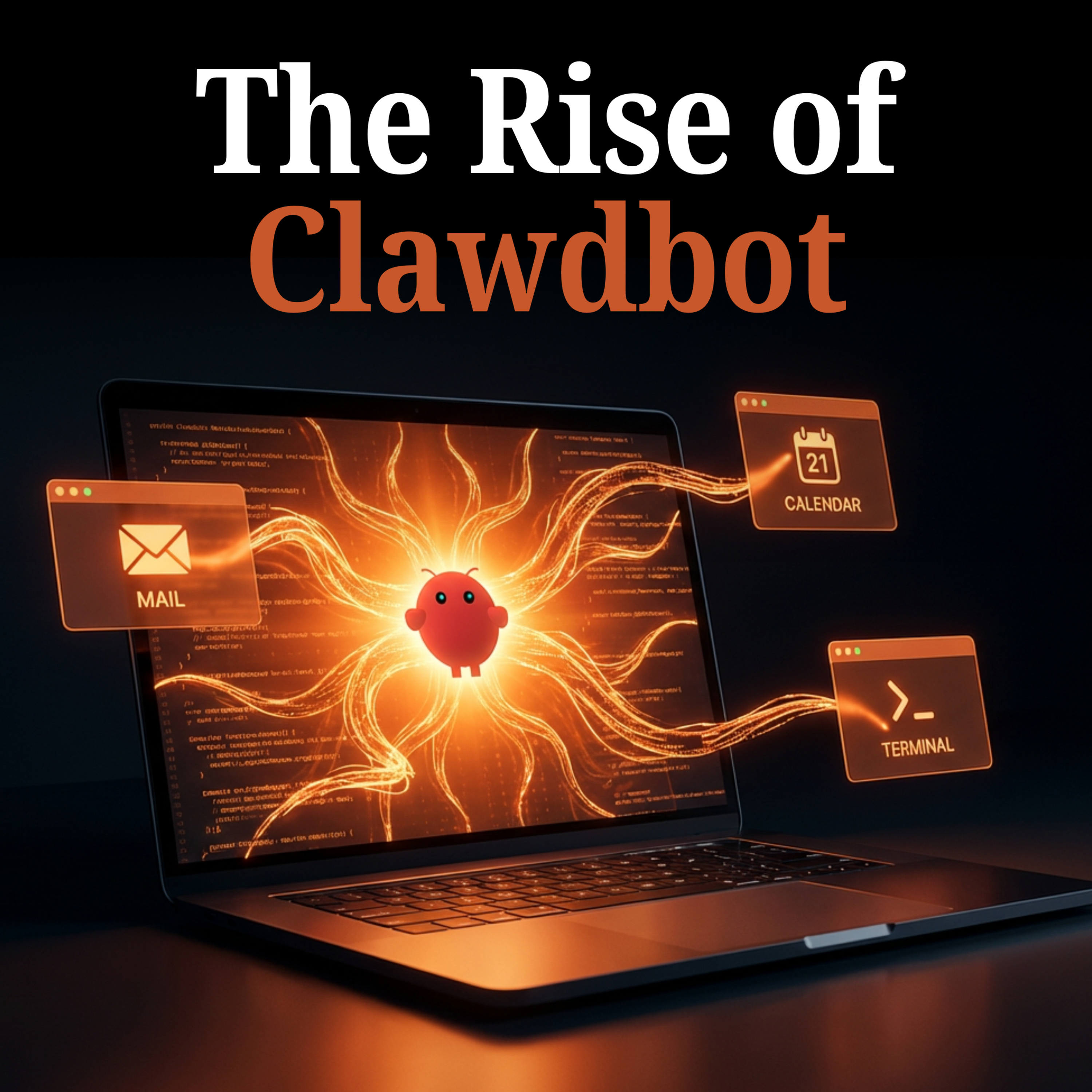
Clawdbot can autonomously identify market trends (like X's new article feature), propose new product features, and even write the code for them, acting more like a chief of staff than a simple task-doer.
The current chatbot model of asking a question and getting an answer is a transitional phase. The next evolution is proactive AI assistants that understand your environment and goals, anticipating needs and taking action without explicit commands, like reminding you of a task at the opportune moment.

To make agents useful over long periods, Tasklet engineers an "illusion" of infinite memory. Instead of feeding a long chat history, they use advanced context engineering: LLM-based compaction, scoping context for sub-agents, and having the LLM manage its own state in a SQL database to recall relevant information efficiently.

The ultimate value of AI will be its ability to act as a long-term corporate memory. By feeding it historical data—ICPs, past experiments, key decisions, and customer feedback—companies can create a queryable "brain" that dramatically accelerates onboarding and institutional knowledge transfer.

The "Claudebot" system represents a new paradigm where users run a persistent, open-source AI agent on their own local hardware. The agent's key feature is its ability to self-improve by writing new skills on command, effectively becoming a 24/7 digital employee that continually expands its capabilities.
