Get your free personalized podcast brief
We scan new podcasts and send you the top 5 insights daily.
Prompting works when a model already understands a domain's underlying "physics" and just needs to react. Fine-tuning is necessary when the model must learn a new domain's fundamental rules, such as the nuances of human social behavior not present in its original training data.

Related Insights
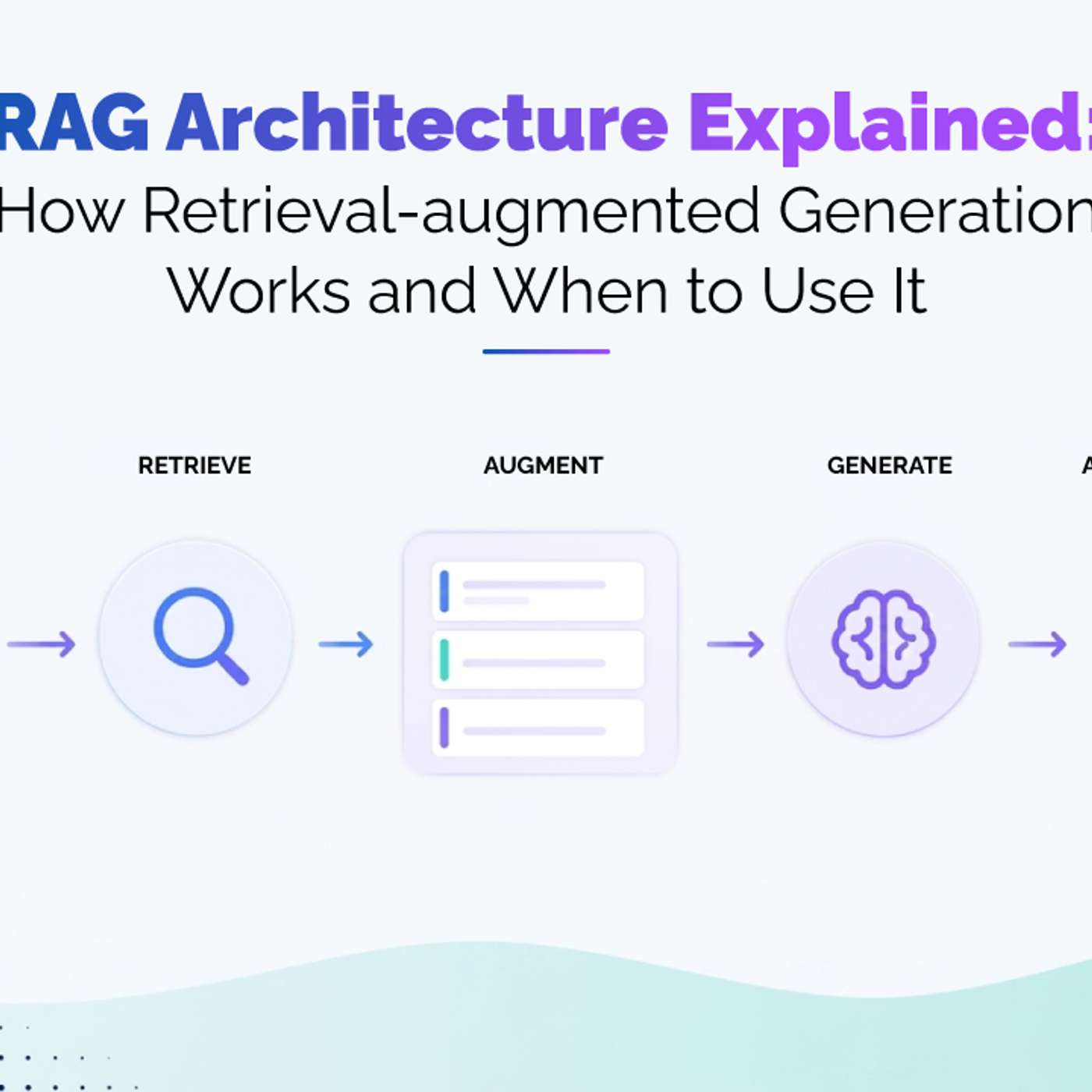
Adopt a "start simple" approach for AI development. Master prompting first. If that fails, use Retrieval Augmented Generation (RAG). Fine-tuning should be the last resort due to its complexity in deployment, serving, and keeping up with rapidly evolving base models.

As AI models improve, the most effective user interaction is shifting. Instead of forceful commands to avoid errors, sophisticated users are adopting a more collaborative, reassuring tone—almost like therapy—to guide the AI toward success. This reflects a maturation in both the technology and user strategy.

RAG and fine-tuning are not competing approaches but complementary tools. RAG provides a model with current, external knowledge, while fine-tuning shapes its style, format, and reasoning. The most robust AI systems combine both for optimal performance.
Don't stop at Supervised Fine-Tuning (SFT). SFT teaches a model *how* to respond in a certain format. Follow it with Direct Preference Optimization (DPO) to teach the model *what* constitutes a good response, using preference pairs to correct undesirable behaviors like fabrication or verbosity.

OpenAI favors "zero gradient" prompt optimization because serving thousands of unique, fine-tuned model snapshots is operationally very difficult. Prompt-based adjustments allow performance gains without the immense infrastructure burden, making it a more practical and scalable approach for both OpenAI and developers.

AI development has evolved to where models can be directed using human-like language. Instead of complex prompt engineering or fine-tuning, developers can provide instructions, documentation, and context in plain English to guide the AI's behavior, democratizing access to sophisticated outcomes.

Fine-tuning an AI model is most effective when you use high-signal data. The best source for this is the set of difficult examples where your system consistently fails. The processes of error analysis and evaluation naturally curate this valuable dataset, making fine-tuning a logical and powerful next step after prompt engineering.
Effective AI prompting involves providing a detailed narrative of the situation, user, and goals. This forces the AI to ask clarifying questions, signaling a deeper understanding and leading to more relevant answers compared to a simple, direct command.

Treat AI skills not just as prompts, but as instruction manuals embodying deep domain expertise. An expert can 'download their brain' into a skill, providing the final 10-20% of nuance that generic AI outputs lack, leading to superior results.

To build robust social intelligence, AIs cannot be trained solely on positive examples of cooperation. Like pre-training an LLM on all of language, social AIs must be trained on the full manifold of game-theoretic situations—cooperation, competition, team formation, betrayal. This builds a foundational, generalizable model of social theory of mind.
