Get your free personalized podcast brief
We scan new podcasts and send you the top 5 insights daily.
Adopt a "start simple" approach for AI development. Master prompting first. If that fails, use Retrieval Augmented Generation (RAG). Fine-tuning should be the last resort due to its complexity in deployment, serving, and keeping up with rapidly evolving base models.

Related Insights
Forget complex 'prompt engineering.' When a new AI model is released, find the official prompting guidelines from the creator. Feed this document into a chatbot like ChatGPT and have *it* construct the perfect prompt for you based on your reference image and goals, saving significant time and effort.

Before delegating a complex task, use a simple prompt to have a context-aware system generate a more detailed and effective prompt. This "prompt-for-a-prompt" workflow adds necessary detail and structure, significantly improving the agent's success rate and saving rework.
Instead of spending time trying to craft the perfect prompt from scratch, provide a basic one and then ask the AI a simple follow-up: "What do you need from me to improve this prompt?" The AI will then list the specific context and details it requires, turning prompt engineering into a simple Q&A session.
Before considering expensive model fine-tuning, implement Retrieval-Augmented Generation (RAG). RAG dynamically retrieves information from a knowledge base to augment the prompt, solving most domain-specific problems efficiently. The recommended hierarchy is: Prompt Optimization -> Context Engineering -> RAG -> Fine-tuning.

Instead of immediately asking an AI to perform a complex task, first prompt it to create a functional spec or a sequential plan. Go back and forth to align on this plan before instructing it to execute, which significantly improves the final output's quality and relevance.

OpenAI favors "zero gradient" prompt optimization because serving thousands of unique, fine-tuned model snapshots is operationally very difficult. Prompt-based adjustments allow performance gains without the immense infrastructure burden, making it a more practical and scalable approach for both OpenAI and developers.

Generative AI is moving beyond pure experimentation. Practices like fine-tuning, prompt engineering, and retrieval-augmented generation (RAG) are now becoming standardized disciplines with established best practices, signaling a maturation of the field toward reliable and repeatable engineering.
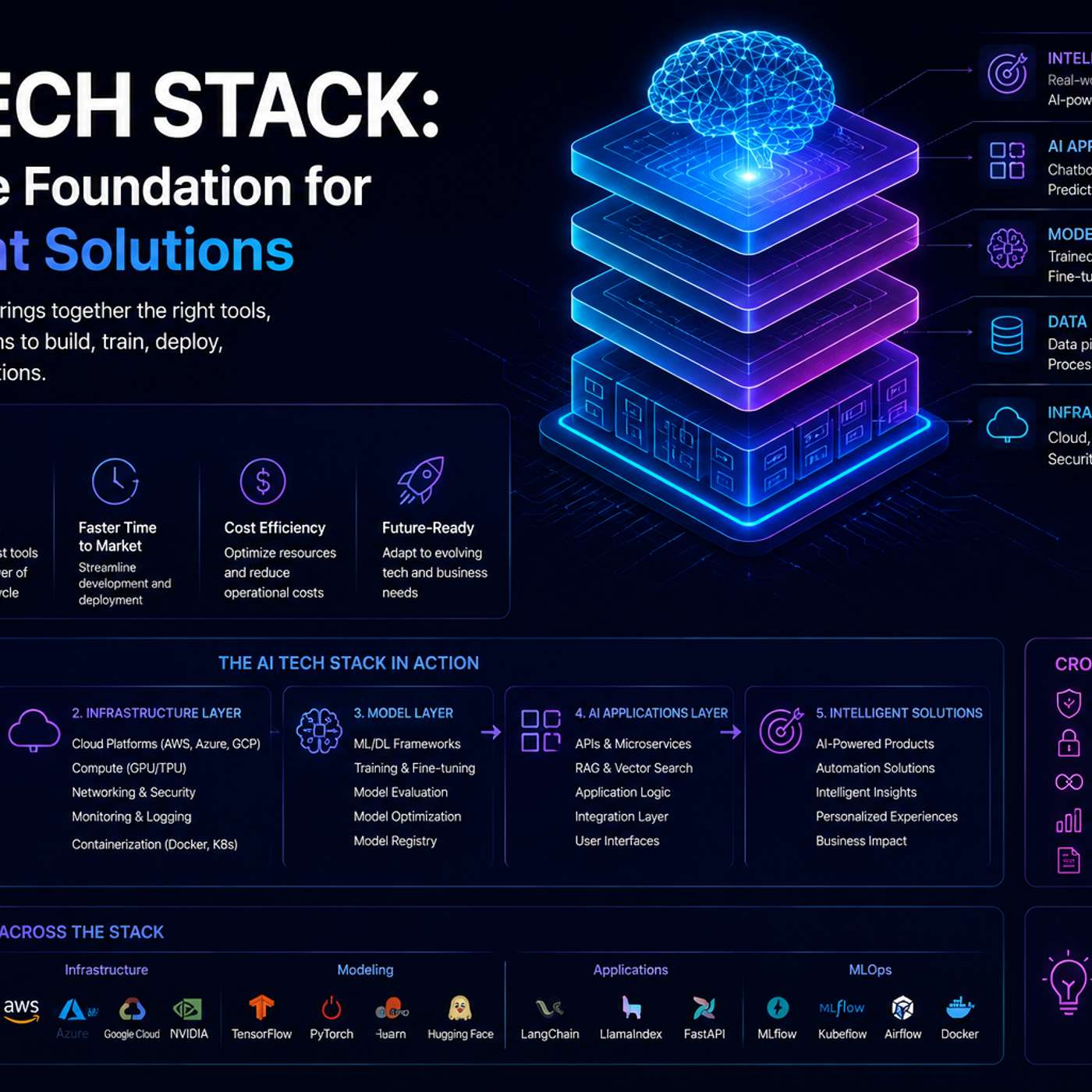
Resist the urge to apply LLMs to every problem. A better approach is using a 'first principles' decision tree. Evaluate if the task can be solved more simply with data visualization or traditional machine learning before defaulting to a complex, probabilistic, and often overkill GenAI solution.

Instead of manually crafting complex "mega prompts" or training rules for AI assistants, ask the AI to generate them for you. You can have a dialogue with the AI to refine its suggestions, dramatically speeding up the process of creating sophisticated workflows.

Fine-tuning remains relevant but is not the primary path for most enterprise use cases. It's a specialized tool for situations with unique data unseen by foundation models or when strict cost and throughput requirements for a high-volume task justify the investment. Most should start with RAG.