Get your free personalized podcast brief
We scan new podcasts and send you the top 5 insights daily.
RAG and fine-tuning are not competing approaches but complementary tools. RAG provides a model with current, external knowledge, while fine-tuning shapes its style, format, and reasoning. The most robust AI systems combine both for optimal performance.
Related Insights
Adopt a "start simple" approach for AI development. Master prompting first. If that fails, use Retrieval Augmented Generation (RAG). Fine-tuning should be the last resort due to its complexity in deployment, serving, and keeping up with rapidly evolving base models.

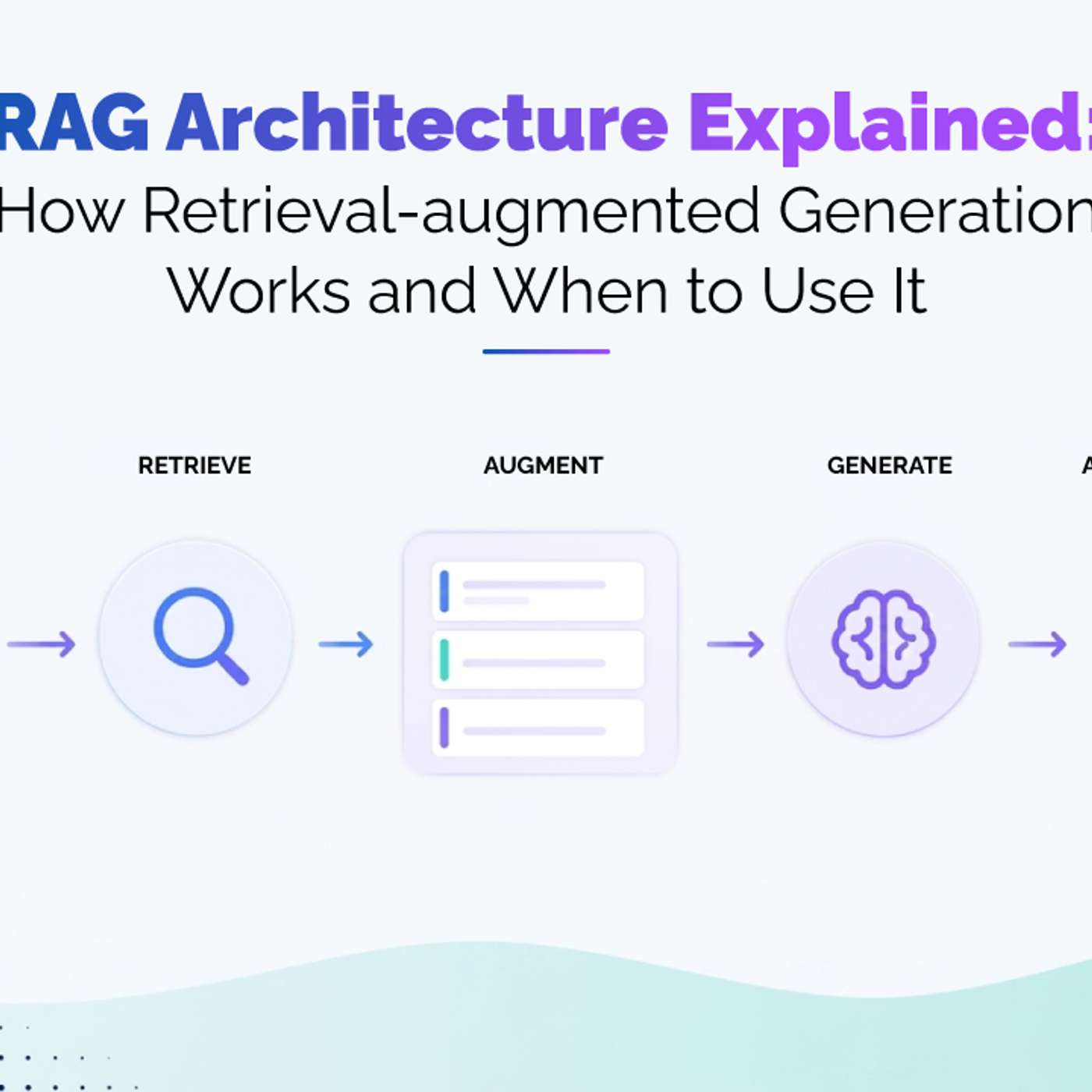
Before considering expensive model fine-tuning, implement Retrieval-Augmented Generation (RAG). RAG dynamically retrieves information from a knowledge base to augment the prompt, solving most domain-specific problems efficiently. The recommended hierarchy is: Prompt Optimization -> Context Engineering -> RAG -> Fine-tuning.

Instead of relying on opaque model weights, continual learning is more reliably achieved by having AI build explicit, external 'world models' like knowledge graphs. This approach makes the model's understanding inspectable and correctable by humans, enabling more robust causal analysis.

Retrieval-Augmented Generation (RAG) is just one component of agent memory. A robust system must also handle dynamic operations like updating information, consolidating knowledge, resolving conflicts, and strategically forgetting obsolete data.
Generative AI is moving beyond pure experimentation. Practices like fine-tuning, prompt engineering, and retrieval-augmented generation (RAG) are now becoming standardized disciplines with established best practices, signaling a maturation of the field toward reliable and repeatable engineering.
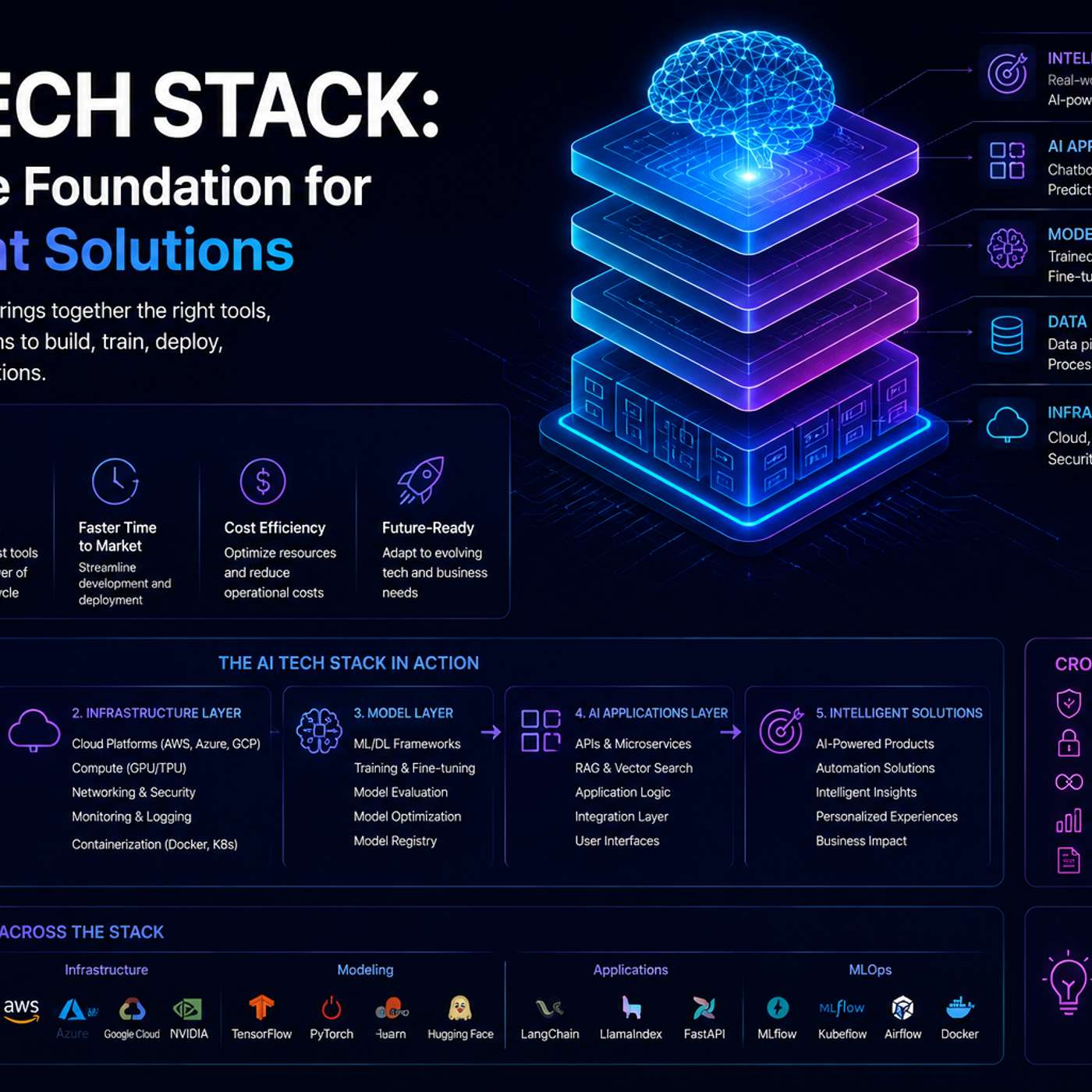
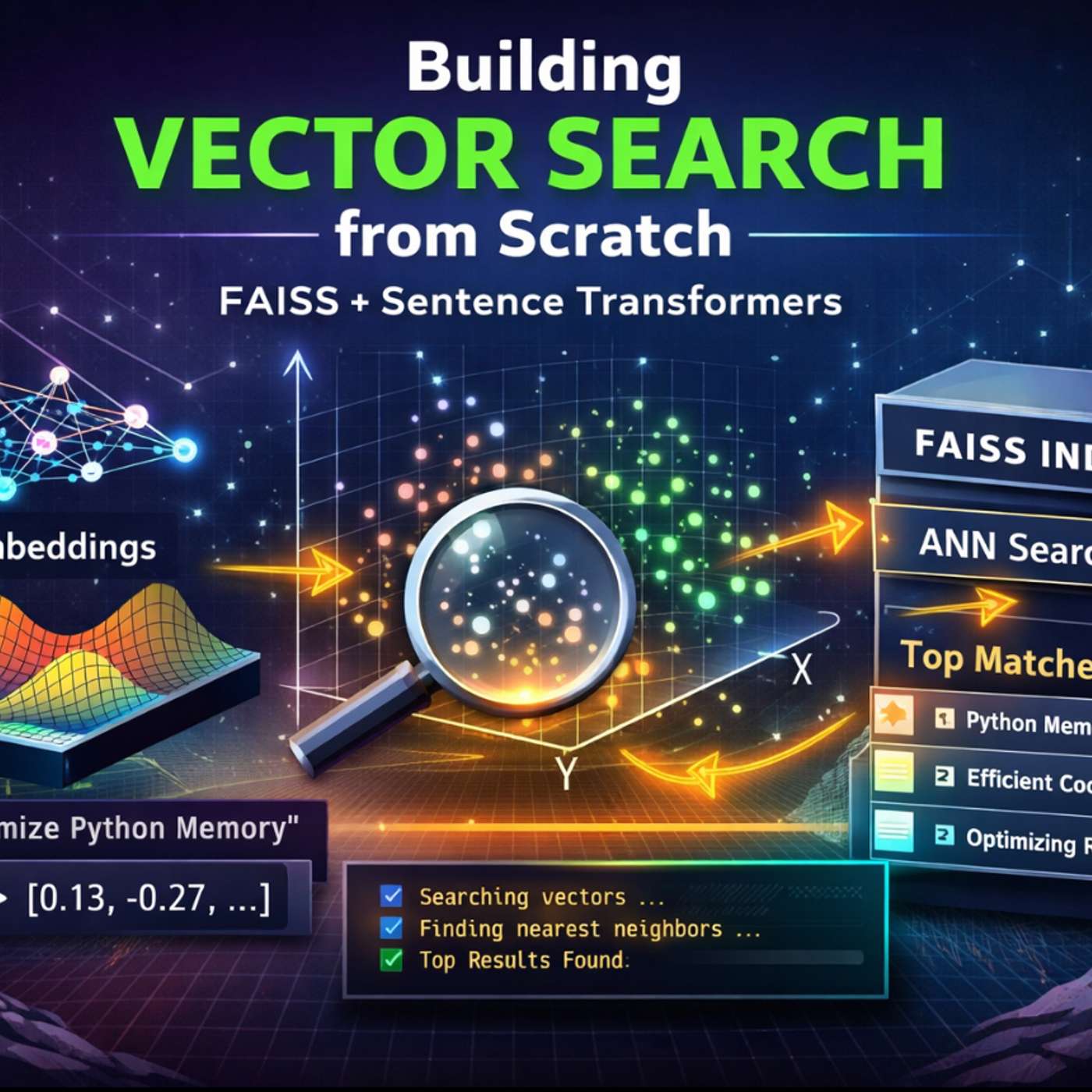
Retrieval Augmented Generation (RAG) uses vector search to find relevant documents based on a user's query. This factual context is then fed to a Large Language Model (LLM), forcing it to generate responses based on provided data, which significantly reduces the risk of "hallucinations."
Basic supervised fine-tuning (SFT) only adjusts a model's style. The real unlock for enterprises is reinforcement fine-tuning (RFT), which leverages proprietary datasets to create state-of-the-art models for specific, high-value tasks, moving beyond mere 'tone improvements.'

RAG systems are limited to direct retrieval and can't make spontaneous, abstract connections. This human-like ability to notice related but unasked-for concepts can only emerge from knowledge internalized within model weights, forming an associative memory.

An emerging rule from enterprise deployments is to use small, fine-tuned models for well-defined, domain-specific tasks where they excel. Large models should be reserved for generic, open-ended applications with unknown query types where their broad knowledge base is necessary. This hybrid approach optimizes performance and cost.

Fine-tuning remains relevant but is not the primary path for most enterprise use cases. It's a specialized tool for situations with unique data unseen by foundation models or when strict cost and throughput requirements for a high-volume task justify the investment. Most should start with RAG.