Get your free personalized podcast brief
We scan new podcasts and send you the top 5 insights daily.
The departure of half of xAI's founding team, many of whom are researchers, indicates a pivot away from speculative research projects. The company's focus appears to be on massive engineering feats, like space-based data centers, to win through sheer scale rather than novel AI breakthroughs.

Related Insights
Beyond data from X, a key strategic advantage for XAI is its access to a continuous stream of hard science and engineering problems from SpaceX, Tesla, and Neuralink. This provides a rich, proprietary reinforcement learning environment for its models that is difficult for competitors to replicate, a theory the host confirmed with an XAI employee.

Unlike previous years where the path forward was simply scaling models, leading AI labs now lack a clear vision for the next major breakthrough. This uncertainty, coupled with data limitations, is pushing the industry away from scaling and back toward fundamental, exploratory R&D.

High-profile departures from xAI spark debate, but assessing the true cause—be it Musk's demanding style or normal turnover—is clouded by intense public bias. Objective analysis is vanishingly rare, making it difficult to gauge the actual impact on the company's trajectory.

xAI's 500-megawatt data center in Saudi Arabia likely isn't just for running its own models. It's a strategic move for Musk to enter the lucrative data center market, leveraging his expertise in large-scale infrastructure and capitalizing on cheap, co-located energy sources.

The merger combines SpaceX's rocketry with XAI's AI development. The official rationale is to build cost-effective, environmentally friendly data centers in space to meet the massive compute demands of future AI, a vision that leverages SpaceX's continually falling launch costs to make space-based supercomputing feasible.
The merger leverages SpaceX's heavy launch capabilities to deploy space-based data centers for xAI, capitalizing on abundant solar power and the vacuum of space for cooling. This creates a massive competitive advantage by eliminating terrestrial energy and real estate costs.
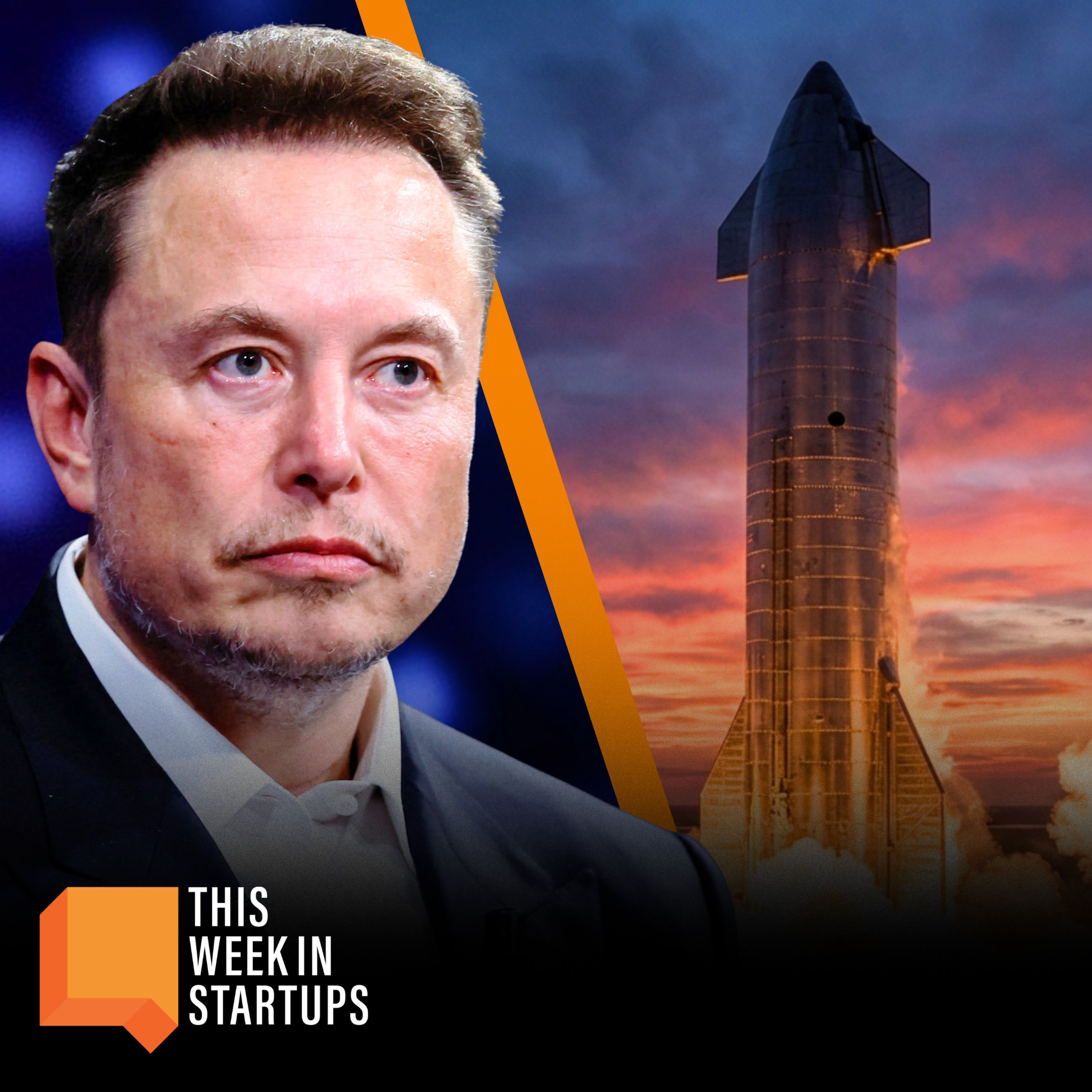
SpaceX is reportedly targeting a $1.5 trillion IPO to raise $30 billion. This capital isn't just for rockets but to fund a new AI infrastructure business: data centers in space. This represents a significant strategic shift, leveraging its launch dominance to compete in the AI compute market by acquiring massive quantities of GPUs.

The competitive AI landscape has forced founders from pure research backgrounds to adopt a strong focus on financial returns. This shift from idealistic AGI pursuits to "hard capitalism" means they make rational R&D spending decisions, de-risking investor concerns.

The merger between SpaceX and xAI is being justified by the strategic narrative of building "data centers in space." This positions SpaceX's satellite network not just as a communications provider but as the essential physical infrastructure for a future AI-driven world, providing a rationale for combining rockets and AI.

A key rationale for merging SpaceX and Elon Musk's XAI is to fund the development of data centers in orbit. The logic is that space provides free, extreme cooling and unlimited solar energy, solving two of the biggest cost and physical constraints of terrestrial AI infrastructure.
