Get your free personalized podcast brief
We scan new podcasts and send you the top 5 insights daily.
Factors like 'value' don't get arbitraged away, despite being public knowledge, because of human behavior. These strategies can underperform for a decade or more, causing immense career risk and psychological pain. This difficulty in execution, not lack of knowledge, is why the edge persists.

Related Insights
With information now ubiquitous, the primary source of market inefficiency is no longer informational but behavioral. The most durable edge is "time arbitrage"—exploiting the market's obsession with short-term results by focusing on a business's normalized potential over a two-to-four-year horizon.

Markets, technologies, and companies change constantly. The one constant is the human operating system—our biases, emotions, and irrationality. The ability to systematically trade against predictable human behavior is an enduring source of alpha.

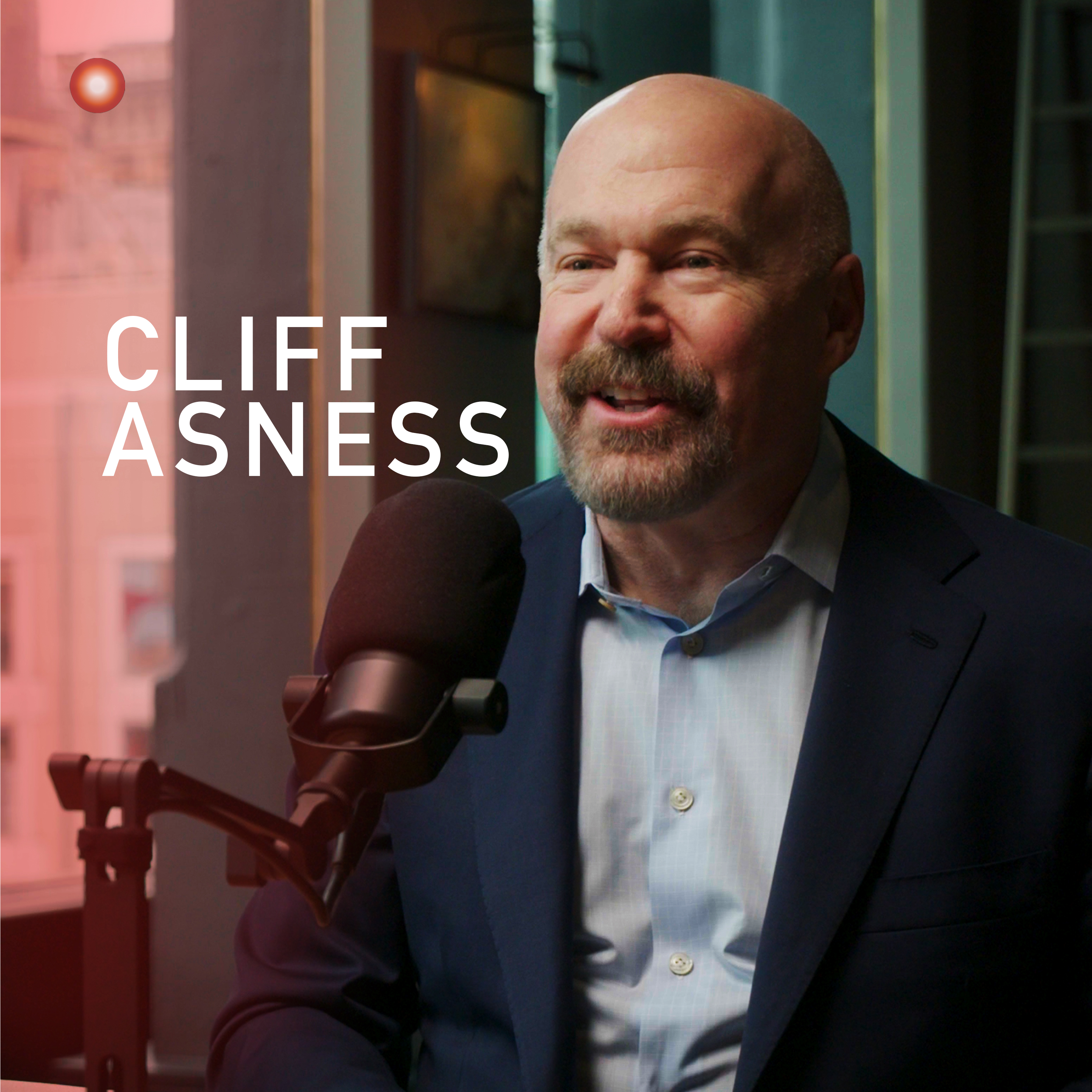
Cliff Asness argues that quant strategies like value investing persist through all technological eras because their true edge is arbitraging consistent human behaviors like over-extrapolation. As long as people get swept up in narratives and misprice assets, the quantitative edge will remain.
To achieve above-average investment returns, one cannot simply follow the crowd. True alpha comes from contrarian thinking—making investments that conventional wisdom deems wrong. Rubenstein notes the primary barrier is psychological: overcoming the innate human desire to be liked and the fear of being told you're 'stupid' by your peers.

The maxim "buy low, sell high" is psychologically hard because it forces you to act against the crowd's emotional consensus. It's like flying by instruments when everyone else is calm and looking out the window. This act of trusting abstract data over social proof feels deeply unnatural for humans.

Despite decades of evidence, there is no agreement on why factors like "value" (cheap stocks outperforming) work. The debate is split between rational risk-based explanations (Fama's view that they are inherently riskier) and behavioral ones (Shiller's view that investors make systematic errors). This uncertainty persists at the core of quant investing.

An estimated 80-90% of institutional trading is driven by quant funds and multi-manager platforms with one-to-three-month incentive cycles. This structure forces a short-term view, creating massive earnings volatility. This presents a structural advantage for long-term investors who can underwrite through the noise and exploit the resulting mispricings caused by career-risk-averse managers.
![Henry Ellenbogen - Man Versus Machine - [Invest Like the Best, EP.452] thumbnail](https://megaphone.imgix.net/podcasts/498a0910-d6ea-11f0-aae4-8f837283e00f/image/9b60f0353346cd1b5cbd326c86e22287.jpg?ixlib=rails-4.3.1&max-w=3000&max-h=3000&fit=crop&auto=format,compress)
While process is necessary, any repeatable, process-driven advantage that generates significant alpha will quickly be arbitraged away in competitive markets. A firm's true, lasting edge comes from its ability to recruit and retain exceptional people within a culture that fosters truth-seeking.

Professional fund managers are often constrained by the need to hug their benchmark index to avoid short-term underperformance and retain clients. Individuals, free from this 'career risk,' can make truly long-term, contrarian bets, which is a significant structural advantage for outperformance.

Short-term performance pressure forces fund managers to sell underperforming stocks, creating a self-fulfilling prophecy of price declines. Investors with permanent capital have a structural advantage, as they can hold through this volatility and even buy into the weakness created by others' behavioral constraints.