Get your free personalized podcast brief
We scan new podcasts and send you the top 5 insights daily.
Microsoft CEO Satya Nadella is personally experimenting with Anthropic's AI tools, including the open-source project "Maltbot." He is actively sharing his findings with deputies, using the rival's cross-application agent capabilities as a direct challenge and source of inspiration for improving Microsoft's own 365 Copilot product.

Related Insights
Nadella posits a future where the winner isn't the company with the best model. Instead, value accrues to the platform that provides the data, context, and tools (the 'scaffolding') that make any model useful, especially as capable open-source alternatives proliferate.
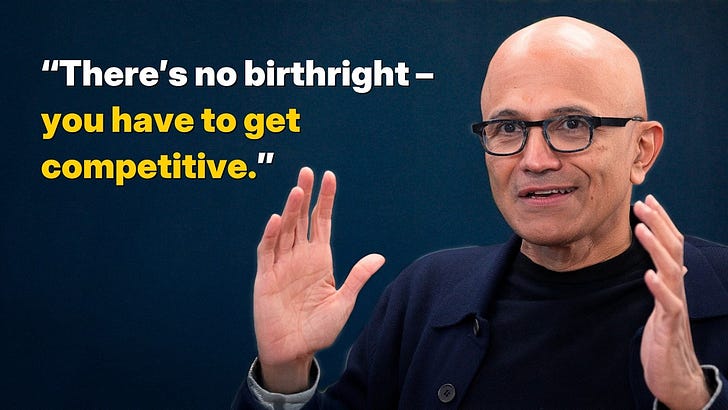
Microsoft is not solely reliant on its OpenAI partnership. It actively integrates competitor models, such as Anthropic's, into its Copilot products to handle specific workloads where they perform better, like complex Excel tasks. This pragmatic "best tool for the job" approach diversifies its AI capabilities.

Nadella has delegated management responsibilities to embed himself directly in AI product development. He now spends his time in internal Teams channels, emailing engineers with specific flaws, and holding weekly product grillings to accelerate Copilot's improvement, acting as a hands-on product leader.
Microsoft's decision to promote Anthropic models on Azure as aggressively as OpenAI's reflects a core belief from CEO Satya Nadella. He anticipates AI models will become commoditized, making the underlying intelligence interchangeable and the cloud platform the primary point of differentiation and value capture.
Microsoft is not just an investor in Anthropic; it's also a top customer, spending over $500 million annually on its models for products like GitHub Copilot. In return, Anthropic committed to spending billions on Azure. This reciprocal financial relationship deepens their strategic alliance beyond a simple cloud provider-customer dynamic.
Microsoft CEO Satya Nadella views AI's trajectory in two distinct paths. The first is "cognitive enhancement" tools that assist users, like Copilot. The second, more ambitious path is a "guardian angel," an AGI-like system that oversees and manages tasks. This framework signals a deeper belief in AGI's potential than is commonly associated with him.

Satya Nadella’s deposition reveals the OpenAI deal was driven by his perpetual 'dissatisfaction with the rate of progress' at Microsoft, both in absolute terms and versus competitors. This frames strategic investment not as an admission of internal failure, but as a critical CEO tool to accelerate innovation and bypass inertia.
Beyond the equity stake and Azure revenue, Satya Nadella highlights a core strategic benefit: royalty-free access to OpenAI's IP. For Microsoft, this is equivalent to having a "frontier model for free" to deeply integrate across its entire product suite, providing a massive competitive advantage without incremental licensing costs.

Nadella frames the progression of AI tools for knowledge workers as following the same path as coding assistants: from simple suggestions, to chat interfaces, to executing actions, and finally to fully autonomous agents. This provides a clear roadmap for product development and user adoption in the AI space.
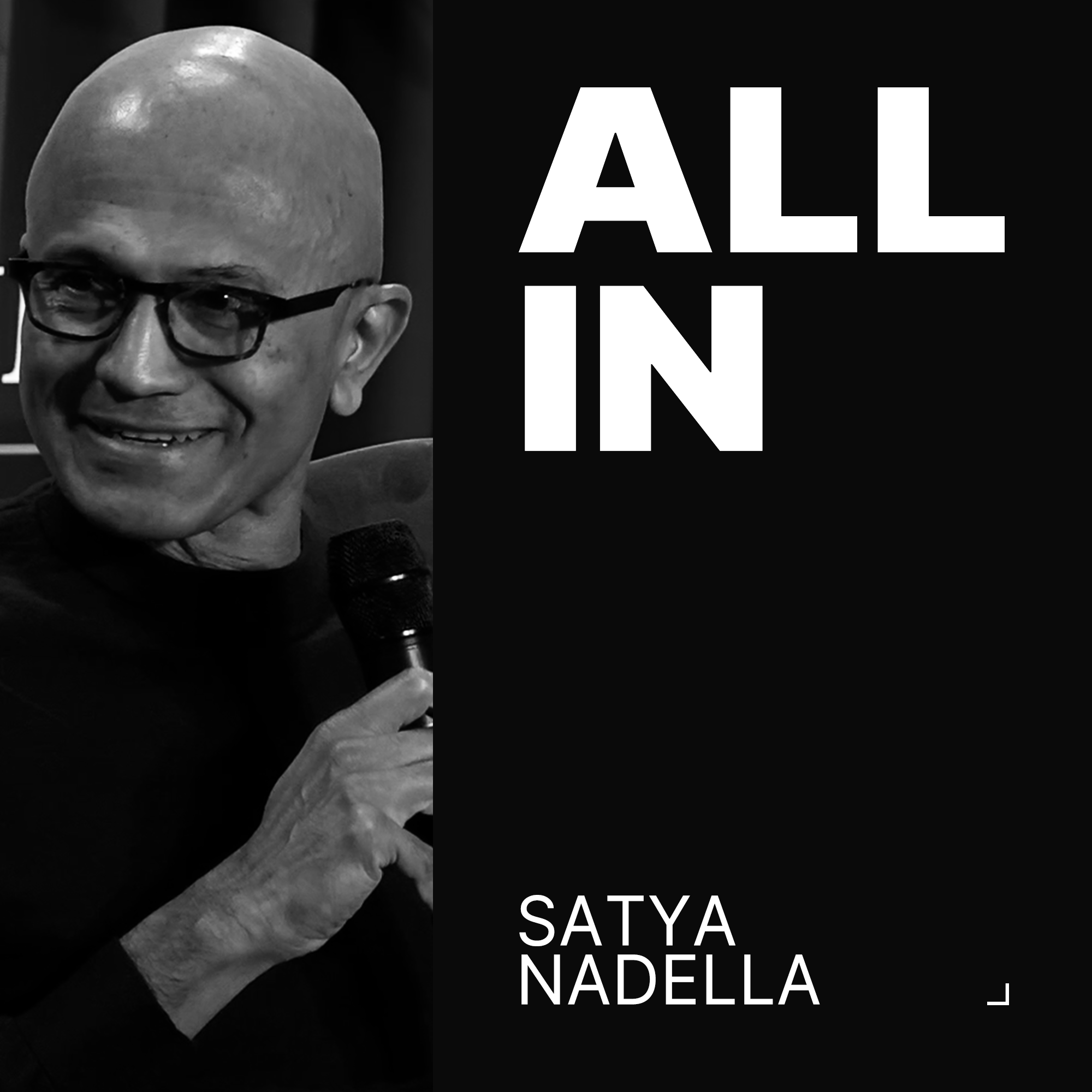
While Microsoft's Office suite provides a strong user base, its ownership of the Windows operating system is the real moat against competitors like Anthropic's Co-work (currently Mac-only). This "home turf" advantage allows for deeper, native integration, making it easier to build powerful AI agents that can organize files and orchestrate tasks across the entire user desktop.