Get your free personalized podcast brief
We scan new podcasts and send you the top 5 insights daily.
Satya Nadella’s deposition reveals the OpenAI deal was driven by his perpetual 'dissatisfaction with the rate of progress' at Microsoft, both in absolute terms and versus competitors. This frames strategic investment not as an admission of internal failure, but as a critical CEO tool to accelerate innovation and bypass inertia.
Related Insights
While some competitors prioritize winning over ROI, Nadella cautions that "at some point that party ends." In major platform shifts like AI, a long-term orientation is crucial. He cites Microsoft's massive OpenAI investment, committed *before* ChatGPT's success, as proof of a long-term strategy paying off.
Lawsuit filings reveal a previously unreported $2 billion Microsoft investment in OpenAI in 2021. This deal featured a lower 6x return multiple but granted Microsoft broader commercialization rights to any OpenAI model developed (except AGI), showing a much deeper strategic commitment before ChatGPT's public success.
The most difficult part of Microsoft's initial OpenAI investment wasn't the capital, but navigating the complex non-profit/for-profit structure that caused traditional VCs to pass on the deal. This highlights how innovative deal-structuring can be a competitive advantage.

Microsoft's decision to promote Anthropic models on Azure as aggressively as OpenAI's reflects a core belief from CEO Satya Nadella. He anticipates AI models will become commoditized, making the underlying intelligence interchangeable and the cloud platform the primary point of differentiation and value capture.

Microsoft’s new superintelligence team is a direct result of a renegotiated OpenAI deal. The previous contract restricted Microsoft from building AGI past a certain computational threshold. Removing this clause was a pivotal, strategic move to pursue AI self-sufficiency.
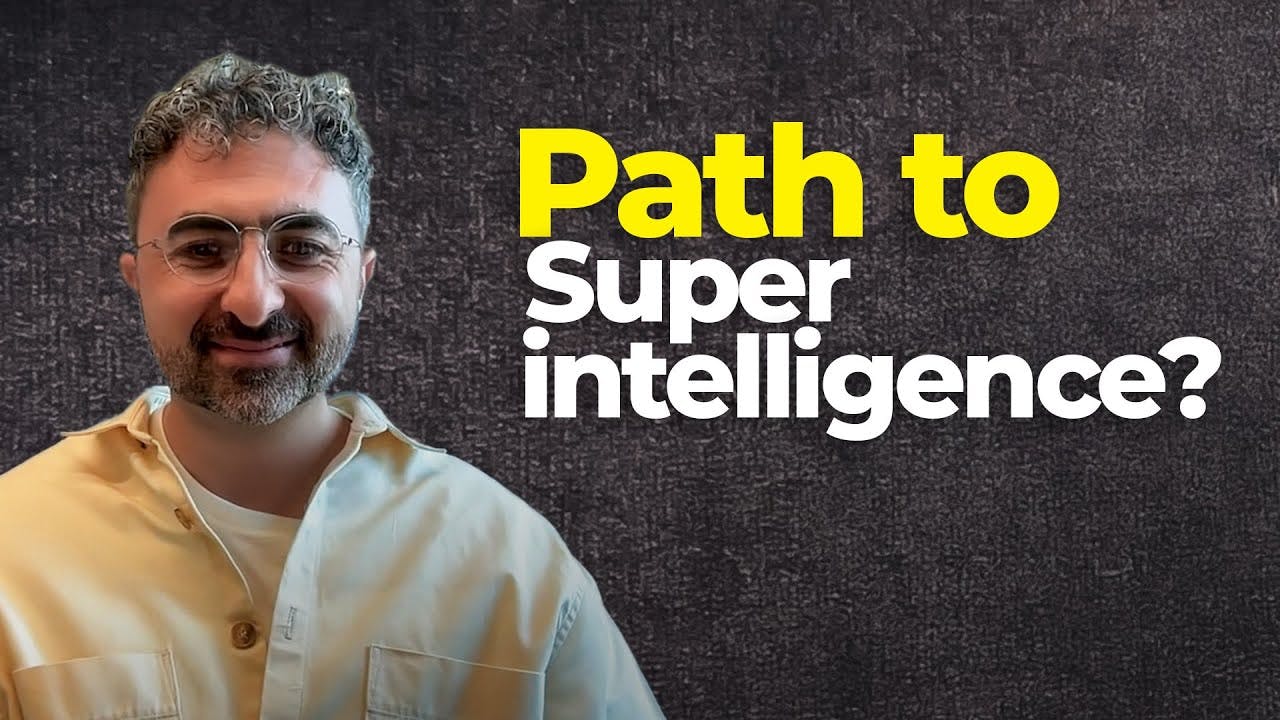
Satya Nadella reveals that the initial billion-dollar investment in OpenAI was not an easy sell. He had to convince a skeptical board, including a hesitant Bill Gates, about the unconventional structure and uncertain outcome. This highlights that even visionary bets require navigating significant internal debate and political capital.

Microsoft's early OpenAI investment was a calculated, risk-adjusted decision. They saw that generalizable AI platforms were a 'must happen' future and asked, 'Can we remain a top cloud provider without it?' The clear 'no' made the investment a defensive necessity, not just an offensive gamble.
Satya Nadella reveals that the first $1 billion investment in OpenAI was considered a high-risk bet with a high probability of failure. Bill Gates himself told Nadella he expected him to "burn this billion dollars," underscoring the extreme risk tolerance required for the deal.
Beyond the equity stake and Azure revenue, Satya Nadella highlights a core strategic benefit: royalty-free access to OpenAI's IP. For Microsoft, this is equivalent to having a "frontier model for free" to deeply integrate across its entire product suite, providing a massive competitive advantage without incremental licensing costs.
OpenAI’s pivotal partnership with Microsoft was driven more by the need for massive-scale cloud computing than just cash. To train its ambitious GPT models, OpenAI required infrastructure it could not build itself. Microsoft Azure provided this essential, non-commoditized resource, making them a perfect strategic partner beyond their balance sheet.